Roman vs German Chamomile Oil: Which One Should You Buy?
Walk into any well-stocked apothecary shelf and you'll likely find two bottles labeled simply "chamomile oil," sitting side by side but looking nothing alike. One is the color of pale straw. The other is a deep, almost otherworldly blue. Both come from flowers most people would struggle to tell apart in a garden bed, yet the oils pressed and distilled from them are genuinely different products with different chemistry, different scent profiles, and different ideal uses. If you're trying to figure out which chamomile oil to buy, the short answer is: it depends on what you're making and how you plan to use it. The longer answer is worth understanding before you spend your money.
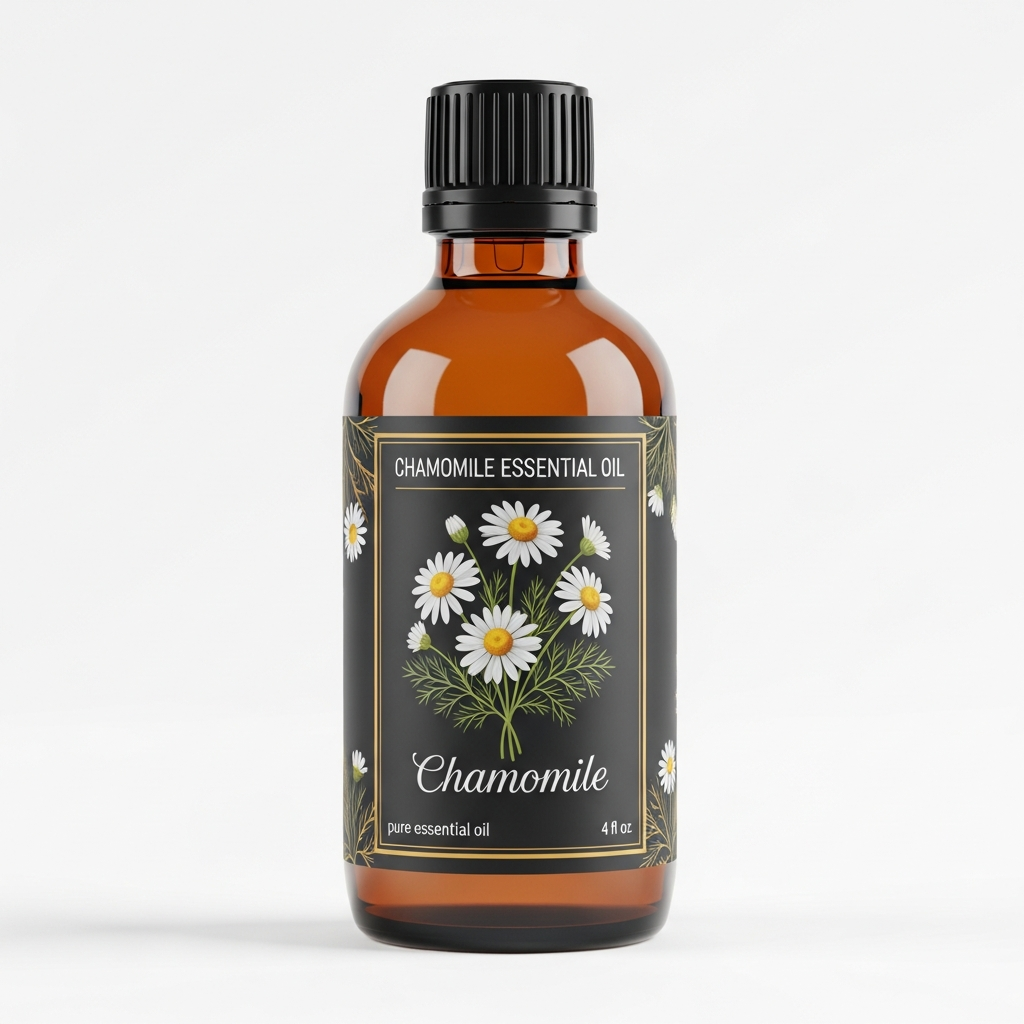
Chamomile Essential Oil
Our own Chamomile Essential Oil, in sizes from 0.5 oz to bulk.
From $22.99
Shop Now →Two Plants, One Common Name
Here's the detail that trips up a lot of shoppers: "chamomile" isn't one plant. Roman chamomile comes from Chamaemelum nobile, a low, spreading perennial in the daisy family that's also sometimes grown as a fragrant lawn substitute. German chamomile comes from Matricaria chamomilla (also called Matricaria recutita), an annual with taller, airier stems and smaller flowers. They're related, both members of the Asteraceae family, and both have small white-petaled, yellow-centered flowers that look similar enough at a glance to confuse a casual gardener.
But botanically they diverge quite a bit, and that divergence carries straight through into the essential oil. Different plant, different volatile compounds, different oil.
How They Look, Smell, and Feel Different
The most obvious distinction is color. German chamomile oil is famous for its deep blue, sometimes almost inky green-blue, tint. That color comes from chamazulene, a compound formed during steam distillation when a precursor molecule called matricin breaks down under heat. Roman chamomile doesn't produce chamazulene in meaningful amounts, so its oil stays a soft pale yellow to light gold.
Scent is the second giveaway. Roman chamomile smells sweeter, fruitier, almost apple-like with a soft herbal edge, which lines up with the plant's old nickname of "ground apple." German chamomile carries a warmer, deeper, slightly hay-like and herbaceous aroma with more weight to it. If you handed an experienced formulator a blind smell test, most could identify the two without looking at the color.
Texture and viscosity differ too, though more subtly. German chamomile oil tends to feel a touch thicker in the bottle, while Roman chamomile pours a bit more freely.
What's Actually Inside: A Chemistry Snapshot
The chemical makeup is where the real story lives, and it's the reason these two oils get used so differently in formulation.
| Compound Category | Roman Chamomile | German Chamomile |
|---|---|---|
| Dominant compounds | Esters (isobutyl angelate and related angelate esters), making up a large share of the oil | Sesquiterpenes and sesquiterpene oxides, including chamazulene and bisabolol |
| Signature molecule | Angelic acid esters (contribute the fruity, sweet note) | Chamazulene (responsible for the blue color) |
| Typical color | Pale yellow to light gold | Deep blue to blue-green |
| Common yield | Higher yield per batch of flowers, generally more available | Lower yield, more flowers needed per bottle |
Some research has looked at chamazulene and bisabolol, the two hallmark compounds in German chamomile, and their behavior when applied to skin in a diluted carrier. That research is ongoing and should be read as exploratory, not as a promise about what any bottle of oil will do for you personally. Roman chamomile's ester-heavy profile has a longer history of use in aromatic blending, largely because of how pleasant and rounded the scent reads once diluted.
Roman Chamomile: A Closer Look
Roman chamomile is the gentler-smelling, more approachable of the two for most noses. It's traditionally used in evening blends meant to accompany a wind-down routine, diffused alongside lavender or sweet orange for a soft, rounded aromatic base. In skincare formulation, it's often chosen for its lighter scent load, since a little goes further in a lotion or balm without overpowering other notes.
Because Roman chamomile flowers are more widely cultivated and the plant yields relatively well, the oil tends to sit at a friendlier price point than German chamomile. That makes it a practical starting point if you're experimenting with chamomile in blends for the first time and don't want to commit to the pricier option before you know how you like it.
German Chamomile: A Closer Look
German chamomile's claim to fame is that striking blue color and its bisabolol and chamazulene content, which is why you'll see it turn up in serious skincare formulation circles more than in casual diffuser blends. Formulators often reach for it in small percentages in facial oils and balms, both for its scent depth and for the aesthetic of that blue tint peeking through a finished product.
The tradeoff is cost and availability. German chamomile flowers yield less oil per harvest, and the extra distillation time needed to develop chamazulene adds to production costs. Expect to pay more per milliliter than you would for Roman chamomile, and expect smaller bottle sizes to be more common on the market.
A useful rule of thumb from formulators: reach for Roman chamomile when scent and gentleness are the priority, and reach for German chamomile when you want the blue tint and a more concentrated aromatic presence in a smaller amount.
Roman vs German Chamomile: Quick Reference
| Roman Chamomile | German Chamomile | |
|---|---|---|
| Botanical name | Chamaemelum nobile | Matricaria chamomilla / recutita |
| Color | Pale yellow to gold | Deep blue to blue-green |
| Scent | Sweet, fruity, apple-like | Warm, herbaceous, slightly hay-like |
| Price range | More affordable | Typically higher priced |
| Common use case | Diffuser blends, evening atmosphere, lighter-scented lotions | Small-percentage facial oils and balms, blue-tinted formulations |
| Availability | Widely available | Less common, smaller batch sizes typical |
Sourcing and Quality: What to Actually Check on the Label
Whichever type you lean toward, the label tells you more than the marketing copy does. Look for the full Latin botanical name printed on the bottle, not just "chamomile," since that's the only reliable way to know which plant, and which oil, you're actually getting. A reputable supplier will also list the country of origin and, ideally, batch-specific testing information such as a GC/MS report.
Color can be a rough quality signal for German chamomile specifically. If a bottle labeled German chamomile looks pale or greenish-yellow rather than blue, that's worth asking the seller about, since it may indicate a shorter distillation time, a different growing season, or a blend cut with something else. For Roman chamomile, color is less diagnostic since the pale gold tone is naturally variable batch to batch.
Price is a signal too, in both directions. German chamomile priced suspiciously close to Roman chamomile is worth a second look, given how different their yields are. And Roman chamomile priced at a steep premium doesn't necessarily mean better quality; ask what's driving the cost.
Which Chamomile Oil Should You Buy?
If you're new to chamomile oil types altogether and want one bottle to start experimenting with in a diffuser or a simple lotion, Roman chamomile is the more forgiving, more budget-friendly entry point. Its scent blends easily with almost anything else in a botanical collection, and it won't dominate a formulation the way a stronger note might.
If you're formulating something skin-focused where you want the visual and aromatic signature of that deep blue color, or you're specifically drawn to bisabolol and chamazulene as ingredients you want to research further, German chamomile is the one to invest in, even at the higher price point. Buy it in a smaller bottle first if cost is a concern; a little tends to go a long way once diluted.
Some formulators keep both on hand and blend small amounts of each together, layering Roman's sweetness against German's depth. There's no rule that says you have to pick a side permanently. Many people simply end up owning both once they've worked with each enough to know where it shines.
Using Either Oil Safely
Essential oils, chamomile included, are potent plant extracts and should always be diluted before touching skin. A common starting dilution for facial use is around 1 percent (roughly 6 drops of essential oil per ounce of carrier oil), and body applications are sometimes formulated slightly higher depending on the carrier and the rest of the blend. Always patch test on a small area of skin, such as the inner forearm, and wait 24 hours before wider use.
Chamomile is part of the Asteraceae/Compositae plant family, so anyone with a known sensitivity to ragweed, daisies, marigolds, or related plants should be especially cautious and patch test first. Keep any essential oil away from the eyes, and store bottles out of reach of children and pets. Pregnant or nursing individuals, and anyone managing an ongoing health situation, should check with a qualified healthcare provider before adding a new essential oil to a routine.
Neither Roman nor German chamomile oil is meant for internal use, and neither should be applied undiluted directly to skin. If you experience any redness, itching, or discomfort after a patch test, discontinue use and rinse the area with a carrier oil (not water, which can spread the oil) followed by mild soap and water.
The Bottom Line
Roman and German chamomile share a name and a family tree, but the oils that come out of them are their own distinct materials with different colors, different scents, and different chemistry. Roman chamomile offers a sweeter, more affordable, more versatile everyday option. German chamomile offers a deeper, more concentrated profile prized in skin-focused formulation, at a higher price that reflects its lower yield. Knowing which one you're reaching for, and why, is really the whole answer to which chamomile oil to buy: match the oil to the project, check the botanical name on the label, and buy from a supplier willing to tell you exactly what's in the bottle.