What Is Chamomile Essential Oil? A Complete Beginner's Guide
If you've ever brewed a cup of chamomile tea and wondered what happens when that same flower is distilled into a concentrated oil, you're asking the right question. Chamomile essential oil shows up in candles, diffuser blends, lotion bars, and bath products, but most bottles on a shelf don't explain what's actually inside them or why the oil smells and behaves so differently from the dried flowers in your tea cabinet. This guide breaks it down from the ground up: what chamomile essential oil is, where it comes from, the two main types you'll encounter while shopping, and how to bring it into your routine thoughtfully.
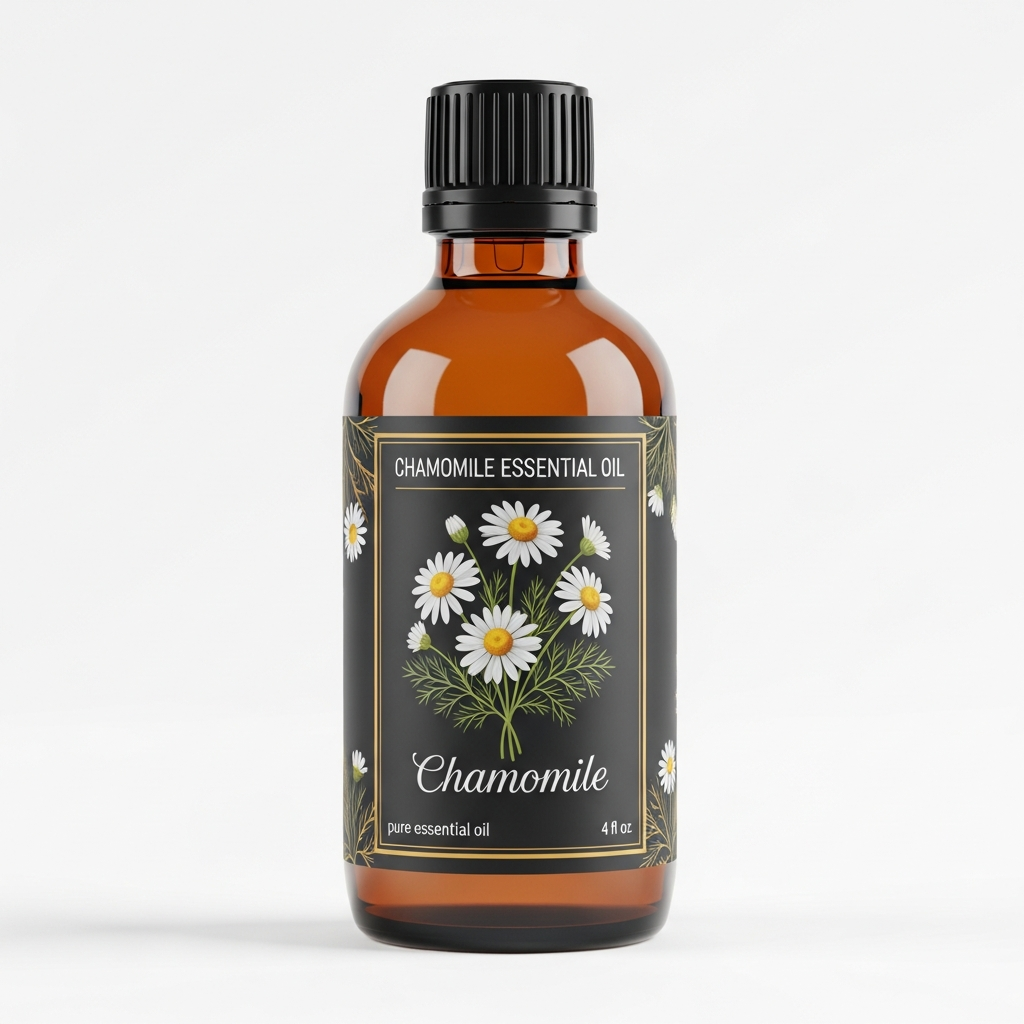
Chamomile Essential Oil
Our own Chamomile Essential Oil, in sizes from 0.5 oz to bulk.
From $29.38
Shop Now →Table of Contents
- What Is Chamomile Essential Oil, Exactly?
- Roman vs. German Chamomile: Understanding the Two Types
- How Chamomile Essential Oil Is Made
- What's Inside the Bottle: Key Compounds
- How People Use Chamomile Oil
- Using Chamomile Essential Oil Safely
- Quality and Sourcing: What to Look For
- Chamomile Oil vs. Chamomile Tea vs. Other Forms
- Frequently Asked Questions
Key Takeaways
- Chamomile essential oil is a concentrated aromatic extract of the chamomile flower, produced by steam distillation, not the same product as chamomile tea or dried flowers.
- There are two common types sold commercially, Roman and German chamomile, and they come from different plants with different scents, colors, and chemical profiles.
- German chamomile often has a deep blue color from a compound called chamazulene, while Roman chamomile is typically pale yellow with an apple-like scent.
- Essential oils are highly concentrated and should always be diluted in a carrier oil before touching skin.
- Chamomile oil is used cosmetically and aromatically. It is not a substitute for medical care, and a qualified healthcare provider should be consulted for any health concern.
What Is Chamomile Essential Oil, Exactly?
Chamomile essential oil is the aromatic compound extracted from the flowering heads of the chamomile plant, most often through steam distillation. Think of it this way: a chamomile flower contains hundreds of pounds of plant material's worth of scent packed into tiny oil-producing structures within the petals and disc florets. Distillation pulls those volatile aromatic molecules out and concentrates them into a small amount of oil. The result is a substance that smells intensely of chamomile, far more so than tea or a dried flower ever could, because it's stripped of the water, fiber, and bulk that make up the rest of the plant.
This is the core of what chamomile oil explained really means: it's not a stronger version of tea, and it's not something you'd drink or apply directly to skin without dilution. It's a different category of product entirely, closer in concentration and use to a botanical extract used in perfumery or skincare formulation than to an herbal infusion.
People new to essential oils sometimes assume "natural" means "gentle," but concentration matters more than origin. A few drops of chamomile essential oil represent a meaningful quantity of the plant's aromatic chemistry, which is part of why proper dilution and handling matter so much, something we'll cover in detail later in this guide.
Roman vs. German Chamomile: Understanding the Two Types
One of the most common points of confusion for beginners is that "chamomile essential oil" can refer to oil from two different plants. They share a name and a family resemblance in scent, but they are botanically distinct, and understanding the difference is central to any real chamomile essential oil guide.
Roman Chamomile (Chamaemelum nobile)
Roman chamomile is a low-growing perennial with a soft, fruity, apple-like aroma. Its essential oil is typically pale yellow to very light blue when freshly distilled, and it's often described as smelling rounder and sweeter than its German counterpart. Roman chamomile has a long history in European gardens, where it was sometimes grown as a fragrant lawn or path border because the flowers release scent when brushed against or stepped on lightly.
German Chamomile (Matricaria chamomilla, also called Matricaria recutita)
German chamomile is an annual plant, and its oil is famous for a deep, inky blue color that can range from teal to almost navy depending on the batch. That color comes from chamazulene, a compound formed during the steam distillation process itself rather than one present in the living flower. German chamomile's aroma tends to be warmer, slightly herbaceous, and less overtly sweet than Roman.
| Feature | Roman Chamomile | German Chamomile |
|---|---|---|
| Botanical name | Chamaemelum nobile | Matricaria chamomilla |
| Plant type | Perennial | Annual |
| Oil color | Pale yellow to light blue | Deep blue to teal |
| Scent profile | Sweet, fruity, apple-like | Warm, herbaceous, slightly earthy |
| Signature compound | Esters (give the fruity note) | Chamazulene (gives the blue color) |
When you're reading a product label, always check the Latin binomial rather than relying on the word "chamomile" alone. A bottle labeled simply "chamomile oil" without a species name is a signal to look elsewhere, since reputable suppliers identify exactly which plant produced the oil.
How Chamomile Essential Oil Is Made
Nearly all commercially available chamomile essential oil is produced through steam distillation. Here's the general process:
- Harvesting. Flower heads are collected at peak bloom, usually by hand or with specialized harvesting equipment, since timing affects the aromatic yield.
- Loading the still. The flowers are packed into a distillation chamber, and steam is passed through the plant material.
- Vaporization. The heat and steam cause the plant's volatile aromatic compounds to release from the oil-bearing structures in the flower and evaporate along with the steam.
- Condensation. The steam and vaporized oil travel through a cooling coil, where they condense back into liquid form.
- Separation. Because essential oil and water don't mix, the oil naturally separates and floats on top of (or in chamomile's case, sometimes mixes into) the resulting hydrosol, or flower water, and is collected separately.
It takes a substantial quantity of chamomile flowers to produce a relatively small amount of oil, which is part of why pure chamomile essential oil, particularly German chamomile, tends to carry a higher price point than many other common oils. Yield varies by growing conditions, harvest timing, and distillation technique, all of which is why sourcing and batch testing matter so much to quality-focused producers.
What's Inside the Bottle: Key Compounds
Chamomile essential oil is a complex mixture of dozens of naturally occurring compounds, not a single active ingredient. Some of the most studied constituents include:
- Chamazulene (German chamomile): responsible for the oil's characteristic blue color, formed during distillation from a precursor compound called matricin.
- Bisabolol (also called alpha-bisabolol): a compound found in both chamomile types that contributes to the oil's smooth texture and is of interest in cosmetic formulation research.
- Farnesene: a naturally occurring compound that contributes to the oil's herbaceous, green facets.
- Esters like isobutyl angelate and isoamyl angelate (Roman chamomile): these give Roman chamomile its distinctly sweet, fruity aroma.
Some research suggests these compounds interact with skin and scent receptors in ways that continue to interest cosmetic chemists and botanical researchers, but findings from laboratory or small-scale studies don't always translate directly to how a diluted oil performs in a home routine. It's worth approaching any claims about specific compounds with healthy curiosity rather than certainty, and treating ingredient lists as a starting point for further reading rather than a guarantee of any particular outcome.
How People Use Chamomile Oil
Because this guide focuses on cosmetic and aromatic use, here's an honest look at how chamomile essential oil typically shows up in everyday routines, along with some of its history.
Diffusing and Scenting a Space
Chamomile's warm, gentle aroma makes it a popular choice for diffuser blends meant to set an unhurried mood, particularly during evening wind-down routines or quiet weekend mornings. It's frequently paired with lavender, sweet orange, or sandalwood in blend recipes shared by hobbyist perfumers and candle makers.
Skincare and Body Care Formulation
Diluted chamomile oil appears in facial serums, body oils, bath soaks, and lotion bars, generally chosen for its scent and its long history in botanical skincare traditions. Formulators sometimes reach for German chamomile specifically for its color and traditional folk use in calming skin-focused blends, though anyone with sensitive skin should always patch test first.
Traditional and Historical Use
Chamomile has a documented history stretching back to ancient Egypt, Greece, and Rome, where the dried flower was traditionally used in infusions and applied topically as part of folk practice. It's worth noting that historical use of the flower itself, often as a tea or poultice, is a different tradition from the modern practice of using a distilled essential oil, which is a more recent development tied to the rise of steam distillation technology.
Anecdotal evidence and long-standing folk tradition are interesting context, but they aren't a substitute for guidance from a qualified healthcare provider, especially if you're managing an ongoing health concern.
Using Chamomile Essential Oil Safely
Essential oils, chamomile included, are potent and should be handled with care. Keep these guidelines in mind:
- Always dilute before skin contact. A common home dilution range for body use is 1 to 2 percent, which works out to roughly 6 to 12 drops of essential oil per ounce of carrier oil (such as jojoba, sweet almond, or fractionated coconut oil). Facial applications typically call for even lower concentrations.
- Patch test first. Apply a small diluted amount to the inside of your forearm and wait 24 to 48 hours before wider use, checking for any redness, itching, or irritation.
- Never apply undiluted oil ("neat") to skin, and never ingest essential oils.
- Chamomile is part of the ragweed and daisy plant family (Asteraceae). Anyone with a known sensitivity to ragweed, marigolds, daisies, or related plants should be especially cautious and consider consulting a healthcare provider before use.
- Keep away from eyes and mucous membranes.
- Store safely out of reach of children and pets, in a cool, dark place with the cap tightly sealed.
- Pregnant or nursing individuals, and anyone with an existing health condition, should speak with a qualified healthcare provider before introducing any new essential oil into their routine.
- This oil is intended for cosmetic and aromatic use only. It is not intended to diagnose, and no claims here should be read as medical advice.
Quality and Sourcing: What to Look For
Not all bottles labeled "chamomile oil" contain the same thing. Here's what to check before buying:
- Botanical name on the label. Look for Chamaemelum nobile (Roman) or Matricaria chamomilla / Matricaria recutita (German), not just the word "chamomile."
- Purity claims. Reputable sellers state clearly whether the oil is 100 percent pure and undiluted, or already blended into a carrier.
- Batch testing (GC/MS reports). Gas chromatography-mass spectrometry testing verifies the actual chemical makeup of a batch. Transparent suppliers make these reports available on request.
- Country of origin and growing practices. Egypt, Croatia, Hungary, and England are well-known growing regions for German chamomile, while Roman chamomile is often associated with France and England. Knowing the origin helps you understand what you're paying for.
- Realistic pricing. Given how much plant material it takes to produce a small amount of oil, especially German chamomile, prices that seem too low relative to other oils on the market are worth a second look.
- Packaging. Pure essential oils degrade with light and air exposure, so look for dark amber or cobalt glass bottles rather than clear plastic.
Chamomile Oil vs. Chamomile Tea vs. Other Forms
Because chamomile appears in so many product categories, it helps to see the differences side by side.
| Form | What It Is | Typical Use |
|---|---|---|
| Essential oil | Steam-distilled, highly concentrated aromatic extract | Diffusing, diluted topical use in skincare and body care |
| Dried flowers / tea | Whole or crushed flower heads | Infused as a warm beverage |
| Hydrosol (flower water) | Byproduct of distillation, much lower concentration than essential oil | Facial mists, gentle skincare toners |
| Infused oil | Flowers steeped in a carrier oil (no distillation) | Body oils, balms, ready-to-use topical blends |
| Extract or tincture | Flowers steeped in alcohol or glycerin | Cosmetic formulation, flavoring |
A frequent point of confusion: infused chamomile oil (flowers steeped in a carrier like olive or sunflower oil) is a completely different product from steam-distilled chamomile essential oil. Infused oil is much lower in concentration and is generally safe to apply without further dilution, while true essential oil should always be diluted first. Reading the label carefully will tell you which one you're holding.
Frequently Asked Questions
Is chamomile essential oil the same as chamomile tea?
No. Tea is made from dried flowers steeped directly in hot water. Essential oil is a distilled, highly concentrated extract meant for diffusing or diluted topical use, not for drinking.
Which is better, Roman or German chamomile oil?
Neither is objectively better. They differ in scent, color, and chemical profile, so the right choice depends on what you're formulating or the aroma you prefer. Roman leans sweet and fruity; German leans warm and herbaceous with that signature blue hue.
Can I apply chamomile essential oil directly to my skin?
No. It should always be diluted in a carrier oil first, and a patch test is recommended before broader use, particularly since chamomile belongs to a plant family associated with certain sensitivities in some people.
How should I store chamomile essential oil?
In a dark glass bottle, tightly capped, away from direct sunlight and heat, and out of reach of children and pets. Properly stored, most essential oils maintain good quality for one to three years.
Is chamomile essential oil safe during pregnancy?
Anyone who is pregnant, nursing, or managing a health condition should consult a qualified healthcare provider before using any essential oil, chamomile included.
Chamomile essential oil rewards a little homework. Once you understand the difference between Roman and German varieties, know how the oil is actually made, and follow sensible dilution and storage practices, you're equipped to choose a quality bottle and use it thoughtfully in your own routine.