
Bisabolol in Chamomile Oil: The Compound Behind Its Soft Aroma
Open a bottle of good chamomile essential oil and the first thing you notice is how gentle it smells. There's a soft, apple-like sweetness up front, a faint hay note underneath, and none of the sharp, medicinal edge you'd expect from a plant that grows wild along roadsides and in neglected gardens. Most of that softness traces back to one molecule: bisabolol. It's not the only compound in the oil, and it isn't even always the most abundant one, but it does more to shape how the oil smells, feels on skin, and performs in a formulation than almost anything else chamomile produces. This is a chemistry-focused look at what bisabolol actually is, what the research literature says about it, where it fits alongside chamomile's other compounds, and how to judge whether a bottle on a shelf actually contains a meaningful amount of it.
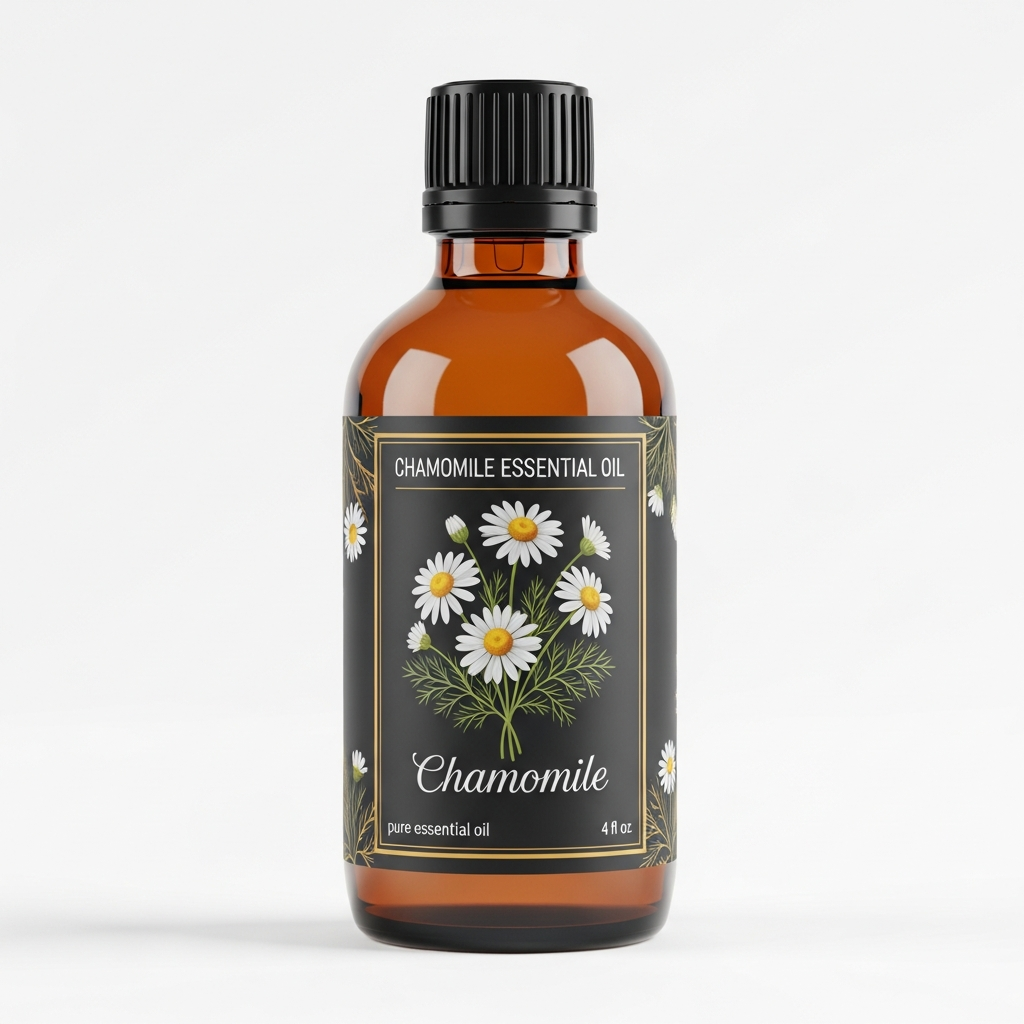
Chamomile Essential Oil
Our own Chamomile Essential Oil, in sizes from 0.5 oz to bulk.
From $29.38
Shop Now →
What Is Bisabolol, Exactly?
Bisabolol (chemists usually mean alpha-bisabolol unless they specify otherwise) is a sesquiterpene alcohol, a class of naturally occurring plant compounds built from three isoprene units with an alcohol group attached. It's a colorless to pale yellow oily liquid on its own, with a mild, slightly sweet, floral odor that's easy to miss next to chamomile's other aromatic compounds. In the plant, bisabolol accumulates mostly in the essential oil glands of the flower heads, particularly in German chamomile (Matricaria chamomilla), though Roman chamomile (Chamaemelum nobile) and a scattering of other Asteraceae family plants produce it too, usually in smaller amounts and different oxide ratios.
Chemically, alpha-bisabolol exists as several stereoisomers, meaning the atoms are connected the same way but arranged differently in three-dimensional space. Natural chamomile-derived bisabolol is typically levorotatory, labeled (-)-alpha-bisabolol, which is the form most associated with the gentle character prized in cosmetic formulation. Synthetic bisabolol, often derived from other terpene sources for cost reasons, can be a racemic mixture of both mirror-image forms. The two aren't identical in how they behave, which is one reason ingredient lists on premium chamomile products sometimes specify "natural" or "(-)-alpha-bisabolol" rather than just "bisabolol."
The Chemical Makeup of Chamomile Essential Oil
Bisabolol never shows up alone. Chamomile oil is a mixture of dozens of compounds, and the exact ratio shifts with the chemotype of the plant, the growing conditions, and the distillation method. Gas chromatography-mass spectrometry (GC-MS) analysis, the standard lab method for breaking an essential oil down into its component molecules, typically finds the following as the major players in German chamomile oil:
| Compound | Typical Range in German Chamomile Oil | Contribution |
|---|---|---|
| Alpha-bisabolol / bisabolol oxides A and B | Roughly 10% to 50%, highly variable by chemotype | Soft, mild aromatic character; primary cosmetic-science interest |
| Chamazulene | Roughly 1% to 15% | Deep blue color; forms during steam distillation from a colorless precursor |
| En-yn-dicycloether (spiroether) | Roughly 5% to 30% | Contributes to the oil's characteristic body and mouthfeel in blends |
| Farnesene | Small to moderate amounts | Green, slightly woody top note |
Roman chamomile oil is a different chemical animal almost entirely, dominated by esters like isobutyl angelate rather than bisabolol or chamazulene, which is why the two chamomiles smell and behave so differently even though they share a common name and a resemblance in the flower bed.
Two bottles labeled "German chamomile essential oil" can differ in bisabolol content by a factor of four or more, simply because the plants were grown from different chemotype seed stock. The label rarely says which chemotype went into the bottle, which is one reason lab documentation matters more with chamomile than with many other oils.
Alpha-Bisabolol Versus Chamomile's Other Signature Compounds
It's worth separating bisabolol from chamazulene, since the two get confused constantly in casual writing about chamomile. Chamazulene is the compound responsible for German chamomile oil's striking deep blue to greenish-blue color, and it forms during steam distillation as heat converts a colorless precursor called matricin into chamazulene. Bisabolol is a separate molecule that exists in the fresh plant material before distillation ever begins, and it doesn't contribute meaningfully to color at all. A pale, nearly colorless chamomile oil can still carry a substantial bisabolol percentage; a deep blue one can be comparatively low in it. Color alone tells you almost nothing about bisabolol content, a point worth keeping in mind if you're comparing bottles by eye.

What Research Suggests About Bisabolol
Bisabolol has been a subject of laboratory and cosmetic-science interest for decades, and it's one of the more studied sesquiterpenes in the personal care world. It's worth being precise about what that research does and doesn't establish. Laboratory studies on isolated cells, animal models, and formulated cosmetic products are not the same as clinical proof of an outcome in humans, and reputable summaries of this research are careful to frame findings as observations rather than guarantees.
With that framing in mind, here's a plain-language summary of what the published literature on bisabolol tends to explore:
- Skin feel and mildness. Cosmetic chemistry literature has long noted that formulations containing natural (-)-alpha-bisabolol tend to test as mild on skin panels compared to many other fragrance and active ingredients, which is a major reason it shows up in products marketed toward sensitive skin.
- Skin barrier and comfort research. Some laboratory work has looked at how bisabolol interacts with skin cells and surface lipids, with researchers reporting observations related to visible redness and general skin comfort in formulated test products. This is an active area of cosmetic ingredient research rather than a settled conclusion, and results vary by concentration, formulation, and study design.
- Penetration and delivery studies. Because bisabolol is a small, relatively lipophilic molecule, some formulation research has looked at its ability to help other actives move through the outer skin layers when blended into a product, which is part of why it shows up as a functional ingredient (not just a fragrance note) in some skincare formulas.
- Fragrance and stability research. Perfumery and cosmetic stability literature discusses bisabolol's low odor intensity and relative resistance to oxidation compared to some other sesquiterpenes, which is part of why chamomile oils that are bisabolol-rich tend to age a bit more gracefully in the bottle than oils dominated by more volatile top notes.
None of this amounts to a claim that chamomile oil or bisabolol addresses any medical condition, and reputable sourcing on this ingredient doesn't frame it that way. The consistent thread across the research is narrower and more modest: bisabolol shows up again and again in mildness and formulation studies, which lines up with why chamomile has such a long track record in gentle skincare and fragrance rather than in more aggressive cosmetic actives.
Safety Profile and Who Should Be Cautious
Bisabolol and chamomile oil as a whole have a favorable safety reputation within cosmetic ingredient literature, but "favorable" doesn't mean "no precautions needed." A few things are worth knowing before using any chamomile-derived product on skin or around the home.
Dilution and Patch Testing
Essential oils, chamomile included, are concentrated botanical extracts and should never be applied to skin undiluted. A common starting point for facial applications is a 1% dilution (roughly 6 drops of essential oil per ounce of carrier oil), with body applications tolerating slightly higher concentrations depending on the carrier and use case. Before using any new chamomile product on a larger area of skin, apply a small diluted amount to the inner forearm and wait 24 to 48 hours, watching for any visible redness, itching, or discomfort at the site. This is standard practice for any essential oil, not a chamomile-specific quirk, but chamomile's reputation for mildness makes it easy to skip this step, which isn't a good idea.
Botanical Family Sensitivity
Chamomile belongs to the Asteraceae (daisy) family, which also includes ragweed, marigold, chrysanthemum, and yarrow. People who know they react to plants in this family should be more cautious with chamomile products and patch test carefully before broader use, since cross-sensitivity within a plant family is a recognized pattern in botanical dermatology even when the specific chamomile compound involved hasn't been identified.
Pregnancy, Breastfeeding, and Existing Health Considerations
Anyone who is pregnant, breastfeeding, managing an existing health condition, or currently taking medication should talk with a qualified healthcare provider before adding essential oils, including chamomile, to a routine. This is general guidance that applies across the essential oil category, not a signal that chamomile carries an unusual risk relative to other oils, but it's worth taking seriously rather than skipping.
Photosensitivity and Oxidation
Chamomile oil isn't considered a phototoxic oil in the way citrus peel oils are, but like most essential oils rich in unsaturated compounds, it can oxidize over time when exposed to heat, light, and air. Oxidized essential oils are more likely to trigger skin reactions than fresh oil, which is part of why proper storage (a cool, dark place, cap tightened, ideally in an amber glass bottle) matters as much for safety as it does for scent quality.
Sourcing and Quality: What Actually Determines Bisabolol Content
Because bisabolol content varies so widely between chemotypes and growing conditions, sourcing decisions matter more with chamomile than with many other essential oils. A few factors drive real differences in what ends up in the bottle:
- Chemotype. German chamomile has been bred and selected into several distinct chemotypes over the decades, some bred for higher bisabolol content, others for higher chamazulene or spiroether content. Growers and distillers who track chemotype produce a more consistent, predictable oil year over year.
- Growing region and conditions. Soil composition, rainfall, and harvest timing all shift the plant's essential oil chemistry, sometimes significantly. This is part of why oils from established growing regions with a long chamomile cultivation history tend to show more batch-to-batch consistency.
- Distillation method and timing. Steam distillation temperature and duration affect how much matricin converts to chamazulene and how well the more delicate bisabolol fraction is preserved. Over-distillation can degrade some of the oil's more volatile, desirable compounds.
- Harvest stage. Chamomile flowers harvested at peak bloom generally yield oil with a different, often richer chemical profile than flowers harvested too early or too late in the flowering cycle.
Reading a Lab Report Like It Matters (Because It Does)
The only reliable way to know what's actually in a bottle of chamomile oil is a GC-MS report from an independent lab. Reputable suppliers make this documentation available, either alongside the product listing or on request, and it's worth learning to read the basics rather than skimming past it.
A useful GC-MS report will list the individual compounds detected (bisabolol and its oxides, chamazulene, farnesene, the spiroether fraction, and so on) along with the percentage of each. Look specifically for a bisabolol figure broken out by name rather than lumped into a vague "sesquiterpenes" category, and compare it against the typical range for the chemotype claimed on the label. A German chamomile oil claiming to be bisabolol-rich but showing a GC-MS result under 5% bisabolol content is a mismatch worth asking the seller about directly. Batch numbers matter too: a lab report should correspond to the specific batch or lot in your bottle, not a generic report the brand reuses across every harvest.
Using Chamomile Oil Thoughtfully
None of this chemistry needs to be memorized to enjoy chamomile oil well. In practice, the takeaways are simple. Choose a supplier that publishes batch-specific GC-MS testing. Dilute properly before any skin contact and patch test first, especially if you have a known sensitivity to plants in the daisy family. Store the oil away from heat and light to slow oxidation. And treat marketing language about bisabolol content with a healthy dose of skepticism unless a lab report backs it up, since "bisabolol-rich" is an easy phrase to print on a label and a harder one to verify without documentation.
For most people who enjoy chamomile in a diffuser blend, a diluted facial oil, or a homemade linen spray, understanding bisabolol mostly explains something you already noticed by nose: why this particular oil feels rounder and gentler than its reputation as a botanical classic might suggest. The chemistry is doing quiet work behind that softness, and it's the kind of detail that rewards a closer look without needing to be oversold.