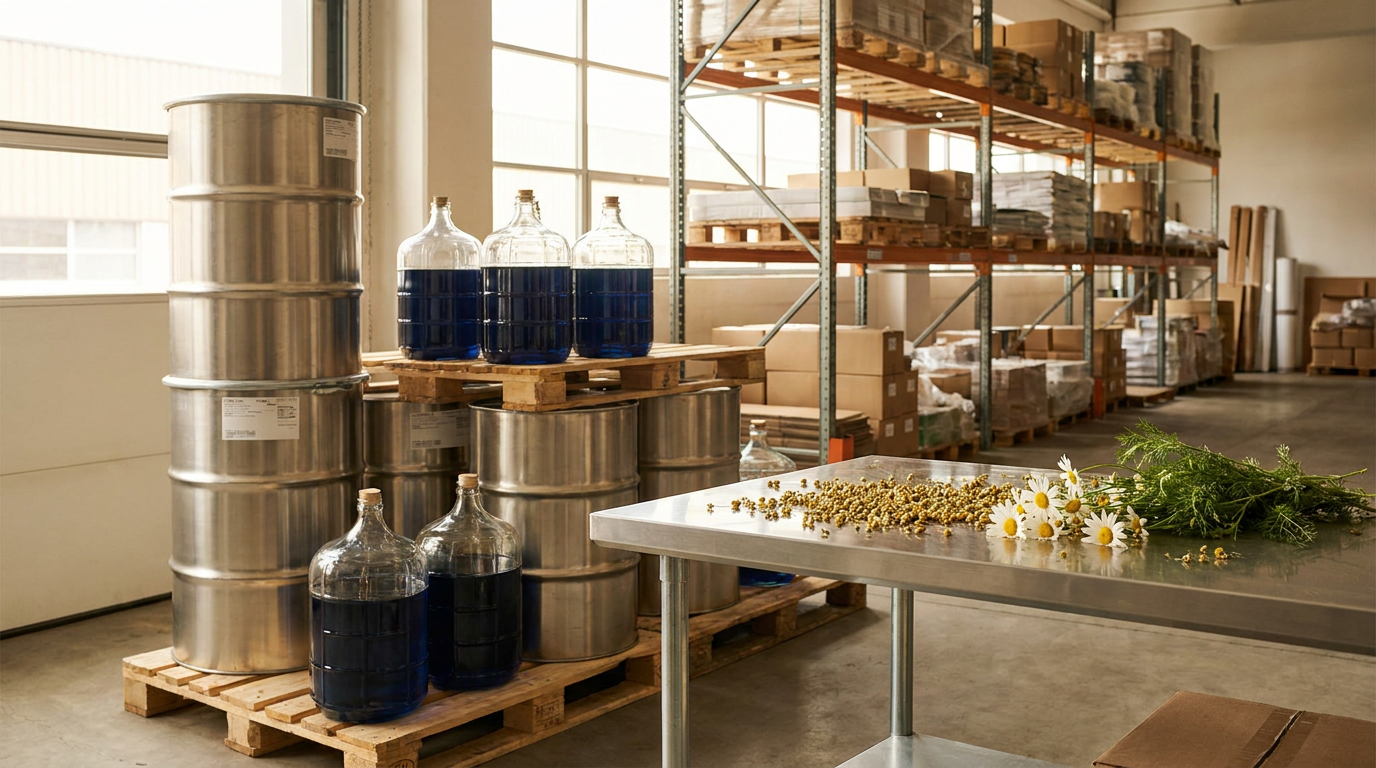
Chamomile essential oil moves through wholesale channels in far larger volumes than a nightstand bottle suggests. This guide covers what the trade actually sells under the chamomile name, who buys it in bulk, and how to size an order against a real production plan.
Check current bulk pricing on our /bulk/ page or reach out directly with your production volume.
True German chamomile oil is steam-distilled from the daisy-like blossoms of Matricaria chamomilla, and the distillation itself is what gives the oil its signature: a deep blue color from naturally occurring chamazulene, formed as the plant's compounds convert under steam and heat. Buyers new to the category often assume the color is added; it is not, and the mechanism behind it is worth understanding before placing a first order, as covered in our breakdown of the blue color and our German chamomile overview.
The aroma sits apart from most florals as well: sweet, herbaceous, and gently fruity, often compared to fresh apples and hay, and rounder and softer than the sharper floral notes buyers may expect from a wholesale essential oil order. A formulator's shorthand for this profile, along with the bisabolol chemistry that contributes to it, is laid out in our bisabolol explainer.
New buyers researching the category for the first time do well to start with our complete guide to chamomile essential oil, which lays the groundwork this page builds on for sourcing at scale.
| Sold as | What it actually is | How to recognize it |
|---|---|---|
| German Chamomile Essential Oil | Steam-distilled Matricaria chamomilla, the true blue variety this store ships | Deep inky blue color from chamazulene and a sweet, apple-like aroma; see our deep blue oil guide |
| Roman Chamomile Essential Oil | A different plant entirely, Chamaemelum nobile, with its own color and aroma character | Pale rather than blue, with a fruitier, less rounded scent; compared directly in our Roman versus German comparison |
| Chamomile Fragrance Oil | A synthetic or blended reconstruction built to approximate the scent, not a distilled essential oil | No chazmazulene blue, no batch distillation lineage, and usually a lower price point; the distinction is covered in our fragrance oil comparison |
| Chamomile Hydrosol | The aromatic water byproduct of distillation, sold alongside the oil but chemically distinct from it | Mostly water with only trace oil content, priced and packaged nothing like the essential oil itself; see our oil versus hydrosol breakdown |
Color is the fastest field check a buyer has, but it is not the only one. A listing can run pale-to-medium blue and still be genuine German chamomile depending on the distillation lot, so color alone should prompt a question, not an automatic rejection; pair it with a batch-specific certificate before drawing a conclusion.
The sourcing trap in this category is assuming any blue liquid sold as chamomile is chazmazulene-rich German chamomile at full strength. Diluted or blended batches can be tinted to approximate the color without the underlying chemistry. Insist on a certificate tied to the specific lot you are buying, not a generic spec sheet reused across listings.
Wholesale demand for chamomile essential oil concentrates in a handful of production categories rather than spreading evenly across the aromatherapy trade. Candle makers and home fragrance brands buy it as a fragrance-load component; soap makers fold it into cold process batches for its scent and mild color contribution; and cosmetic formulators building facial oils, balms, and haircare lines value its gentle, rounded profile in leave-on and rinse-out products.
A smaller but steady share of wholesale buyers are gift set assemblers and private label brands repackaging the oil into finished consumer goods, and bath and body companies blending it into salts and massage oil bases. Each of these buyer types is documented in more depth in our own applications below, and the everyday-use case that ties them together is covered in our everyday use idea list.
Before placing a wholesale order, run the listing through the same checks a formulator or production buyer would.
Documentation is the difference between a one-time purchase and a repeatable supply relationship. Always ask for a certificate tied to the specific batch you are buying, not a boilerplate spec sheet reused across every listing a supplier carries.
This oil ships from 0.5 oz bottles up through 400 lbs drums, and the right starting point depends on where a buyer sits in their own production cycle rather than on price per ounce alone. Our own bottle size buying guide walks through the same logic for a single buyer, which scales directly to a wholesale order.
Most production buyers move through a predictable sequence: a small bottle to confirm aroma and performance, a mid-size bottle to run a pilot batch, then a pound-tier size once the formula is locked. Skipping straight to a large drum without that sequence is the most common wholesale mistake this category sees.
Order a 4 oz or 8 oz bottle first and run it against your own aroma and performance expectations before committing to a larger volume.
Check the batch number on the bottle against the published certificate of analysis to confirm the sample you tested matches what a bulk order would ship.
Place a 5 lbs or 25 lbs order sized to your actual production run rather than rounding up for a discount that outpaces your usage.
Once a formula is locked, set a standing reorder at 25 lbs or 400 lbs and use direct contact to lock in consistent batch timing.
The applications below cover the real wholesale buyer categories this oil actually serves, each with its own sourcing checklist and sizing pattern.
Diffuser blend brands and home fragrance lines sourcing chamomile for its soft, apple-like base note.
Read the sourcing guide →Candle makers evaluating chamomile as a fragrance load component in soy and wax blends.
Read the sourcing guide →Soap makers folding chamomile into cold process batches for scent and mild color character.
Read the sourcing guide →Haircare brands formulating shampoos, conditioners, and scalp oils around chamomile's gentle profile.
Read the sourcing guide →Bath and body brands blending chamomile into bath salts, massage oils, and soaking rituals.
Read the sourcing guide →Cosmetic formulators building facial oils and balms around chamomile's gentle, rounded profile.
Read the sourcing guide →Gift set brands assembling chamomile into seasonal boxes and self-care bundles.
Read the sourcing guide →See wholesale pricing and packaging options on /bulk/, or start with a sample from /shop/.
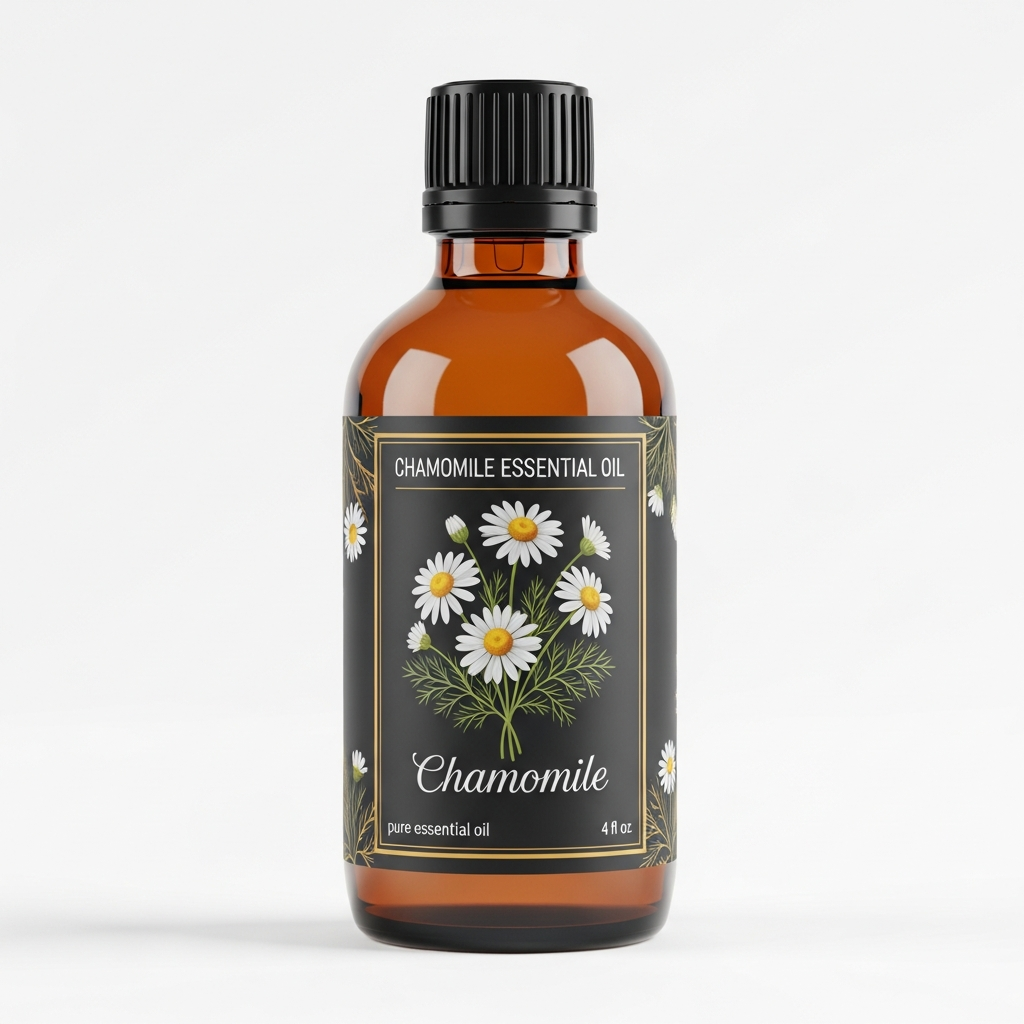
Our own Chamomile Essential Oil, in sizes from 0.5 oz to bulk.
From $22.99
Shop Now →