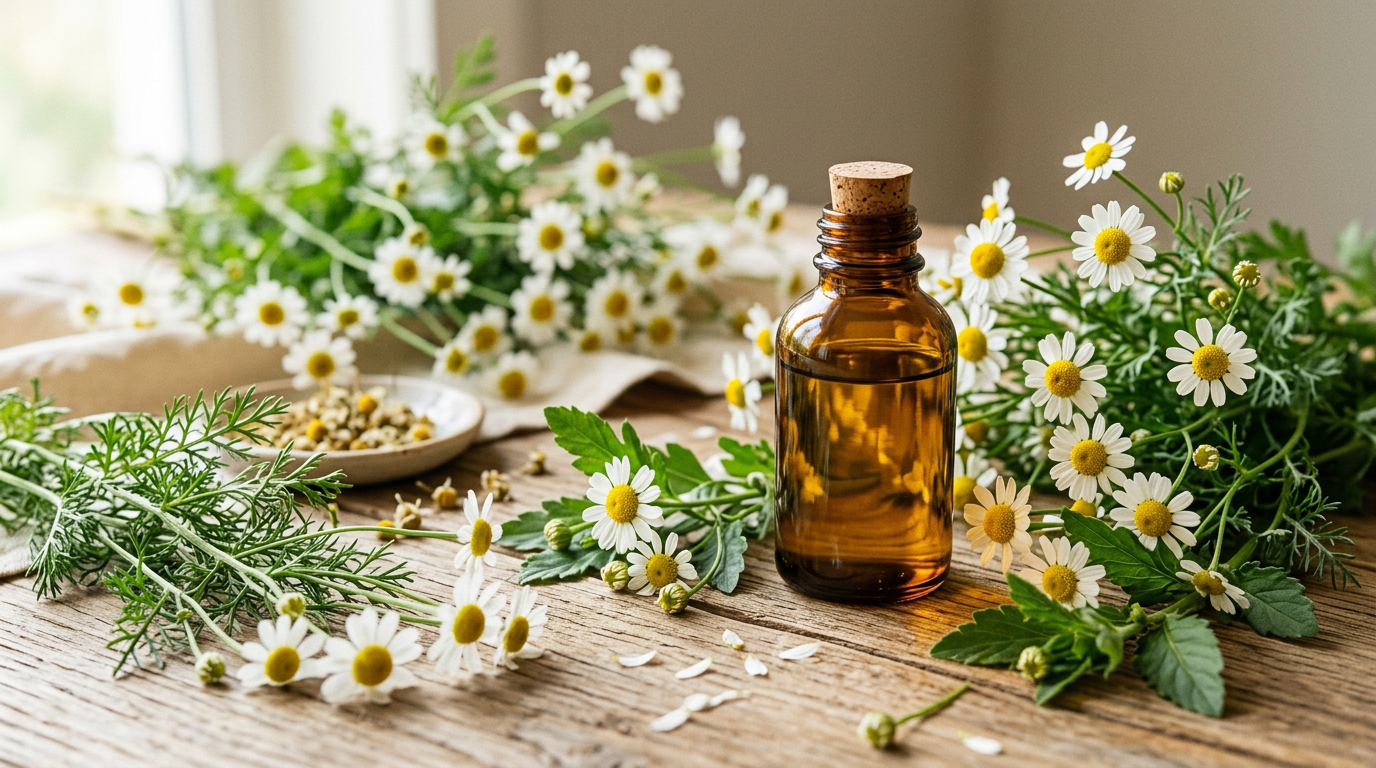
Chamomile Essential Oil Myths: Tea Bags, Color, and Potency
Chamomile has one of the friendliest reputations in the botanical world, and that friendliness has quietly generated a pile of misinformation. Because the plant shows up in tea tins, lotion labels, and apothecary shelves alike, people tend to assume that every chamomile product works the same way, at the same strength, for the same purpose. It doesn't. Chamomile essential oil myths persist because chamomile itself is genuinely confusing: there are two different plants sold under the same common name, a wide range of extraction methods, and a chemistry lesson hiding in that famous blue color that almost nobody outside a lab actually understands.
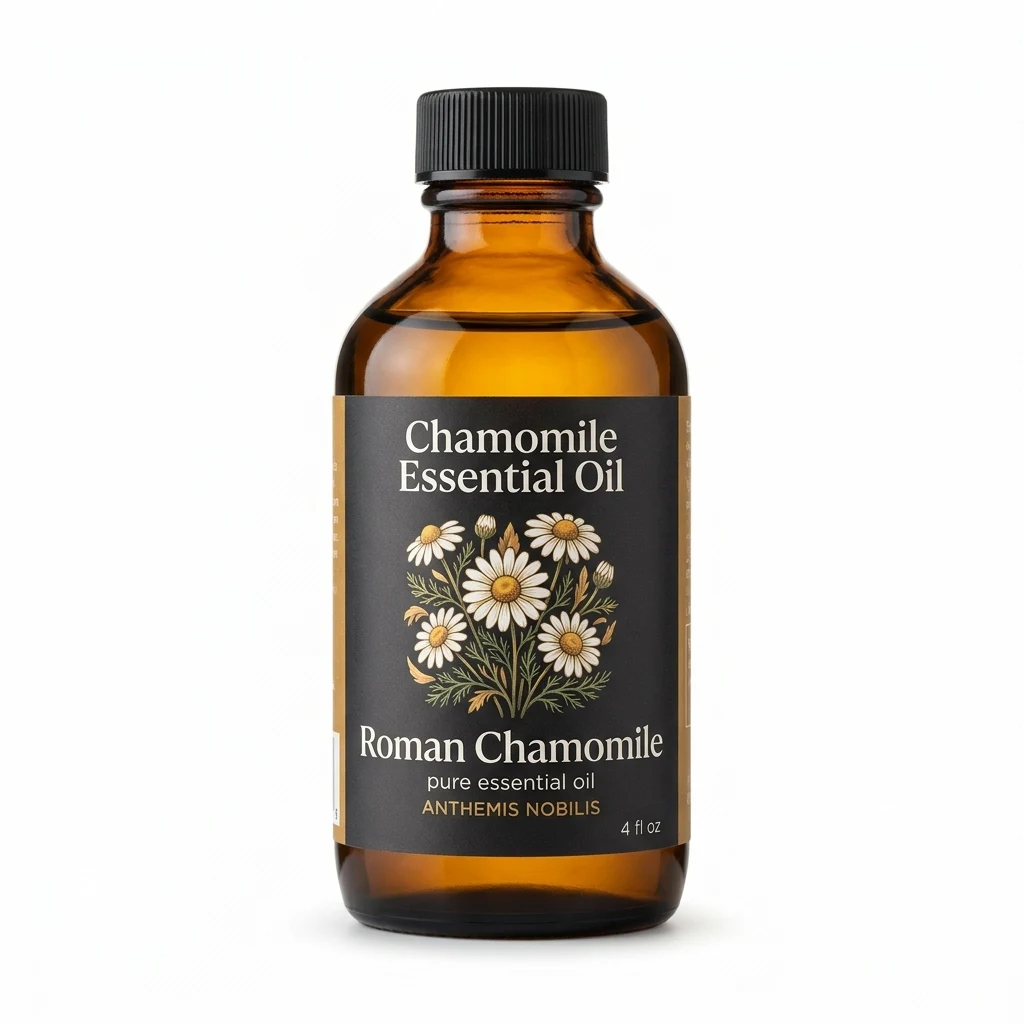
Roman Chamomile Essential Oil
Our own Roman Chamomile Essential Oil, in sizes from 0.5 oz to bulk.
From $32.99
Shop Now →This piece walks through the claims we hear most often from customers and readers, checks each one against what research suggests and what evidence indicates, and explains why the myth took hold in the first place. None of this is medical guidance. Essential oils are cosmetic and aromatic products, and anyone with a specific health question should talk to a qualified healthcare provider rather than a product label.
Myth 1: Chamomile Essential Oil Is Just Strong Chamomile Tea
This is probably the single most common misconception we hear, and the question behind it, is chamomile essential oil the same as chamomile tea, deserves a straight answer: no, they are not interchangeable, and the difference isn't just a matter of degree.
Chamomile tea is an infusion. Dried flowers steep in hot water, and water-soluble compounds migrate into the liquid. Chamomile essential oil is produced by steam distillation, a process that pulls the volatile, fat-soluble aromatic compounds out of the plant material and concentrates them into a small amount of oil. The two extraction methods pull out overlapping but genuinely different sets of plant compounds. Tea captures things like apigenin and other water-soluble flavonoids. Steam distillation captures the volatile oil fraction, including chamazulene, bisabolol, and a cluster of terpenes that never made it into your teacup at all.
The concentration gap is enormous. It typically takes several pounds of dried chamomile flowers to yield a single ounce of essential oil. That ratio is why the oil is meant for diffusers, diluted topical blends, and small-batch cosmetic formulations, never for drinking, and never swapped into a recipe or routine that calls for tea. Where this myth comes from makes sense on the surface: same plant, same gentle floral-apple scent, same general association with a calm evening ritual. But "same plant" is where the similarity ends. Treating the oil as a more concentrated version of the tea, rather than a chemically distinct product, is where people get into trouble with dilution and dosing.
Myth 2: Bluer Oil Means a More Potent or Higher-Quality Bottle
Walk into any conversation about chamomile oil and the chamazulene color myth comes up within minutes. The claim goes something like this: the deeper and more vividly blue the oil, the more powerful and higher-grade it must be. It's an understandable assumption, since the color is so visually striking, but it oversimplifies real, interesting plant chemistry.
Chamazulene isn't actually present in the living chamomile plant. It forms during steam distillation, when heat converts a colorless precursor compound called matricin into chamazulene. The resulting color ranges from pale green through deep indigo blue depending on several variables that have nothing to do with how "good" the oil is:
- Species matters most. German chamomile (Matricaria recutita) is rich in matricin and typically distills into a deep blue oil. Roman chamomile (Chamaemelum nobile) contains very little matricin and produces a pale yellow to light blue oil, sometimes almost clear. Comparing the two on color alone is comparing apples to a completely different fruit.
- Harvest timing shifts matricin levels. Flowers picked at different points in their bloom cycle carry different concentrations of the precursor compound, which shows up directly in the finished oil's shade.
- Distillation conditions change the outcome. Temperature, pressure, and distillation duration all affect how efficiently matricin converts to chamazulene. A rushed or low-heat distillation run can leave a German chamomile batch lighter than expected, even though the raw material was identical to a deeper-colored batch.
- Storage and light exposure fade color over time. Chamazulene is not a particularly stable compound. A bottle that has spent a year on a sunlit shelf will often look paler than a fresh one, regardless of what was originally in it.
So a very pale Roman chamomile oil is not an inferior version of a deep blue German chamomile oil. They're different plants with different chemical profiles, different traditional uses in blending, and different price points. Research suggests chamazulene and related sesquiterpenes are worth noting for formulation purposes, but color depth by itself tells you almost nothing definitive about quality within a single species, and it tells you even less when comparing across species. If a seller is using "the bluest oil we've ever seen" as their main selling point, ask what species is in the bottle and how old the batch is before assuming darker automatically means better.
Myth 3: A Stronger Scent Always Signals a More Potent Oil
The chamomile oil potency myth extends beyond color into smell. Some buyers assume that if a bottle has a sharper, more assertive aroma, it must be more concentrated or more effective than a milder-smelling one. Aroma intensity and chemical concentration are related, but they are not the same measurement, and relying on your nose alone can lead you astray.
A few things complicate the "stronger smell equals stronger oil" assumption:
- Roman and German chamomile smell noticeably different from each other. Roman chamomile tends to have a brighter, sweeter, apple-like top note. German chamomile often reads as deeper, warmer, and slightly herbaceous. Neither profile is inherently more concentrated; they're just different chemotypes.
- Oxidation changes scent over time, and not always in a way that signals lower quality. An oil that has been open and exposed to air for months may smell sharper or more medicinal in an unpleasant way, which is actually a sign of degradation rather than potency.
- Carrier dilution ratios in pre-blended products vary widely between brands. A 2 percent dilution blend will smell fainter than a undiluted bottle of pure oil, even if both started from identical raw material.
- Individual scent sensitivity differs from person to person, so two people smelling the same bottle can walk away with different impressions of its strength.
- A GC/MS (gas chromatography-mass spectrometry) report from the supplier is the closest thing to an objective potency check, since it lists actual compound percentages rather than relying on a nose test.
Evidence indicates that a well-sourced, properly stored oil from either chamomile species will carry a recognizable, pleasant aroma without needing to be overpowering. If a bottle smells unusually harsh, sour, or almost solvent-like, that's more often a red flag for oxidation or adulteration than a sign of extra strength.
Myth 4: Roman and German Chamomile Are Just Two Names for the Same Oil
Because both plants share the common name "chamomile," a lot of shoppers assume the botanical distinction is marketing noise. It isn't. Roman chamomile and German chamomile are different genera entirely, not just different varieties of the same species, and that taxonomic gap shows up in their chemistry, their scent, and their traditional uses in blending.
German chamomile, as covered above, tends to carry more chamazulene and bisabolol, giving it that signature blue-to-green color and a warmer aroma. Roman chamomile is prized in blending for its lighter, applelike top note and its pale coloring. Perfumers and formulators choose between the two based on the character they want in a finished blend, not because one is simply a stronger or weaker version of the other. Mixing up the two in a recipe that specifies one or the other can noticeably change the final scent profile and the overall balance of a blend, even though the label on both bottles says "chamomile."
Myth 5: Because It's Natural, You Don't Need to Dilute It
This last one isn't really about chamomile specifically, it's a myth that follows nearly every essential oil, but chamomile's gentle reputation makes people especially prone to skipping the caution that applies to any concentrated plant extract. "Natural" and "mild" are not synonyms. Essential oils are highly concentrated, and applying them undiluted to skin, or diffusing them at excessive concentrations in an enclosed room, can cause irritation regardless of how calm and floral the plant's reputation is.
If you're formulating a topical blend at home, a few sourcing and safety basics apply:
- Dilute in a carrier oil before any skin contact. A common general guideline for body-safe blends is around 1 to 2 percent essential oil to carrier oil, though appropriate ratios vary by use case and by individual.
- Patch test on a small area of skin, such as the inner forearm, and wait 24 to 48 hours before wider use.
- Anyone pregnant, nursing, managing an existing health condition, or caring for children should consult a qualified healthcare provider before introducing a new essential oil into a routine.
- Keep bottles out of reach of children and pets, and never apply near the eyes.
- Store bottles away from direct light and heat to slow the natural degradation that changes both scent and chemical composition over time.
None of this is meant to make chamomile oil sound intimidating. It's simply a reminder that concentrated botanical extracts deserve the same basic respect and handling care as any other potent ingredient in your cabinet.
What This Means for Your Shelf
Chamomile essential oil myths mostly trace back to the same root cause: chamomile shows up in so many forms, tea, tincture, dried flower, and two entirely different essential oils, that people flatten all of it into one mental category. Once you separate the plant species, the extraction method, and the chemistry behind that famous blue color, the myths mostly answer themselves.
A quick recap worth keeping in mind while shopping:
- Chamomile essential oil and chamomile tea are related but chemically distinct products made through different extraction processes; one is not simply a stronger version of the other.
- The chamazulene color myth overstates what blue coloring actually tells you. Species, harvest timing, distillation conditions, and storage age all affect color independent of overall quality.
- Scent intensity is an unreliable stand-in for concentration or freshness. A GC/MS report from the supplier is far more informative than a nose test.
- Roman and German chamomile are genuinely different plants with different chemical profiles, not interchangeable labels for the same oil.
- Natural doesn't mean automatically gentle at full strength. Dilution, patch testing, and sensible storage still matter.
The next time a bottle catches your eye because of how deeply blue it looks, or a seller leans hard on scent strength as proof of quality, you'll have the actual chemistry to check the claim against rather than taking the marketing at face value.