Chamomile Essential Oil vs Chamomile Hydrosol: Key Differences
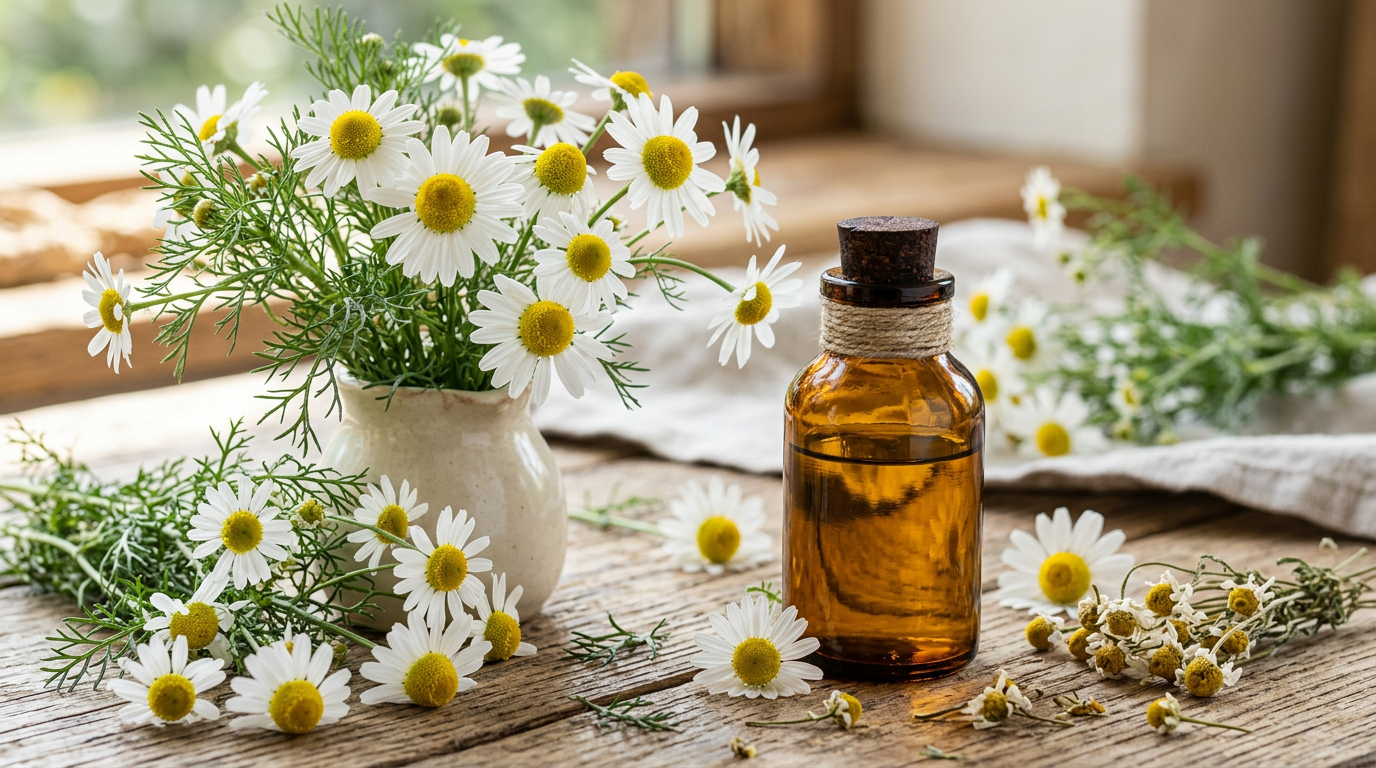
Walk into any shop selling botanical goods and you'll likely find two chamomile products sitting near each other: a small amber bottle labeled "chamomile essential oil" and a larger spray bottle labeled "chamomile hydrosol" or "chamomile floral water." They come from the same plant, sometimes the same distillation run, yet they behave completely differently once they're in your hands. Understanding the difference between chamomile hydrosol and oil matters if you're building a skincare shelf, a diffuser blend collection, or just trying not to overspend on the wrong format.
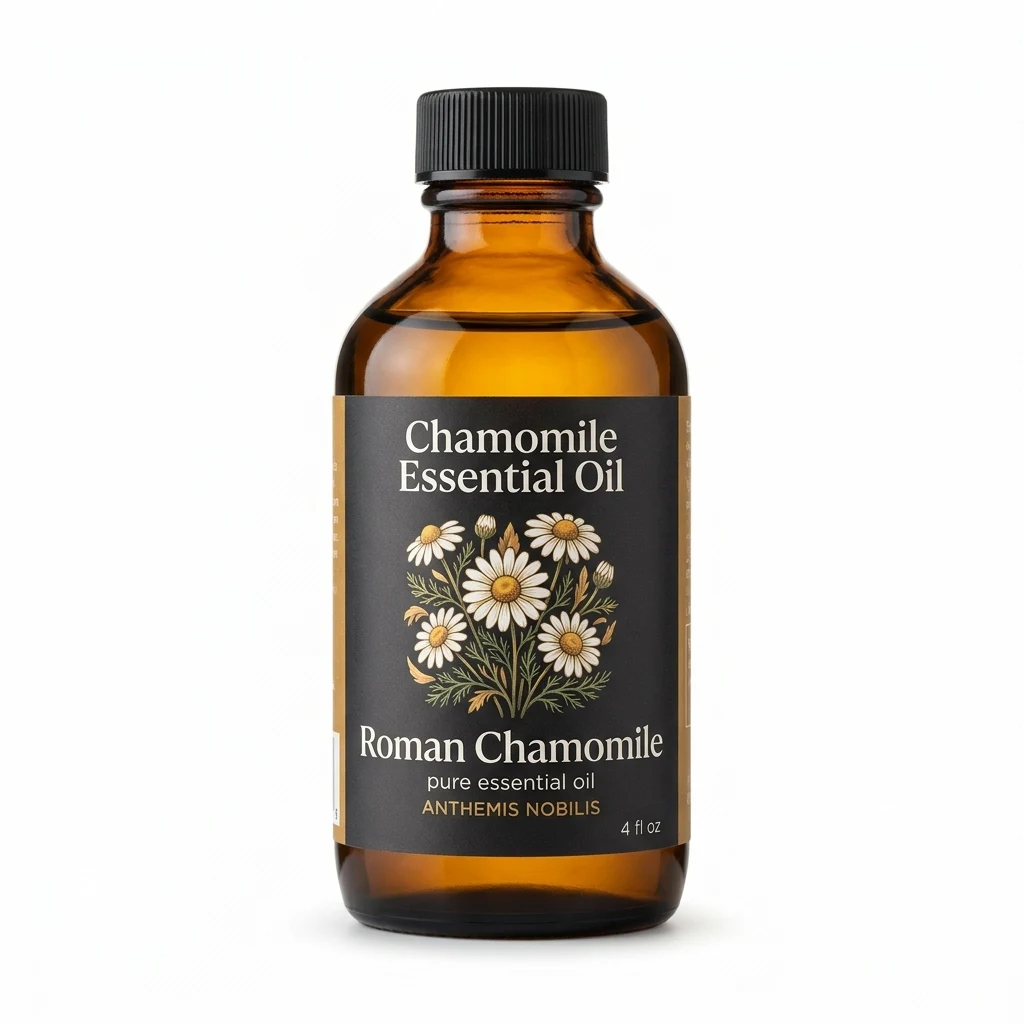
Roman Chamomile Essential Oil
Our own Roman Chamomile Essential Oil, in sizes from 0.5 oz to bulk.
From $32.99
Shop Now →This comparison walks through how each is made, what they cost, how they're used, and which one makes sense for your particular routine. We'll keep the language grounded and practical: no exaggerated claims, just an honest look at chamomile floral water vs oil so you can shop with confidence.
What Is Chamomile Essential Oil?
Chamomile essential oil is the concentrated aromatic compound extracted from chamomile flowers, most commonly Roman chamomile (Chamaemelum nobile) or German chamomile (Matricaria chamomilla), through steam distillation. It takes a substantial volume of flowers to produce even a small amount of oil, which is why a 10ml bottle often carries a noticeable price tag. German chamomile oil in particular has a deep blue color, owed to a naturally occurring compound called chamazulene that forms during distillation.
Because it's so concentrated, chamomile essential oil is almost always diluted before it touches skin. It's a staple in aromatherapy blending, candle and soap making, and small-batch skincare formulation, where a few drops go a long way.
What Is Chamomile Hydrosol?
Chamomile hydrosol, sometimes called chamomile floral water, is the byproduct of that same steam distillation process. As steam passes through the plant material, it carries both the essential oil and water-soluble plant compounds upward, then condenses back into liquid. The oil and water separate, and what's left behind, the fragrant water layer, is the hydrosol.
Hydrosol is far gentler in concentration than the oil it's distilled alongside. It carries a lighter, more herbal scent and a much larger volume per batch, which is part of why it's priced so differently on the shelf. Chamomile hydrosol uses lean heavily toward misting, toning, and light daily application rather than concentrated blending.
Comparison Table: Chamomile Essential Oil vs Hydrosol
| Attribute | Chamomile Essential Oil | Chamomile Hydrosol |
|---|---|---|
| Concentration | Highly concentrated | Very dilute, water-based |
| Typical use | Diluted in a carrier oil, diffuser, or formulation | Direct mist, toner, or light spray |
| Scent strength | Strong, persistent | Soft, fades quickly |
| Cost per bottle | Higher (small volume, concentrated) | Lower (larger volume, less concentrated) |
| Shelf life (properly stored) | Roughly 3 to 5 years | Roughly 6 to 18 months, shorter once opened |
| Dilution needed for skin contact | Yes, always | Generally used as-is, patch testing still advised |
| Best storage | Cool, dark place, tightly capped | Refrigeration extends usable life |
| Common formats sold | 5ml to 15ml amber bottles | 4oz to 8oz spray or pump bottles |
| Ease of DIY use | Requires blending knowledge and dilution math | Ready to use out of the bottle |
| Portability | Compact, travel-friendly | Bulkier, less ideal for travel |
Chamomile Essential Oil: Pros and Cons
Pros
- Highly concentrated, so a small bottle lasts a long time in blending projects
- Versatile across formats: diffusers, soap, candles, lotion bases, roller blends
- Longer shelf life than hydrosol when stored properly
- German chamomile's blue hue makes it easy to identify and visually distinctive in finished products
- Compact size travels well and takes up little shelf space
Cons
- Must be diluted before skin contact; using it undiluted is not recommended
- Higher upfront cost per bottle
- Requires some familiarity with dilution ratios and carrier oils to use confidently
- A little goes such a long way that it's easy to over-pour if you're new to blending
- Not suited for a quick, grab-and-go mist
Chamomile Hydrosol: Pros and Cons
Pros
- Ready to use straight from the bottle, no dilution math required
- Gentle enough for frequent, everyday use as a facial mist or toner
- More budget-friendly per bottle, especially in larger sizes
- Feels refreshing on skin in warm weather or during a midday reset
- Doubles as a light linen spray or room freshening mist
Cons
- Shorter shelf life, especially once opened and exposed to air repeatedly
- Scent is faint and fades fast, so it's not a strong choice for aromatic blending projects
- Bulkier bottles are less practical for travel bags
- Quality varies more between brands since "hydrosol" isn't as tightly regulated a term as people assume
- Needs refrigeration or cool storage to get the most out of it
Best For: Matching the Product to the Use Case
Best for daily facial misting and toning
Chamomile hydrosol. Its light concentration and ready-to-use format make it a natural fit for a quick refresh throughout the day or as a step in a skincare routine. Because it's gentler by nature, it tends to suit people who want a botanical mist without measuring or mixing anything.
Best for diffuser blends and aromatic layering
Chamomile essential oil. Hydrosol's scent is too faint to hold up in a diffuser. The essential oil's concentration gives it staying power in a blend, and it pairs well with lavender, sweet orange, or sandalwood for a rounded aromatic profile in a home diffuser.
Best for bath additions
Chamomile essential oil, diluted first. Essential oils don't mix into bathwater on their own since oil and water separate, so it should be blended into a dispersant, unscented bath base, or carrier oil before adding to the tub. Chamomile hydrosol can also be added directly to a warm bath for a lighter, more diffuse scent experience, though it will be subtler.
Best for DIY lotion, soap, and candle making
Chamomile essential oil. Its concentration and stability under mild heat make it the practical choice for formulators working with melt-and-pour soap bases, lotion bases, or wax. Hydrosol's water content makes it unsuitable for oil-based or wax-based projects.
Best for a light linen or room spray
Chamomile hydrosol. It's gentle enough to spritz on pillowcases or curtains without leaving an oil residue, and the soft scent works well in a bedtime wind-down routine as part of an evening atmosphere ritual.
Best for travel
Chamomile essential oil. Its small bottle size and long shelf life make it the more practical companion for a travel bag, where a hydrosol's bulk and shorter usable window are less convenient.
Best for budget-conscious shoppers building a first botanical shelf
Chamomile hydrosol. It offers a lower per-bottle cost and doesn't require additional carrier oils or dilution supplies to get started, which makes it an easier entry point.
Sourcing and Quality: What to Look For
Whichever format you choose, sourcing matters more than the label alone suggests. For essential oil, look for the botanical name (Roman or German chamomile), the country of origin, and a batch or lot number, which reputable suppliers use to track distillation runs. Cloudy or unusually thick oil can be a sign of dilution with a carrier, which should always be disclosed on the label.
For hydrosol, freshness is the biggest quality signal. A true hydrosol should smell distinctly of chamomile flowers, not flat or musty, and should be stored in a dark bottle to protect it from light degradation. Some products sold as "floral water" are actually water with a small amount of essential oil and a dispersant added rather than a true distillate, so reading the ingredient list closely is worth the extra minute.
Can You Use Both Together?
Many people who build out a botanical routine end up keeping both on hand, since they serve different purposes rather than competing for the same job. A common approach is a hydrosol mist for a light daily refresh, paired with the essential oil reserved for diffuser blends or occasional formulation projects. Used this way, the two products complement rather than duplicate each other.
As with any botanical product applied to skin, a small patch test on the inner forearm before broader use is a sensible precaution, and anyone with specific skin sensitivities or existing product concerns should check with a qualified healthcare provider before adding a new botanical into a routine.
The Verdict
Neither product is objectively "better" than the other, they're built for different jobs. If your priority is a ready-to-use, everyday mist with a light touch and a lower price point, chamomile hydrosol is the more sensible pick. If you're formulating, blending, or diffusing and want a concentrated aromatic with a long shelf life, chamomile essential oil earns its higher price tag through versatility and staying power.
For most people building out a chamomile-based routine, the smart move is starting with whichever matches your immediate use case, a hydrosol for misting, an essential oil for blending, rather than buying both up front. You can always add the second once you know how the first fits into your daily rhythm.
Quick summary: choose hydrosol for gentle, direct, everyday use. Choose essential oil for concentrated blending, diffusing, and DIY formulation where a little needs to go a long way.