Chamomile Oil for Candle Makers: A Fragrance Load Buyer's Guide
Chamomile essential oil shows up in a lot of candle lines as a soft, apple-hay undertone, usually blended with something brighter like bergamot or something creamy like vanilla. On its own it's quiet: a little herbal, a little sweet, almost tea-like. That subtlety is exactly what trips people up when they're buying chamomile oil for candle making. It performs differently than the florals and citruses most candle makers are used to, and a bottle that smells lovely on a blotter strip can go nearly silent once it's suspended in wax. This guide walks through what actually matters when you're sourcing chamomile essential oil for candles: how to read a spec sheet, what separates a usable oil from a wasted purchase, and where the real price breakpoints sit.
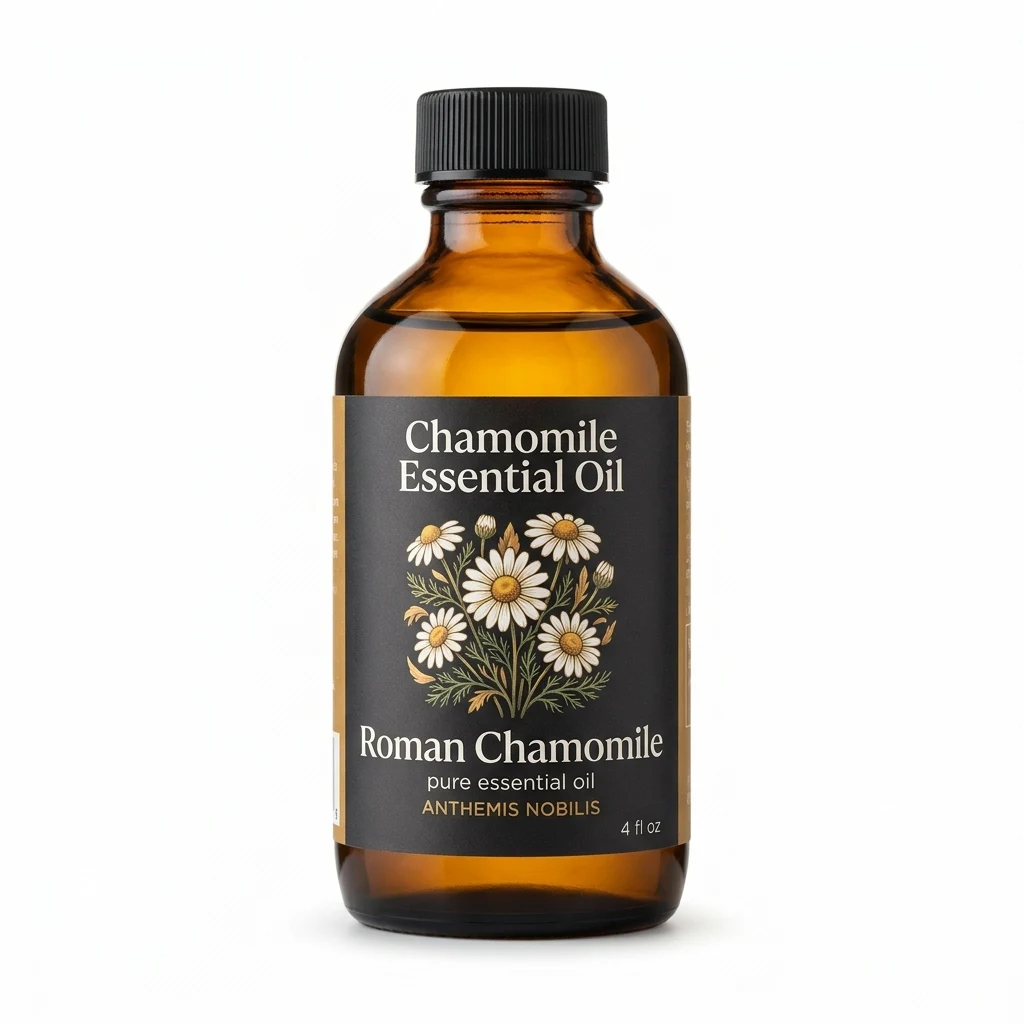
Roman Chamomile Essential Oil
Our own Roman Chamomile Essential Oil, in sizes from 0.5 oz to bulk.
From $32.99
Shop Now →Why Chamomile Behaves Differently in Wax
Most fragrance guidance aimed at candle makers is written around fragrance oils, which are formulated blends built for hot throw. Chamomile essential oil for candles is a single-note botanical extract, and its aromatic compounds (largely chamazulene in German chamomile, esters of angelic and tiglic acid in Roman chamomile) are lighter and more volatile than the synthetic fixatives used in commercial fragrance blends. That means two things for a buyer: you'll typically need a higher fragrance load than you would with a comparable fragrance oil, and the wax type you choose will change your results more than it would with a heavier-bodied scent.
Soy wax tends to mute chamomile's top notes noticeably at cold throw and only opens up somewhat once the candle is burning. Coconut and coconut-soy blends carry it a bit more faithfully. Paraffin, because of its higher fragrance retention capacity, generally gives the truest representation of what's in the bottle. None of this means one wax is wrong, just that the oil you buy needs to be strong and consistent enough to survive whichever base you're pouring into.
What to Look For: Quality Indicators
When you're evaluating a chamomile oil fragrance load for candles, the bottle itself and its paperwork tell you most of what you need to know before you ever light a test pour.
A Current Certificate of Analysis (CoA)
A legitimate supplier should be able to provide a batch-specific CoA showing GC/MS results, not a generic spec sheet copied across every lot. Look for the botanical name (Chamomilla recutita for German, Anthemis nobilis or Chamaemelum nobile for Roman) and confirmation the oil is undiluted. If a seller can't produce this on request, that's worth noting before you commit to a larger purchase.
Flash Point Listed in Writing
Chamomile oil flash point for candles matters because it determines how the oil behaves when it meets melted wax at pouring temperature, typically somewhere in the 120 to 185 degrees Fahrenheit range depending on species and processing. An oil with a low flash point can volatilize off before the wax sets, which shows up later as weak cold throw even though you measured your fragrance load correctly. Reputable suppliers list flash point on the product page or CoA. If you can't find it anywhere, ask directly. A supplier that doesn't know its own oil's flash point probably isn't testing batches closely.
Species and Origin Disclosure
German and Roman chamomile are different plants with different chemical profiles and different prices, and candle performance varies between them. German chamomile tends to run deeper blue-green in color from its chamazulene content and carries a slightly heavier, more herbal note. Roman chamomile is lighter, sweeter, and closer to apple. A listing that just says "chamomile oil" without specifying species is a minor red flag, not a dealbreaker, but it tells you the seller may not be sourcing with much precision.
Consistent Color and Viscosity Across Batches
If you reorder the same product and the color shifts dramatically or the viscosity feels different, that's a sign of inconsistent sourcing or blending practices upstream. Small natural variation is normal for a botanical extract; a jump from pale yellow to deep blue between batches is not.
Key Features to Compare
Once you've confirmed an oil is legitimate, the buying decision comes down to comparing a handful of practical specs across your shortlist.
| Feature | Why It Matters for Candles | What to Ask the Supplier |
|---|---|---|
| Species (German vs. Roman) | Changes scent profile and typical recommended load | "Is this Chamomilla recutita or Anthemis nobilis?" |
| Flash point | Determines safe pour temperature and retention risk | "What's the tested flash point for this batch?" |
| Recommended fragrance load range | Sets your starting ratio for test batches | "What load range have other candle customers used?" |
| Batch testing (GC/MS, CoA) | Confirms purity and consistency | "Can I see the CoA for the batch I'd be shipped?" |
| Packaging | UV and air exposure degrade the oil over time | "Is this shipped in amber or cobalt glass?" |
| Minimum order size | Lets you test small before scaling | "What's your smallest available size?" |
Fragrance Load: Where to Start Testing
There's no universal number here because it depends on wax type, vessel size, and how prominent you want the note to be, but as a starting point for test batches, many candle makers begin in the 6 to 8 percent range by weight for a single-note botanical like chamomile in soy or coconut-soy wax, adjusting upward in small increments (half a percent at a time) if cold throw is weak, and checking your wax manufacturer's maximum fragrance load guidance before you go higher. Always run a full burn test, not just a cold throw sniff test, before finalizing a load. A candle that smells right unlit can still underperform once burning, or in rare cases produce excess soot if overloaded.
Top Picks at Different Price Points
Pricing for chamomile essential oil varies widely because Roman chamomile in particular is a lower-yield crop than most florals used in candle making, so a fair-priced bottle often costs more per ounce than lavender or eucalyptus from the same supplier. Rather than naming specific brands, here's how to read the market by tier.
Budget Tier
Expect German chamomile blends or chamomile-scented fragrance oils marketed as "chamomile" rather than pure essential oil. These can still work fine in candles and are often the more practical choice for large production runs, but confirm the listing is honest about what's actually in the bottle. A true 100 percent essential oil at budget pricing is uncommon and worth double-checking against the CoA.
Mid-Range
This is where most serious candle makers land: verified single-species essential oil, batch-tested, sold in 4oz to 16oz sizes with volume discounts. Suppliers at this tier usually publish flash point and recommended load ranges up front, which saves you a round of email back-and-forth before your first test pour.
Premium
Roman chamomile from limited harvest regions, sold in smaller bottles at a noticeably higher per-ounce price. Worth it for small-batch or luxury lines where the softer, sweeter Roman profile is the whole point of the candle. Less economical for high-volume production where the price difference compounds fast across a large batch run.
Red Flags to Avoid
- No species listed. A generic "chamomile oil" label with no botanical name is a sign the seller isn't sourcing carefully, even if the price looks appealing.
- No flash point on request. If a supplier can't or won't answer this basic safety question, move on.
- Suspiciously uniform pricing across every oil in the catalog. Roman chamomile should cost more than lavender or lemongrass from the same supplier because of yield differences. If everything in the store is priced identically, the oils may be diluted or synthetic.
- Clear glass packaging. Chamomile oil degrades faster under UV light. Clear bottles suggest the seller isn't thinking about shelf stability, which matters if you're buying in bulk to use over several months.
- Reviews that only mention scent, never performance in wax. A pretty bottle with glowing reviews from skincare buyers tells you nothing about how it performs at 185 degrees in a wax pour. Look for candle-specific feedback specifically.
- No return or sample policy. Fragrance is subjective and batch-dependent. A supplier confident in their product usually offers a small sample size or a reasonable return window for unopened stock.
Where to Buy
For most candle makers, the most reliable sourcing path is a supplier that specializes in bulk essential oils for makers rather than a general wellness retailer. Specialty suppliers are more likely to publish CoAs, flash points, and recommended fragrance loads because their customer base actually asks for that data. Wholesale fragrance and soap-and-candle supply co-ops are a good secondary option, particularly for buyers scaling past a few pounds a month, since pricing usually improves meaningfully at the 1lb and 5lb tiers.
Marketplace listings can work, but treat the absence of a published CoA as reason to ask directly before ordering anything beyond a small test size. A quick message to the seller asking for species, flash point, and a recent batch CoA will usually sort legitimate suppliers from resellers who don't know their own inventory in any detail.
Whichever route you take, buy a small test size before committing to a bulk order, even from a supplier you've used before for other scents. Chamomile's low, quiet profile means small differences in sourcing or freshness are more noticeable in the finished candle than they would be with a bolder fragrance note.
A Simple Pre-Purchase Checklist
- Confirm species (German or Roman) matches the scent profile you want.
- Request the current batch CoA and check the flash point.
- Ask for the supplier's recommended fragrance load range for your wax type.
- Order a small test size before a bulk purchase.
- Run a full burn test, not just a cold sniff test, before finalizing your recipe.
- Store the oil in amber glass, away from heat and light, until you're ready to pour.
Buying chamomile essential oil for candle making rewards a bit of homework up front. The oils that perform well in wax are rarely the cheapest or the flashiest listings; they're the ones from suppliers willing to show their testing data and answer specific questions about flash point and load. Start small, test thoroughly, and let the burn test, not the bottle, tell you whether an oil earns a spot in your production line.