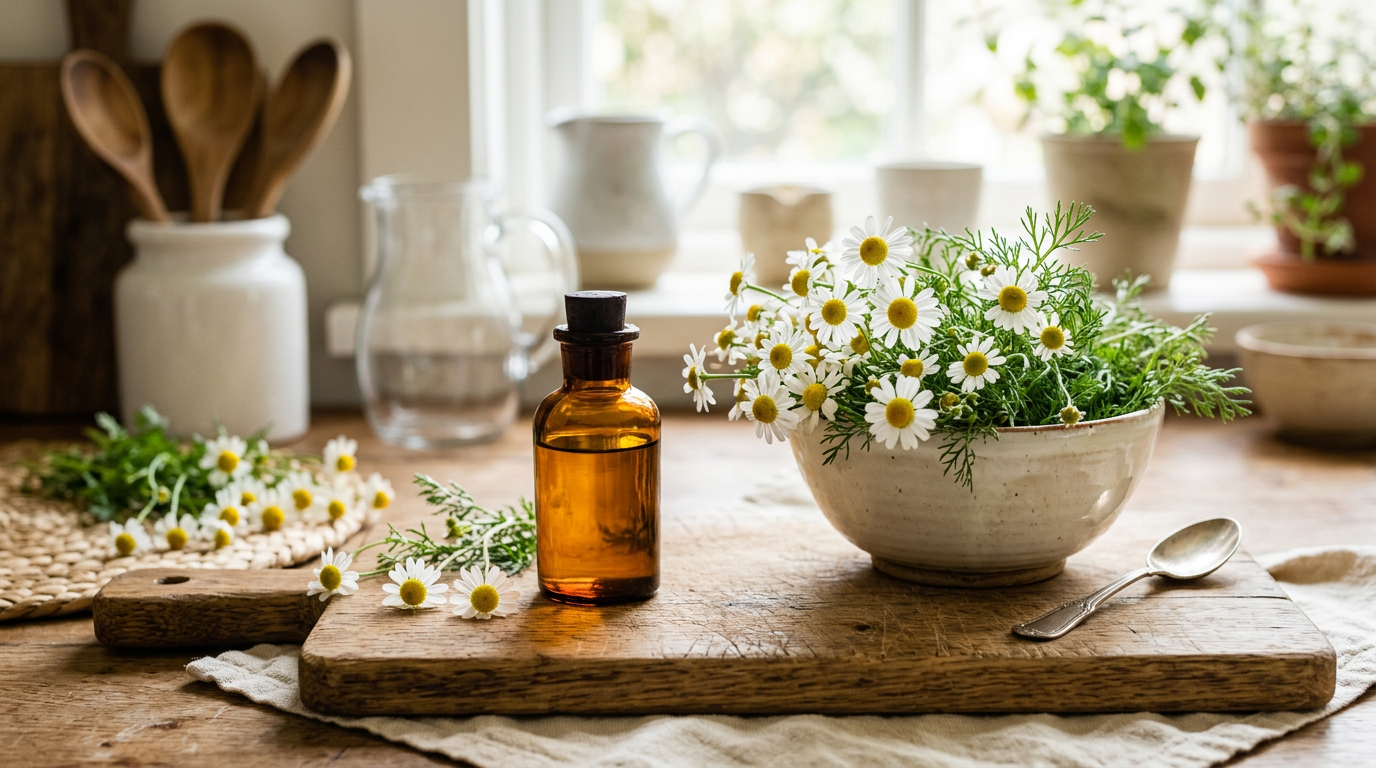
The Chamomile Meadow Linen Spray: A Signature Blend Recipe
There's a particular kind of quiet that settles over freshly made linens: cool cotton, a faint hay-and-apple sweetness, the sense that a room has been cared for. That's the effect we're chasing with this chamomile linen spray recipe. It's a simple blend built around Roman chamomile essential oil, diluted properly for fabric contact, and finished with a whisper of complementary botanicals. No fillers, no synthetic fragrance, just a small glass bottle of something you made yourself.
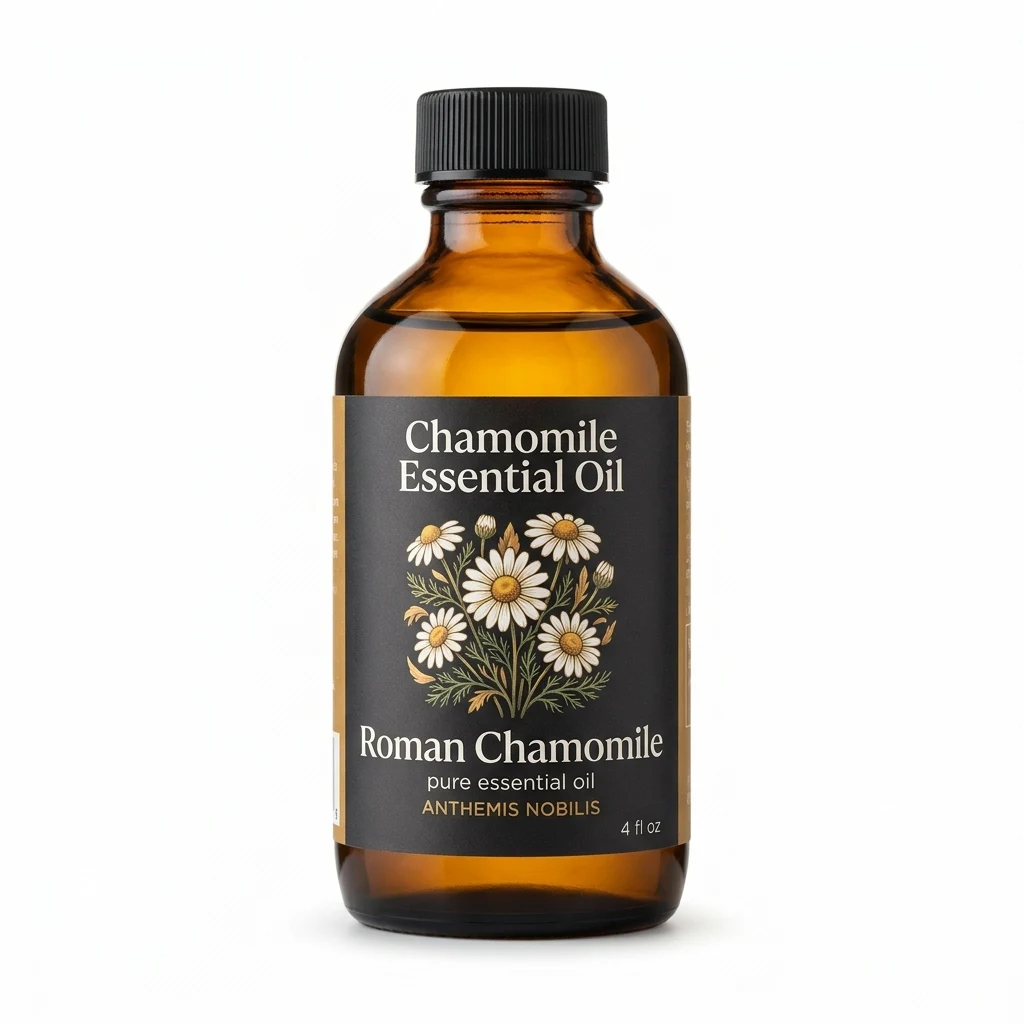
Roman Chamomile Essential Oil
Our own Roman Chamomile Essential Oil, in sizes from 0.5 oz to bulk.
From $32.99
Shop Now →This is a DIY chamomile room spray in the truest sense: it works on pillowcases, sheets, curtains, and the air of a room in equal measure. Below you'll find the full ingredient list, the exact chamomile essential oil linen spray ratio we use, step-by-step mixing instructions, and the safety information you need before your first batch.
Difficulty Level and Prep Time
- Difficulty: Beginner. No special equipment beyond a spray bottle and a measuring spoon.
- Active prep time: 10 minutes.
- Yield: One 4 oz (120 ml) spray bottle, roughly 60 to 80 spritzes.
- Cost: Under a few dollars per batch once you own the essential oil, since most of the volume is water.
Why This Blend Works
Chamomile essential oil brings a soft, slightly fruity, hay-like note that reads as clean and unfussy rather than sweet or floral in the way rose or jasmine might. Roman chamomile (Chamaemelum nobile) is the variety most people reach for in a linen spray because it's pale, lightly scented, and won't tint pale fabric. German chamomile (Matricaria chamomilla) has a deeper, almost blue-green color from its azulene content and a more herbal, slightly medicinal aroma; it's lovely in a diffuser blend but can leave a faint tint on white linens, so we don't recommend it here unless your bottle and fabric are dark.
The other job in this recipe belongs to the dispersant. Essential oils are oil-based and water is not, so without something to bridge the two, the oil will float on top of your spray and land on fabric in undiluted droplets. That's both wasteful and a fabric-staining risk. A small amount of witch hazel or high-proof unflavored vodka solves this by helping the oil disperse evenly through the water.
Full Ingredients List
- 4 oz (120 ml) distilled water (tap water works but can introduce minerals that shorten shelf life and clog the sprayer)
- 2 tablespoons (30 ml) witch hazel, or high-proof vodka (100 proof or higher) as an alternative dispersant
- 18 to 20 drops Roman chamomile essential oil
- Optional: 5 drops lavender essential oil, for a rounder, softer finish
- Optional: 3 drops sweet orange essential oil, for a brighter top note
- One 4 oz amber or cobalt glass spray bottle with a fine-mist nozzle
- A small funnel (helpful, not required)
Use glass, not plastic. Essential oils are concentrated compounds that can degrade certain plastics over time, and amber or cobalt glass also protects the finished blend from light, which helps it hold its scent longer.
The Chamomile Essential Oil Linen Spray Ratio
Getting the ratio right matters more in a linen spray than in almost any other DIY project, because the mist lands directly on fabric that touches skin. This recipe sits at roughly a 1% dilution, which is a widely used starting point for fabric and room sprays that isn't intended for direct skin application.
The math: 20 drops of essential oil is approximately 1 ml. Divided across 4 oz (about 120 ml) of total liquid, that comes out to just under 1%. If you want a lighter, more atmospheric mist, drop down to 12 to 15 drops. If you're making a larger batch, keep the same proportions: about 5 drops of essential oil per ounce of total liquid.
Resist the urge to add more oil "to make it stronger." A heavier concentration doesn't make the scent more noticeable in the way you'd expect, it mostly increases the chance of a visible oil spot on fabric and raises the odds of skin sensitivity for anyone who presses their face into a freshly sprayed pillow.
Step-by-Step Instructions
- Sanitize your bottle. Rinse the spray bottle with hot water, or wipe the interior with a small amount of rubbing alcohol, and let it air dry fully before filling.
- Add the dispersant first. Pour the witch hazel or vodka into the bottle before anything else. Adding it first, rather than the water, gives the essential oil something to bind to right away.
- Add the essential oil drops. Count your chamomile drops directly into the dispersant. If you're using the optional lavender or sweet orange, add those now too.
- Swirl gently. Cap the bottle partway (or place your palm over the opening) and swirl for about 15 seconds to let the oils fully combine with the dispersant before the water goes in.
- Top with distilled water. Use a funnel if you have one, filling to about half an inch below the bottle's neck to leave room for the sprayer mechanism.
- Cap and shake. Secure the sprayer top and shake for 20 to 30 seconds until the mixture looks uniformly cloudy rather than separated.
- Label the bottle. Note the date and ingredients on a small tag or piece of tape. This matters more than it seems, since a plain spray bottle in a linen closet is easy to mistake for something else.
- Test before full use. Spray a small, inconspicuous corner of the fabric you intend to use it on and let it dry fully before spraying the whole piece. See the patch testing section below for details.
Safety Warnings and Patch Testing
This is a fabric and room spray, not a skin product, and it shouldn't be sprayed directly onto skin or used as a substitute for products formulated for that purpose. Even so, because it lands on pillowcases and sheets, a few precautions matter.
- Always dilute. Never spray undiluted essential oil directly onto fabric or skin. This recipe's roughly 1% dilution is a general starting point for fabric sprays, not a fixed rule for every oil or every use.
- Patch test fabric first. Spray a hidden corner of any new fabric (a pillowcase seam, the underside of a curtain) and let it dry completely before using the spray more broadly. Some dyed or delicate fabrics can spot or discolor.
- Patch test on skin-adjacent surfaces with care. If anyone using the linens has known sensitivities to plant-based fragrances, do a small test area and wait 24 hours before regular use.
- Chamomile and the daisy family. Chamomile belongs to the Asteraceae (daisy) plant family, along with ragweed, marigold, and yarrow. People with known sensitivities to plants in this family may want to avoid chamomile-based products or consult a qualified healthcare provider before use.
- Pregnancy and nursing. If you are pregnant, nursing, or have any underlying health condition, speak with a qualified healthcare provider before introducing new essential oil products into your home routine.
- Keep away from infants, young children, and pets. Nurseries, cribs, and pet bedding are not appropriate places for scented sprays of any kind. A young child's or animal's sense of smell and skin sensitivity differ significantly from an adult's.
- Ventilate the room. Spray from about 12 inches away and allow linens to air dry before use, rather than spraying and immediately climbing into bed.
- Store safely. Keep the bottle out of reach of children and pets, and away from open flame, since alcohol-based dispersants are flammable.
- Stop use if irritation occurs. If a rash, redness, or discomfort develops on skin that has contacted sprayed fabric, discontinue use and consult a qualified healthcare provider.
This recipe is intended for cosmetic and aromatic use around the home. It is not intended to diagnose, and this article does not offer guidance for any medical condition.
Storage Instructions and Shelf Life
Store the finished spray in a cool, dark place, a linen closet or bathroom cabinet works well, away from direct sunlight and heat sources. The amber or cobalt glass bottle does most of the work protecting it from light degradation, but temperature matters too; avoid leaving it on a sunny windowsill or in a hot car.
Because this blend is water-based rather than oil-based, its shelf life is shorter than a pure oil blend. Expect it to stay at its best for about 4 to 6 weeks. Using distilled water instead of tap water and a high-proof alcohol as your dispersant both help extend that window, since minerals and lower-proof liquids can encourage the water portion to turn cloudy or develop an off smell sooner. Give the bottle a shake before each use, since some separation between uses is normal, not a sign of spoilage.
If the spray develops an unpleasant or sour smell, looks discolored beyond its usual cloudiness, or the mist starts sputtering instead of misting evenly, it's time to discard it and mix a fresh batch rather than trying to extend it further.
Variations and Substitutions
Chamomile and Lavender Fabric Spray Blend
Swap the optional add-ins for 8 drops lavender essential oil alongside your 18 drops of chamomile. This is one of the most popular pairings for bedtime linens, since lavender's herbal sharpness balances chamomile's softer, rounder note.
Chamomile and Vanilla-Adjacent Warmth
For a cozier, more autumnal feel, add 3 drops of sweet orange and 2 drops of sandalwood alongside your base chamomile. Keep total drop count within the same 1% guideline by reducing the chamomile slightly to 15 drops.
Alcohol-Free Version
If you'd rather avoid alcohol entirely, replace the vodka with an equal amount of unscented liquid castile soap or a solubilizer made for essential oils (available at soap-making suppliers). Straight witch hazel without added alcohol can also work but disperses oil slightly less thoroughly, so shake more often between uses.
Roman vs. German Chamomile
If all you have on hand is German chamomile, you can substitute it, but test on a scrap of white or light fabric first given its deeper color, and consider using a dark or opaque bottle and reserving the spray for darker linens, towels, or upholstery rather than pale sheets.
Smaller or Larger Batches
To make a 2 oz travel-size bottle, halve every ingredient. For an 8 oz batch, double everything. The proportions (roughly 5 drops of essential oil per ounce of total liquid, split between water and dispersant at about a 4-to-1 ratio) stay the same regardless of batch size.
Sourcing Quality Chamomile Essential Oil
The finished spray is only as good as the oil that goes into it. Look for chamomile essential oil that lists its botanical name (Chamaemelum nobile for Roman, Matricaria chamomilla for German), its country of origin, and ideally a batch-specific GC/MS test report from the supplier. Chamomile is a labor-intensive crop to distill in any real volume, so a price that seems unusually low for the variety is worth a second look. A cloudy, inconsistent, or off-smelling oil straight from the bottle will carry those same qualities into your finished spray.
A Few Final Notes
This chamomile fabric spray blend is meant to be simple enough to remake from memory once you've done it a couple of times: dispersant, oil, water, shake. The ratio matters more than the ritual, so measure carefully the first few batches until the proportions feel familiar. After that, it's a five-minute task that turns a plain linen closet shelf into something that smells like it was tended to on purpose.