Where to Buy Chamomile Essential Oil Online: An Ordering Checklist
Buying chamomile essential oil online sounds straightforward until you realize how many listings exist, how widely prices vary, and how few sellers make it easy to verify what's actually in the bottle. A quick search for where to buy chamomile essential oil returns hundreds of results. Some are exceptional. Many are not.
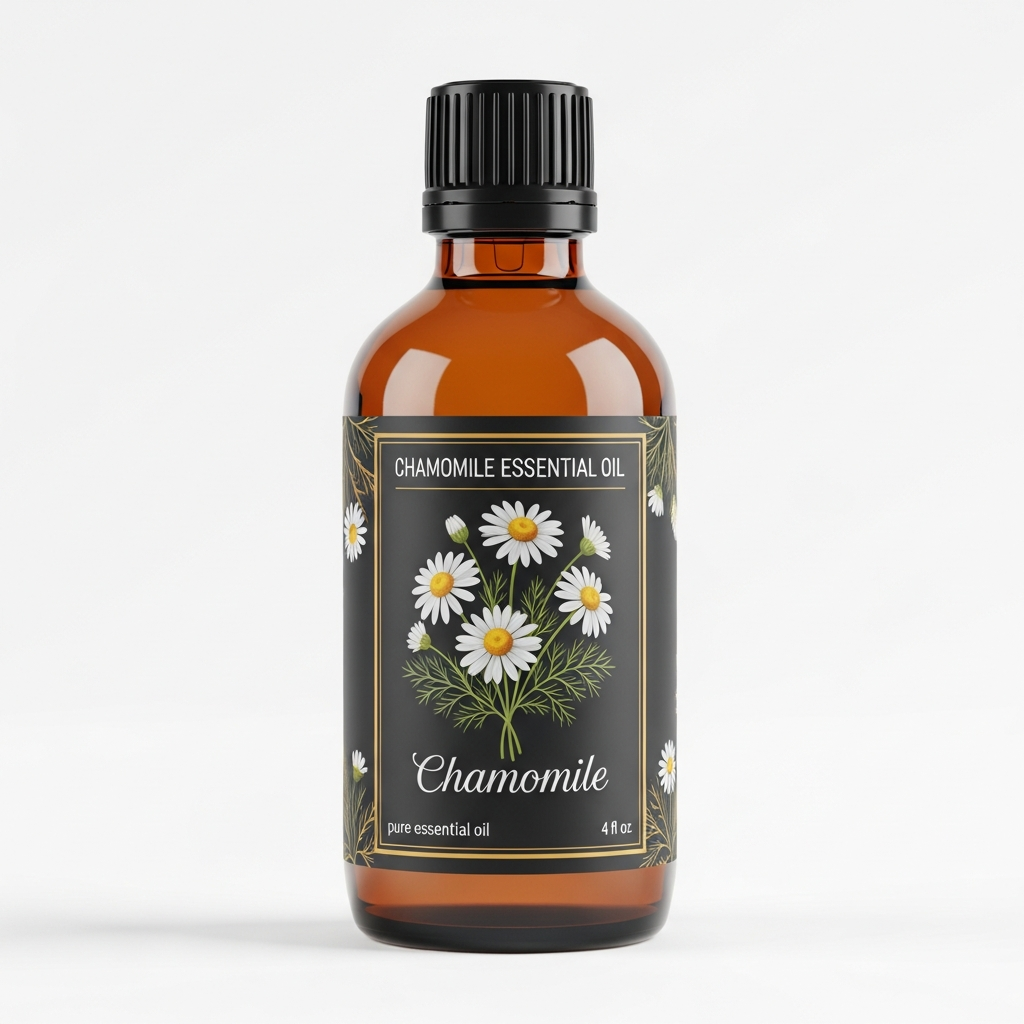
Chamomile Essential Oil
Our own Chamomile Essential Oil, in sizes from 0.5 oz to bulk.
From $29.38
Shop Now →This guide gives you a practical checklist to work through before you order chamomile essential oil from any retailer. Bookmark it, open it in a second tab while you shop, and refer to it every time you're comparing products. It works whether you're stocking a professional blending shelf or picking up your first small bottle for a bedtime wind-down diffuser blend.

First: Know Which Chamomile You're Buying
Not all chamomile essential oil is the same product. Two distinct species are sold under the chamomile name, and they behave differently in cosmetic formulations and aromatic blends.
- Roman chamomile (Chamaemelum nobile): Light, apple-sweet, and somewhat grassy in scent. Pale yellow to clear in color. Generally the more expensive of the two.
- German chamomile (Matricaria chamomilla or Matricaria recutita): Deep inky blue from its high azulene content, which forms during steam distillation. Earthy, warm, and slightly herbaceous.
A listing that just says "chamomile oil" without specifying species is a red flag on its own. Reputable sellers always name the botanical species. If you're unsure which variety suits your needs, our complete guide to chamomile essential oil walks through both in detail.
Quality Indicators: What to Look For on Every Product Page
Before you buy chamomile oil online, run through this checklist on the product listing itself. A trustworthy seller will make most of this information easy to find.
1. Full Botanical Name
The Latin binomial should appear prominently: Chamaemelum nobile for Roman or Matricaria chamomilla for German. If it isn't listed, contact the seller and ask. No response or a vague answer is a signal to shop elsewhere.
2. Country of Origin
Roman chamomile is commonly sourced from France, England, and Hungary. German chamomile is often grown in Hungary, Egypt, and Bulgaria. Origin matters because climate and soil conditions affect the oil's chemical profile. Sellers who list origin are generally more transparent about sourcing overall.
3. Extraction Method
Quality chamomile essential oil is steam distilled from the flower heads. If a listing says "cold pressed" or doesn't mention extraction at all, ask questions before ordering.
4. GC/MS Testing (Gas Chromatography/Mass Spectrometry)
This is the industry-standard purity test. It identifies the chemical constituents of an oil and flags adulterants or diluents. Look for sellers who publish batch-specific GC/MS reports, also called certificates of analysis (COAs). The report should be searchable by lot number so you can match it to the bottle you receive.
5. Packaging
Essential oils degrade when exposed to light and air. Your order should arrive in an amber or cobalt glass bottle with a tight-fitting cap. Plastic bottles or clear glass are not appropriate for long-term storage. Some sellers ship in glass but pack with a dropper insert already in place: that's a nice detail that suggests genuine care for the product.
6. Dilution Status
Chamomile essential oil is often sold pre-diluted in a carrier oil, especially at lower price points. There's nothing wrong with a diluted product as long as it's clearly labeled with the dilution percentage and the carrier oil used. Undisclosed dilution, however, is adulteration.
Key Features to Compare Side by Side
Once you've verified the basics above, use this comparison framework when you have two or three products shortlisted.
| Feature | What to Look For | Watch Out For |
|---|---|---|
| Botanical species | Full Latin name listed | "Chamomile blend" or species unspecified |
| GC/MS report | Batch-specific, publicly accessible | Generic or undated reports |
| Country of origin | Named country, ideally named farm or cooperative | "Various origins" or no information |
| Bottle size options | Multiple sizes available (2 ml, 5 ml, 10 ml, 30 ml+) | One size only with no explanation |
| Dilution disclosure | Clearly labeled if diluted; carrier named | No mention of dilution status |
| Shelf life/batch date | Production or best-by date on label | No date information |
| Return policy | At least 30-day satisfaction window | All sales final on opened bottles |
If you're still undecided about which bottle size makes sense for your routine, our guide to chamomile essential oil sizes breaks down the cost-per-ml math at each volume.
Top Picks at Different Price Points
Chamomile essential oil is one of the pricier botanicals on the market, particularly Roman chamomile. A very low price almost always signals adulteration or a heavily diluted product. That said, "most expensive" doesn't automatically mean best.
Budget Range (Under $15 for 5 ml)
At this price point, you are almost certainly looking at a diluted product or German chamomile rather than Roman. That isn't necessarily a problem. German chamomile has its own distinct aromatic character and is widely used in cosmetic formulations. Just confirm that the listing discloses the dilution percentage and names the carrier oil. Brands like Plant Therapy and Edens Garden sit in this range and publish accessible GC/MS data, which earns them credibility even at lower price points.
Mid-Range ($15 to $40 for 5 ml)
This is where you start finding pure, undiluted German chamomile and entry-level Roman chamomile from reputable sourcing programs. Look for sellers who name their distillers or farming cooperatives. Rocky Mountain Oils and Florihana are worth comparing in this tier. Both maintain searchable COA databases.
Premium ($40 and above for 5 ml)
Undiluted Roman chamomile from small-batch French or English distillers regularly lands above $40 for 5 ml, and sometimes significantly higher. At this price, you should expect full traceability: named farm, harvest year, distillation date, and a current GC/MS report. Stillpoint Aromatics and Kobashi are names that surface frequently among professional formulators looking for well-documented premium Roman chamomile.
A note on pricing: If you find Roman chamomile essential oil priced similarly to lavender or peppermint, that's a signal worth pausing on. Roman chamomile requires a large volume of flowers to yield a small amount of oil. Suspiciously low prices typically reflect adulteration, not a great deal.
Red Flags to Avoid When You Order Chamomile Essential Oil
Some warning signs appear on product pages. Others show up only after you receive the bottle. Here's what to watch for at every stage.
On the Product Listing
- No Latin botanical name
- "Pure" or "100% natural" claims with no third-party testing to back them up
- Pricing dramatically below market rate for the species claimed
- Health or wellness claims that go beyond cosmetic or aromatic use
- No extraction method listed
- Stock photos only, with no image of the actual product label
When the Package Arrives
- German chamomile that is pale yellow or clear rather than blue (color indicates azulene content; a very pale product may be old or adulterated)
- Roman chamomile with a harsh or chemical top note rather than its characteristic soft apple-like sweetness
- No lot number on the bottle, which means you cannot look up the corresponding COA
- Leaking caps or evidence that the bottle was not sealed
Where to Buy Chamomile Essential Oil Online: Retailer Types Compared
Not all online marketplaces are equally suited to buying essential oils. Here's a practical breakdown.
Dedicated Aromatics Retailers
Specialty retailers like Florihana, Stillpoint Aromatics, Eden Botanicals, and Tisserand Aromatics focus exclusively or primarily on essential oils and carrier oils. They tend to invest more in sourcing transparency and COA documentation. Shipping times from European suppliers can be longer, but the quality documentation is often superior.
Direct-to-Consumer Essential Oil Brands
Brands like Plant Therapy, Rocky Mountain Oils, and Edens Garden sell directly through their own websites and publish GC/MS reports by batch number. They offer reliable return policies and accessible customer service. Good starting points for first-time buyers who want strong quality assurance without navigating specialist suppliers.
Amazon and General Marketplaces
Amazon carries many reputable brands, and buying chamomile oil through Amazon can be convenient. However, the marketplace also hosts numerous unverified sellers. Stick to listings sold directly by the brand, not third-party resellers, and verify that the COA information is available before purchasing. Fulfilled-by-Amazon listings from trusted brands are generally fine; unknown third-party sellers are not.
Health Food Stores with Online Shops
Retailers like Whole Foods, iHerb, and Thrive Market carry curated selections and vet their suppliers to some degree. iHerb in particular has a large essential oil category with useful customer review data. These platforms can be a reasonable middle ground between specialist suppliers and general marketplaces.
Before You Click: A Final Pre-Purchase Checklist
- Is the botanical species clearly named with its Latin binomial?
- Is the country of origin disclosed?
- Is a batch-specific GC/MS report available and searchable by lot number?
- Is the extraction method listed as steam distillation?
- Is the dilution status clearly disclosed?
- Does the bottle appear to be amber or cobalt glass?
- Does the price fall within a realistic range for the species claimed?
- Does the seller have a clear return or satisfaction policy?
Eight checks. If a listing passes all eight, you're in good shape. If it fails more than two, keep looking.
For a deeper look at how to assess purity before and after your purchase arrives, our guide on how to buy pure chamomile essential oil covers at-home and professional verification methods in detail.
Chamomile is a rewarding oil to work with, and finding a genuinely well-sourced bottle makes a noticeable difference in how it performs in blends and cosmetic applications. Take the extra few minutes to verify before you order. Your formulations will reflect it.