5 Chamomile Diffuser Blends for a Calm Home Atmosphere
There is something quietly persuasive about the scent of chamomile drifting through a room. Soft, slightly honeyed, with a faint apple-like brightness underneath, it changes the feeling of a space without announcing itself. Pair it with the right companions and a chamomile essential oil diffuser becomes one of the most satisfying parts of a slow-living home routine.
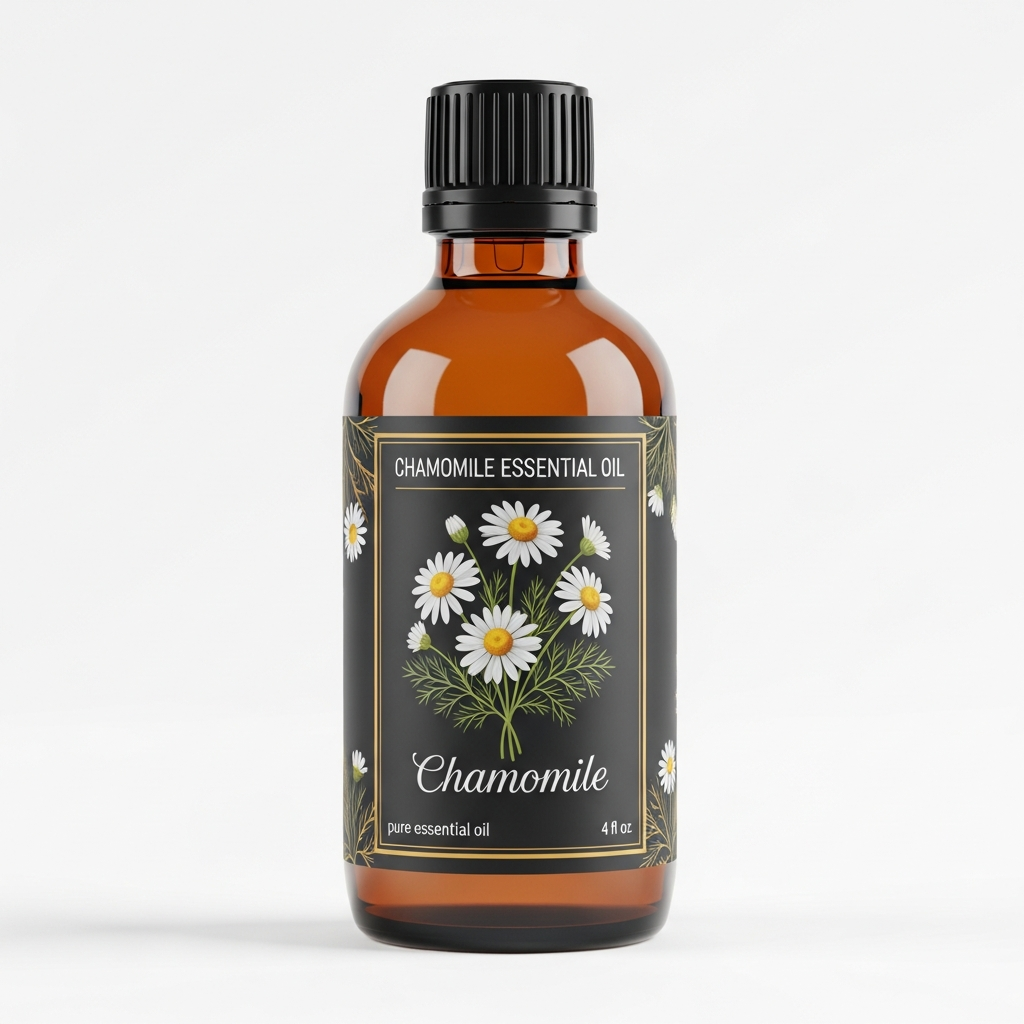
Chamomile Essential Oil
Our own Chamomile Essential Oil, in sizes from 0.5 oz to bulk.
From $29.38
Shop Now →This guide is built around five chamomile diffuser blends, each one featuring Boswellia carterii frankincense as a grounding partner. Below you will find the full case for why carterii suits this role so beautifully, complete recipes with measurements in drops and milliliters, step-by-step instructions, safety notes, and a handful of variations to make each blend your own.
If you are new to chamomile oil itself, the complete guide to chamomile essential oil is a good place to start before diving into blending.
Why Boswellia carterii Frankincense?
Frankincense is a large family. The resin is harvested from several distinct Boswellia species across East Africa, the Arabian Peninsula, and South Asia, and each variety has a genuinely different aromatic personality. Choosing the right one for a chamomile blend matters.
Boswellia carterii, sourced primarily from the coastal regions of Somalia and the Horn of Africa, is the variety most people picture when they imagine classic frankincense. It has a clean, bright citrus-resin top note that settles into a soft, warm woodiness as it dries down. It is less aggressively camphorous than some other species, and it carries none of the sharp, almost green edge found in Boswellia sacra from Oman.
That particular aromatic balance makes carterii an exceptional partner for Roman chamomile (Anthemis nobilis) and German chamomile (Matricaria chamomilla) alike. The citrus brightness in carterii lifts chamomile's sweetness without competing with it. The warm resinous base gives the blend depth and longevity in the diffuser. The result feels cohesive rather than layered, as though the two oils were designed to meet.
Carterii is also widely available, relatively affordable compared to the rarer Boswellia sacra, and consistently sourced from established Somali harvesting communities with long resin-tapping traditions. For everyday calming home fragrance, it is a practical and aromatic choice in equal measure.
Before You Blend: Safety and Dilution Notes
Diffuser blends work with aroma, not skin contact, so dilution ratios in the traditional topical sense do not apply here. That said, a few practical rules keep your experience safe and enjoyable.
- Run time: Most aromatherapists suggest diffusing for 30 to 60 minutes at a time, then allowing the room to air for an equal period. Continuous diffusion in an unventilated space is not recommended.
- Room size: The drop counts in these recipes are calibrated for a standard 100 ml ultrasonic diffuser in a medium-sized room (roughly 150 to 200 square feet). Scale down by 25 to 30 percent for smaller spaces or more compact diffusers.
- Pets and children: Frankincense and chamomile are generally considered gentle oils, but diffusing around infants under three months, cats, and birds carries risks that differ from adult human use. Consult a qualified veterinarian or healthcare provider for specific guidance.
- Skin contact: These recipes are for diffusion only. If you wish to use any blend topically, proper dilution in a carrier oil and a patch test on a small area of skin are essential steps before broader use.
- Oil quality: Use 100 percent pure essential oils with no synthetic fragrance added. The aromatic results and the safety profile both depend on it.
The 5 Chamomile Diffuser Blends

Blend 1: The Classic Quiet (Roman Chamomile and Carterii)
This is the foundational blend. It is warm, slightly fruity, and gently resinous. A good starting point if you are new to chamomile diffuser blends.
Ingredients
| Oil | Drops (per session) | Approximate ml |
|---|---|---|
| Roman chamomile (Anthemis nobilis) | 4 | 0.20 ml |
| Boswellia carterii frankincense | 4 | 0.20 ml |
| Sweet orange (Citrus sinensis) | 2 | 0.10 ml |
Instructions
- Fill your diffuser reservoir to the marked line with clean room-temperature water.
- Add the drops in the order listed: chamomile first, then carterii, then orange.
- Replace the diffuser lid and set a 45-minute run cycle.
- Sit back. Let the room do the rest.
Variation A: Swap sweet orange for bergamot (bergapten-free) for a slightly more complex, tea-like character.
Blend 2: The Evening Anchor (German Chamomile, Carterii, and Cedarwood)
German chamomile brings a deeper, more herbaceous quality than Roman, with a distinctive blue-green note from its naturally occurring chamazulene content. Paired with carterii and Atlas cedarwood, this blend has a grounding, almost forested warmth that suits a bedtime wind-down beautifully. For more ideas built around the evening hour, see our guide to chamomile oil in your evening wind-down routine.
Ingredients
| Oil | Drops (per session) | Approximate ml |
|---|---|---|
| German chamomile (Matricaria chamomilla) | 3 | 0.15 ml |
| Boswellia carterii frankincense | 4 | 0.20 ml |
| Atlas cedarwood (Cedrus atlantica) | 3 | 0.15 ml |
Instructions
- Fill the reservoir with water.
- Add oils in the order listed.
- Diffuse for 30 to 45 minutes starting about an hour before you plan to sleep.
- Switch off and allow the scent to linger naturally in the room.
Variation B: Replace Atlas cedarwood with Virginia cedarwood (Juniperus virginiana) for a slightly drier, pencil-shaving quality that some people find even crisper.
Blend 3: The Garden Room (Roman Chamomile, Carterii, Lavender, and Geranium)
This is the most floral of the five blends. Lavender and geranium join Roman chamomile to create something that smells genuinely like a late-summer herb garden in the afternoon. Carterii keeps it from tipping into sweetness overload with its clean resinous base.
Ingredients
| Oil | Drops (per session) | Approximate ml |
|---|---|---|
| Roman chamomile (Anthemis nobilis) | 3 | 0.15 ml |
| Boswellia carterii frankincense | 3 | 0.15 ml |
| Lavender (Lavandula angustifolia) | 3 | 0.15 ml |
| Rose geranium (Pelargonium graveolens) | 1 | 0.05 ml |
Instructions
- Fill reservoir with water.
- Add geranium last, as even a single drop has considerable aromatic influence and it is easier to gauge the balance with the other oils in place first.
- Run for up to 60 minutes in a well-ventilated living space.
For a deeper look at how lavender and chamomile interact in blending, our article on lavender and chamomile as a classic evening pairing covers the topic in detail.
Variation C: Use palmarosa instead of rose geranium for a softer, slightly grassy floral note with less intensity.
Blend 4: The Reading Nook (German Chamomile, Carterii, Vetiver, and Clary Sage)
This one is for the people who find most calming home fragrance blends a little too sweet. Vetiver adds an earthy, smoky undertone. Clary sage brings an almost nutty, slightly herbal quality. German chamomile's blue-green depth fits right in, and carterii provides the bridge between the lighter and darker notes.
Ingredients
| Oil | Drops (per session) | Approximate ml |
|---|---|---|
| German chamomile (Matricaria chamomilla) | 3 | 0.15 ml |
| Boswellia carterii frankincense | 4 | 0.20 ml |
| Vetiver (Vetiveria zizanoides) | 1 | 0.05 ml |
| Clary sage (Salvia sclarea) | 2 | 0.10 ml |
Instructions
- Fill the reservoir with water.
- Add vetiver first. Vetiver is viscous and benefits from a moment to settle into the water before the other oils join it.
- Add chamomile, then carterii, then clary sage.
- Run for 30 to 45 minutes. Vetiver is persistent and the scent will linger well after the diffuser cycles off.
A note on vetiver: Start with just one drop on your first run. It is a powerful base note and can easily dominate a blend. You can always add a second drop once you know how your specific vetiver oil performs in your diffuser.
Blend 5: The Morning Reset (Roman Chamomile, Carterii, Lemon, and Rosemary)
Not every chamomile blend belongs to the evening. This one leans bright and fresh, using lemon and rosemary to shift the blend toward a crisp, energized atmosphere while chamomile and carterii keep the overall character from feeling sharp or clinical. It is a lovely companion to a slow Saturday morning with coffee.
Ingredients
| Oil | Drops (per session) | Approximate ml |
|---|---|---|
| Roman chamomile (Anthemis nobilis) | 2 | 0.10 ml |
| Boswellia carterii frankincense | 3 | 0.15 ml |
| Lemon (Citrus limon) | 4 | 0.20 ml |
| Rosemary ct. camphor (Rosmarinus officinalis) | 1 | 0.05 ml |
Instructions
- Fill the reservoir with water.
- Add oils in the order listed.
- Run for 45 to 60 minutes during morning hours in a kitchen or workspace.
- Open a window if possible. Citrus blends feel more vibrant with some fresh air circulation.
Note on rosemary ct. camphor: This chemotype has a more pronounced, brisk aroma than the ct. verbenone variety. One drop is plenty in a 100 ml diffuser. People who prefer a gentler herbal note may wish to substitute rosemary ct. verbenone or simply omit it.
Pre-Blending Your Oils: Concentrate Method
If you blend regularly and want to save time, you can pre-mix concentrate versions of these blends in small amber glass vials. The process scales up the drop ratios and lets you add a fixed number of drops from a single bottle each session.
How to Pre-Blend
- Choose a 5 ml or 10 ml amber glass vial with an orifice reducer insert.
- Scale the recipe up by a factor of 10 (so 4 drops becomes 40 drops, and so on).
- Combine oils in the vial. Cap tightly and roll gently between your palms for 20 seconds to integrate. Do not shake vigorously.
- Label with the blend name and date.
- For each diffuser session, add 8 to 10 drops of the concentrate to your filled reservoir.
Storage and Shelf Life

Essential oils are sensitive to light, heat, and air exposure. Store all your single oils and any pre-made concentrates in the following conditions:
- Vessel: Amber or cobalt glass. Avoid plastic, which can leach over time.
- Location: A cool, dark cupboard or drawer. Away from windowsills and stovetops.
- Temperature: Ideally between 60 and 70 degrees Fahrenheit (15 to 21 degrees Celsius).
- Cap tightness: Always replace caps immediately after use. Oxidation is the main factor that diminishes aroma quality.
Shelf life varies by oil type. Roman chamomile has a relatively short window of about two to three years. Citrus oils like lemon are best used within one to two years. Carterii frankincense, vetiver, and cedarwood are more stable and may last four to five years if stored well. Pre-blended concentrates should be used within the shortest shelf life of any oil in the blend.
Sourcing Notes: What to Look for in Carterii and Chamomile
The aromatic results of these blends depend heavily on the quality of the oils you start with. A few sourcing markers worth considering:
- GC/MS testing: Reputable suppliers publish gas chromatography and mass spectrometry data for each batch. This confirms that what is in the bottle matches the species on the label.
- Batch-specific information: Look for lot numbers, country of origin, and harvest year. Carterii from Somalia should say Somalia (or Horn of Africa), not a generic "Middle East" designation.
- Chamomile variety clarity: Roman and German chamomile have different aroma profiles and different chamazulene content. Suppliers should clearly state which species is in the bottle, not just "chamomile."
- No added fragrance: Pure essential oil, full stop. Some "chamomile" products are actually chamomile fragrance oil blended with a carrier. Check the ingredient list.
Making These Blends Part of Your Routine
The best calming home fragrance practice is one that fits naturally into what you already do. A diffuser running during a morning stretch. A blend cycling through the living room while dinner is on the stove. A quiet ritual before the rest of the household wakes up.
Start with one blend. Run it consistently for a week. Notice how the scent changes the atmosphere of the room, how it shifts with the season, how your preferences evolve over time. Blending is a slow, iterative practice and chamomile essential oil diffuser routines are no exception.
Adjust ratios freely. Reduce carterii if you want more chamomile forward character. Add an extra drop of citrus on days that call for brightness. The recipes here are starting points, not fixed formulas.
The five blends above represent a range of moods and moments, anchored by the consistent warm clarity of Boswellia carterii frankincense. That single thread, running through all of them, is what makes a collection of blends feel like a coherent aromatic home rather than five unrelated experiments.