
Organic Roman Chamomile Essential Oil: Is It Worth the Premium?
Roman chamomile is already one of the more expensive essential oils on the market. Add a certified organic label, and the price climbs further. For shoppers weighing a $15 bottle against a $55 one, that gap can feel hard to justify. This guide breaks down exactly what drives the cost of organic Roman chamomile essential oil, what quality indicators actually matter, and how to find a bottle that earns its price tag rather than just wearing one.
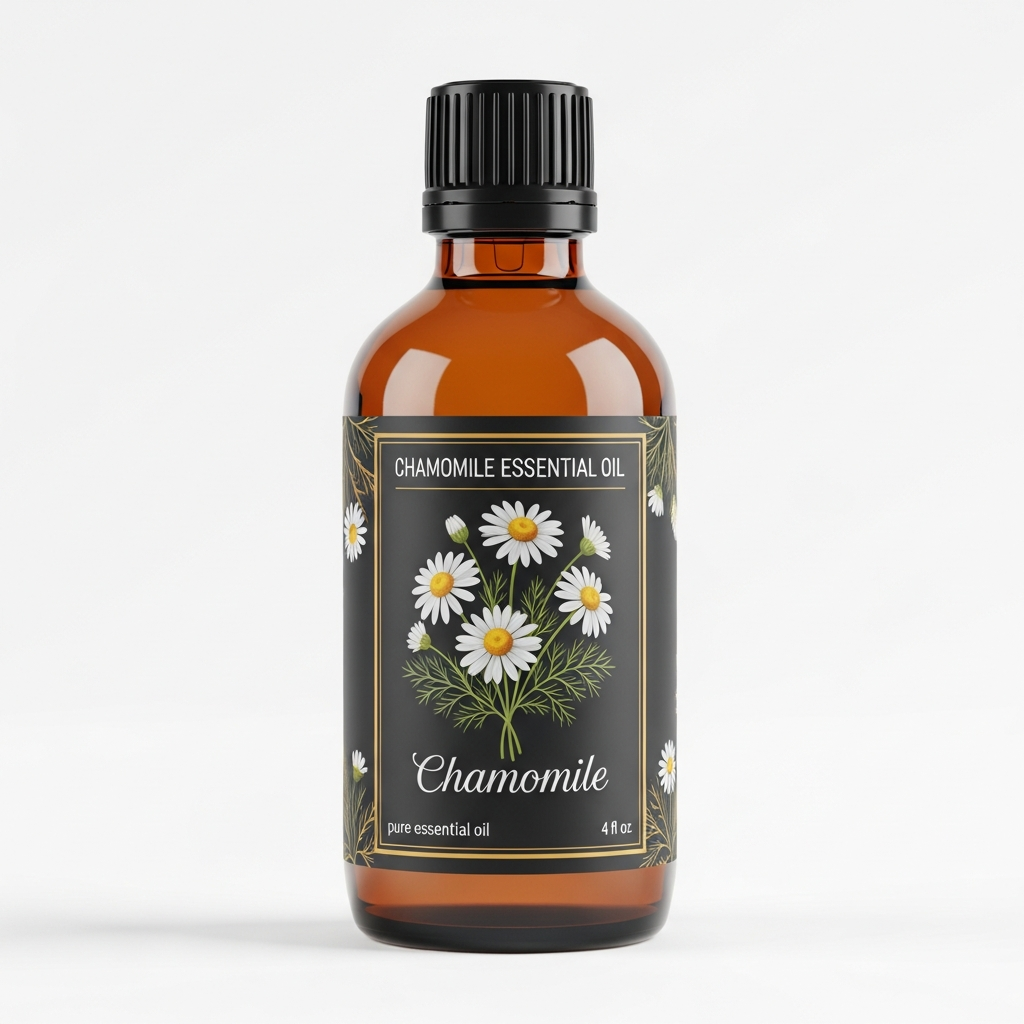
Chamomile Essential Oil
Our own Chamomile Essential Oil, in sizes from 0.5 oz to bulk.
From $29.38
Shop Now →
Why Roman Chamomile Commands a Higher Price
Before evaluating any specific product, it helps to understand why organic chamomile oil sits in a higher price bracket than most oils you will find on a grocery store shelf.
Roman chamomile (Anthemis nobilis or Chamaemelum nobile) is a low-growing perennial that produces relatively small flowers. The yield from steam distillation is modest. To fill a single 5 ml bottle, distillers work through a significant volume of plant material. That ratio is one reason Roman chamomile costs more than most other chamomile varieties.
Organic certification adds another layer. Growers must maintain pesticide-free fields, submit to third-party audits, keep detailed records, and pay certification fees. Those costs pass along the supply chain. A bottle bearing a legitimate organic seal reflects genuine overhead, not a marketing surcharge.
Still, not every expensive bottle delivers exceptional quality. That is exactly the problem this guide addresses.
What to Look for: Quality Indicators That Actually Matter
1. Certification Body and Seal Placement
A credible organic chamomile essential oil will display certification from a recognized body. In the United States, look for USDA Organic. In the UK and Europe, look for COSMOS Organic (certified by bodies such as Soil Association or Ecocert). Some brands carry both, which reflects a genuinely global supply chain commitment.
The seal should appear on the label itself, not only on a website page or marketing material. If you cannot identify the certifying body from the product label, treat that as a warning sign.
2. Botanical Name and Chemotype
Roman and German chamomile are entirely different plants with different aromatic profiles and chemical compositions. Roman chamomile is Anthemis nobilis or Chamaemelum nobile. German chamomile is Matricaria chamomilla or Matricaria recutita. If you are specifically looking for organic Roman chamomile essential oil, the Latin name on the label is your confirmation. A bottle that says only "chamomile" without specifying the species leaves you guessing. For a deeper look at the differences, see this comparison of Roman versus German chamomile essential oil.
3. Country of Origin
Roman chamomile grows well in Western Europe, particularly England, France, and Italy. These regions have long growing histories and established distillation infrastructure. Morocco and Egypt also produce Roman chamomile, though quality can vary more widely. A disclosed country of origin signals transparency. When a brand leaves this field blank, that is worth noting.
4. GC/MS Testing and Batch Transparency
Gas chromatography/mass spectrometry (GC/MS) testing is the industry standard for verifying that an essential oil contains what it claims to contain. Reputable brands publish these reports, either on a per-batch basis or upon request. The report should show the presence of characteristic compounds such as isobutyl angelate and isoamyl angelate, which give Roman chamomile its distinctive, faintly apple-like, herbaceous aroma.
Some companies list a single GC/MS report on their website without linking it to specific lot numbers. A batch-specific certificate of analysis (COA) is the gold standard. It means the report reflects what is actually in the bottle you purchased, not a generic sample from years prior.
5. Bottle Quality and Labeling
Amber or cobalt glass with a proper orifice reducer is the baseline for any quality essential oil. Clear glass, plastic bottles, or oversized dropper tops that allow air exposure are signs of a brand cutting corners. The label should clearly show: botanical name, country of origin, method of extraction (steam distillation for Roman chamomile), net volume, lot number, and batch date.
Key Features to Compare When Shopping
| Feature | What to Look For | Red Flag |
|---|---|---|
| Certification | USDA Organic, COSMOS Organic, or equivalent | No certifying body named |
| Botanical Name | Chamaemelum nobile or Anthemis nobilis | Listed only as "chamomile" |
| GC/MS Testing | Batch-specific COA available | No testing information provided |
| Country of Origin | UK, France, Italy, or other disclosed region | Origin not listed |
| Packaging | Amber or cobalt glass, orifice reducer | Clear glass, plastic, no reducer |
| Price per ml | $5 to $15 per ml for genuine organic | Under $2 per ml (likely adulterated) |
Top Picks at Different Price Points
The picks below represent a cross-section of the organic Roman chamomile market. Prices reflect approximate retail at time of writing and will vary by retailer and bottle size.
Entry-Level Organic: $18 to $30 for 5 ml
Plant Therapy Organic Roman Chamomile Essential Oil
Plant Therapy is one of the more transparent mid-market brands in the essential oil space. Their organic Roman chamomile carries USDA Organic certification and GC/MS reports are available by batch number on their website. The aroma is fresh and characteristic, leaning herbal with a soft floral edge. The 5 ml amber bottle is well-sealed. For shoppers new to organic chamomile oil who want accountability without a premium brand markup, this is a reasonable starting point.
Rocky Mountain Oils Organic Roman Chamomile
Rocky Mountain Oils posts batch-specific GC/MS reports and offers a searchable COA database. Their organic Roman chamomile is steam distilled and the labeling is complete. The aroma profile is slightly sweeter than some European distillates. At this price tier, the value proposition is solid.
Mid-Range: $35 to $55 for 5 ml
Florihana Organic Roman Chamomile (France)
Florihana is a French distillery with COSMOS Organic certification and a reputation for single-origin, traceable oils. Their Roman chamomile is distilled in France, and the aroma is distinctly complex: warm, faintly fruity, and deeply herbal. Florihana publishes full GC/MS data and ships directly to consumers. For a cosmetic formulator or a serious aromatics enthusiast, this tier offers noticeably greater aromatic depth than entry-level options.
Tisserand Organic Roman Chamomile
Tisserand is a UK-based brand with decades of sourcing history. Their organic Roman chamomile is ethically sourced and COSMOS certified. The 9 ml bottle is affordably sized for regular blending use. Tisserand also publishes safety data sheets and usage guidelines, which is useful for formulators working on cosmetic or personal care products.
Premium: $60 and above for 5 ml
Oshadhi Organic Roman Chamomile (UK Origin)
Oshadhi sources directly from small-scale growers and distillers across Europe. Their UK-origin Roman chamomile is among the most aromatically refined options available to retail consumers. The depth of isobutyl angelate character is immediately apparent: rich, warm, and distinctly recognizable as high-quality Roman chamomile. Batch documentation is thorough. The price reflects genuine quality and direct relationships with growers, not brand premium alone.
Kobashi Organic Roman Chamomile (English)
Kobashi is a small UK distiller with a loyal following among professional aromatherapists and perfumers. Their English Roman chamomile is organically grown and distilled in small batches. Availability can be limited, but the quality is consistently excellent. The aroma is the most distinctly floral-herbal of any option in this guide. If provenance and small-batch integrity matter to you, Kobashi is worth seeking out.
Red Flags to Avoid
The essential oil market has a well-documented adulteration problem. Organic labels make it slightly harder to cut corners, but they do not eliminate the risk entirely. Watch for these warning signs before purchasing any organic Roman chamomile essential oil.
- Price that seems too low: Genuine organic Roman chamomile oil will not sell for $5 per 5 ml. If a price seems dramatically below market, the oil is almost certainly diluted in a carrier oil, blended with German chamomile or a synthetic alternative, or simply mislabeled.
- No botanical name on the label: This is non-negotiable. Any reputable brand lists the Latin name.
- Vague certification language: Phrases like "certified pure" or "therapeutic grade" are unregulated marketing terms. They mean nothing without a named certifying body. For a full checklist on evaluating purity claims, see this guide to buying pure chamomile essential oil.
- No lot number or batch date: Without these, you cannot verify any COA the brand might publish.
- Identical pricing across all oils: Some brands sell lavender, frankincense, and Roman chamomile at the same price. That is a significant red flag. These oils have very different production costs, and uniform pricing typically indicates dilution or blending to normalize costs across a catalog.
- Strong solvent or alcohol scent: Fresh organic Roman chamomile has a soft, herbal, mildly apple-like aroma. A sharp chemical top note suggests adulteration or poor storage.
Where to Buy Organic Chamomile Oil
Direct from Distillers and Specialty Suppliers
Buying directly from a distiller or a dedicated essential oil supplier (rather than a general marketplace) gives you the highest confidence in authenticity. Florihana, Kobashi, and Oshadhi all sell direct to consumers. You pay a fair price and receive documentation that holds up to scrutiny.
Reputable Online Retailers
Plant Therapy and Rocky Mountain Oils operate their own e-commerce platforms with strong return policies and accessible customer service. Both publish COAs online and have invested significantly in quality infrastructure. These are well-suited for shoppers who want organic chamomile oil without navigating the complexity of sourcing from European distillers.
Natural Food Stores and Co-ops
Whole Foods, natural food co-ops, and herb shops often carry Tisserand, Aura Cacia, and similar brands. In-store shopping lets you inspect the label before purchasing, which is genuinely useful. The selection is narrower than online, but the ability to assess the bottle directly has real value.
Amazon and General Marketplaces
Proceed carefully. Legitimate brands do sell through Amazon, and some use Fulfilled by Amazon warehousing without issue. However, marketplace listings from unknown third-party sellers carry meaningful risk of counterfeit or improperly stored product. If buying through Amazon, purchase from listings sold and shipped by the brand directly, or from well-known brand storefronts with verified reviews.
Is the Organic Premium Worth It?
For most uses, yes. The organic certification itself is meaningful: it confirms that the plants were grown without synthetic pesticides or fertilizers, which matters both for purity and for environmental reasons. The associated documentation requirements also push brands toward greater transparency across the board, which benefits buyers.
The practical difference between a certified organic bottle and a conventional one from a rigorous, testing-focused brand is smaller than the difference between any quality brand and a low-cost, undocumented one. If you are choosing between a well-tested conventional Roman chamomile and a poorly documented organic one, choose the tested product every time.
That said, when you find an organic Roman chamomile essential oil that combines certification, batch-specific testing, disclosed sourcing, and an aroma that is genuinely rich and complex, you have found something worth paying for. The price is not the premium. The accountability is.
A note on dilution and safe use: Roman chamomile essential oil, organic or otherwise, is highly concentrated. For skin applications, always dilute properly in a carrier oil before use (typically 1 to 2 percent for facial applications, up to 3 percent for body blends). Conduct a patch test on a small area of skin before broader use. Some individuals may be sensitive to plants in the Asteraceae family. If you have known sensitivities or are pregnant, nursing, or caring for young children, consult a qualified healthcare provider before incorporating any essential oil into your routine.