Roman vs German Chamomile Essential Oil: The Ultimate Comparison Guide
Why Are There Two Chamomile Essential Oils?
Walk into any well-stocked aromatherapy shop and you will almost certainly find two separate chamomile oils on the shelf. One is labeled Roman chamomile. The other is German chamomile. Both carry the familiar chamomile name, and both are distilled from small daisy-like flowers. Yet they look different, smell different, contain different chemistry, behave differently in blends, and typically carry very different price tags.
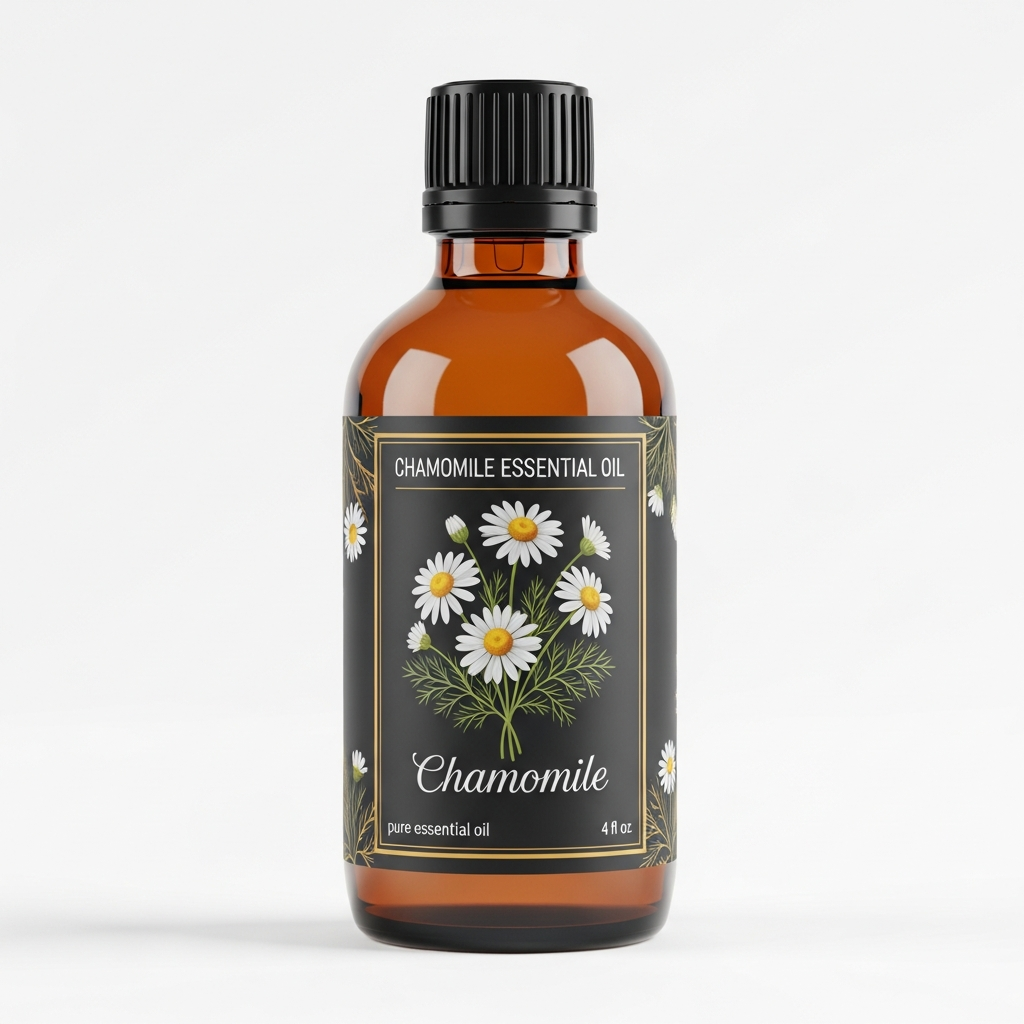
Chamomile Essential Oil
Our own Chamomile Essential Oil, in sizes from 0.5 oz to bulk.
From $29.38
Shop Now →The confusion is completely understandable. Most people assume that "Roman" and "German" are simply regional labels for the same plant, the way "Bourbon" and "Reunion" are regional names for the same rose species. They are not. These are two genuinely distinct botanical species that happen to share a common name because they share a similar appearance and a long intertwined history of use in European gardens and stillrooms.
This guide walks through everything that separates the two oils: their botany, their chemistry, their scent, their cosmetic and aromatic uses, their quality markers, and their relative value. By the end, you will have a clear picture of which oil (or which combination of oils) belongs in your collection.
Botanical Origins and Plant Anatomy
Roman Chamomile: Anthemis nobilis (also classified as Chamaemelum nobile)
Roman chamomile is a low-growing perennial native to western Europe, particularly the British Isles, France, and parts of the Iberian Peninsula. It spreads along the ground in a mat-like fashion, reaching only about 30 centimeters in height when it flowers. The leaves are feathery and finely divided. The flowers are the classic white-petaled daisies with a yellow central cone, and in cultivated double-flowered varieties (particularly the flore pleno strain) the cones are almost entirely replaced by dense layers of white petals.
That double-flowered cultivar is actually the preferred source for Roman chamomile essential oil production. More petals mean more aromatic material per flower head. Historically, Roman chamomile was cultivated extensively in England, particularly around Mitcham in Surrey, which became synonymous with high-quality chamomile production. Today, the main commercial growing regions include England, France, Hungary, and parts of the United States.
The plant is remarkably hardy. It tolerates poor, sandy soils and actually tends to produce more aromatic flowers when grown under mild stress conditions. This is a useful detail when assessing quality: chamomile grown in rich, heavily irrigated soil can yield more biomass but less intense oil. You can read more about the aroma and character of this species in our detailed look at Roman chamomile essential oil's aroma character and everyday uses.
German Chamomile: Matricaria chamomilla (also called Matricaria recutita)
German chamomile is a taller annual plant, typically growing between 15 and 60 centimeters in height. It is native to southern and eastern Europe and western Asia, and it has naturalized so successfully across temperate zones worldwide that it is sometimes considered a weed in agricultural fields. The flowers are single-rayed, with white petals that characteristically reflex (bend downward away from the central yellow disc) as the flower matures. This reflexing is one of the botanical features used to distinguish it in the field from other chamomile-like species.
Germany, Hungary, Egypt, Morocco, and Argentina are among the most significant commercial producers today. Each growing region imparts slightly different chemical profiles to the oil, a point worth understanding when you are comparing products from different suppliers.
German chamomile is an annual, which means it must be replanted each season. The seeds are tiny and production is labor-intensive. Combined with the oil's characteristically low yield, this contributes significantly to its cost. Our companion article on why German chamomile oil stands apart explores those production nuances in greater depth.
A Note on Naming Confusion
Both species have accumulated a tangle of common names over the centuries. Roman chamomile is also called English chamomile, garden chamomile, ground apple, and low chamomile. German chamomile is also called Hungarian chamomile, true chamomile, wild chamomile, and blue chamomile (a name that makes sense once you understand its color, which we cover in the next section). The Latin binomials are the only reliable way to confirm which oil you are purchasing. Always check the botanical name on the label.
Distillation Method
Both oils are produced by steam distillation of the flower heads, though some producers include the upper stems and leaves in German chamomile distillations. The flowers are harvested at peak bloom, typically in the morning after the dew has dried, and distillation ideally happens the same day or within a short window to preserve volatile aromatic compounds. Cold expression is not used for either species. CO2 extraction is available for German chamomile and produces an oil with a somewhat different chemical profile than steam-distilled versions, a distinction worth knowing if you encounter both on the market.
Color, Chemistry, and What Those Differences Mean
The Blue Oil: Why German Chamomile Looks the Way It Does
German chamomile essential oil is one of the most visually striking substances in the natural fragrance world. Fresh, high-quality oil is a deep, vivid blue, ranging from cobalt to midnight indigo. Hold a small amount up to light and it is almost jewel-like. This color comes from a single compound: chamazulene.
Chamazulene is not present in the living plant. It forms during the steam distillation process itself, when heat converts a sesquiterpene precursor called matricine into the vivid blue molecule. This is a fascinating example of distillation chemistry creating a compound that does not exist in the raw botanical material. The higher the chamazulene content in a given batch of oil, the deeper and more saturated the blue color.
Chamazulene content varies considerably depending on the plant's geographic origin, growing conditions, the age of the flowers at harvest, and distillation parameters. Egyptian and Hungarian German chamomile oils tend to have particularly high chamazulene levels, often in the 10 to 30 percent range, while some Argentinian and eastern European batches run lower. Gas chromatography and mass spectrometry (GC/MS) testing is the gold standard for confirming actual chamazulene percentages, and reputable suppliers make these reports available to customers.
Our dedicated explainer on why blue chamomile essential oil is blue goes deeper into the chemistry of chamazulene for readers who want a thorough understanding of this compound.
Alpha-Bisabolol: The Other Key Compound in German Chamomile
Beyond chamazulene, German chamomile oil contains significant amounts of alpha-bisabolol and its oxide forms (bisabolol oxide A and bisabolol oxide B). Alpha-bisabolol is a monocyclic sesquiterpene alcohol that has been the focus of considerable cosmetic research, particularly around its potential role in skin formulations. Cosmetic chemists value it highly, and it is often standardized and sold separately as a skin-care ingredient. Finding it naturally concentrated in the whole essential oil is part of what makes German chamomile appealing for botanical beauty formulations.
Roman Chamomile Chemistry: Esters in Abundance
Roman chamomile essential oil tells a completely different chemical story. Its profile is dominated by esters, particularly isobutyl angelate, isoamyl angelate, and a range of other angelate and tiglate esters. Esters as a chemical class are associated with fruity, sweet, and floral aromas, which explains a great deal about Roman chamomile's distinctive scent (covered in the next section).
Roman chamomile contains very little chamazulene, which is why its color is a pale straw yellow to very faintly blue, not the vivid indigo of its German counterpart. Some Roman chamomile oils appear almost colorless. This is normal and does not indicate lower quality.
The ester-rich nature of Roman chamomile makes it particularly interesting to perfumers and aromatherapists who work with scent and atmosphere. Esters tend to be perceived as gentle and approachable in blending work.
A Quick Chemistry Comparison at a Glance
| Feature | Roman Chamomile (Anthemis nobilis) | German Chamomile (Matricaria chamomilla) |
|---|---|---|
| Dominant chemical class | Esters (angelates, tiglates) | Sesquiterpenes and sesquiterpene alcohols |
| Key compounds | Isobutyl angelate, isoamyl angelate | Chamazulene, alpha-bisabolol, bisabolol oxides |
| Color | Pale straw to faint blue | Deep cobalt to midnight blue |
| Viscosity | Thin, watery | Slightly more viscous |
| Typical GC/MS verification markers | High ester percentage (often 70-80%) | Chamazulene %, bisabolol % verified |
What Adulteration Looks Like
Both chamomile oils are frequent targets for adulteration, largely because of their relatively high cost. German chamomile is sometimes extended with cheaper blue-colored sesquiterpene fractions or with added synthetic chamazulene to simulate the expected color without the full aromatic complexity. Roman chamomile is sometimes blended with cheaper ester-rich oils, such as Cape chamomile (Eriocephalus punctulatus), which is a completely different botanical species and not a genuine substitute. A reliable GC/MS report is your best protection against paying premium prices for diluted or extended product.
Aroma Profiles: What Each Oil Actually Smells Like
Roman Chamomile: Sweet, Fruity, and Floral
Roman chamomile essential oil has one of the most immediately pleasant, crowd-pleasing aromas in the essential oil world. The dominant impression is sweet and apple-like, a quality that comes directly from those angelate esters. Beneath the fruit note there is a warm, hay-like quality and a delicate floral softness that keeps the overall character from being cloying. Some noses detect a faint straw or dried grass nuance in the dry-down.
The scent is light and diffuses gently. It does not project aggressively the way some resinous or spicy oils do. This makes it easy to work with in blending, since it tends to support other ingredients rather than dominate them. In perfumery terms it can function as a heart note with soft, rounded top-note tendencies.
The intensity of the scent varies noticeably between suppliers and growing regions. English-grown Roman chamomile tends to be considered a benchmark for sweetness and finesse. Some French-grown oils have a slightly more herbaceous edge. Neither is better or worse; they simply reflect the influence of terroir on aromatic character, much the way wine grapes from different regions produce different flavor profiles from the same variety.
German Chamomile: Deep, Earthy, and Complex
German chamomile essential oil smells nothing like Roman chamomile. Many people encounter it for the first time expecting something sweet and floral, and instead find an aroma that is earthy, mossy, slightly musty, and deeply herbaceous. There is warmth to it, and a kind of medicinal depth that some find immediately intriguing and others find challenging.
The blue color actually contributes psychologically to how people perceive the scent. Knowing you are smelling something that looks like indigo ink seems to prime the brain for depth and complexity. The aroma has been described variously as resembling dark tea, damp earth after rain, dried hay, and a kind of sweet-bitter botanical character. It is not an easy scent to categorize, which is part of what makes it so interesting to experienced blenders.
In formulation, German chamomile's intensity means a small amount goes a long way. A few drops in a blend can provide a grounding, earthy base that adds dimension without overwhelming the primary scent direction.
Side-by-Side Scent Notes
| Aroma Dimension | Roman Chamomile | German Chamomile |
|---|---|---|
| First impression | Sweet, fruity, apple-like | Deep, earthy, herbaceous |
| Floral quality | Soft and warm | Minimal, almost absent |
| Herbaceous quality | Faint, hay-like undertone | Prominent, slightly bitter |
| Dry-down | Soft, slightly powdery | Earthy, mossy, lingering |
| Intensity | Gentle, approachable | Stronger, more tenacious |
| Typical perfumery role | Heart to top note bridge | Base to heart grounding note |
How the Scents Blend Together
An interesting and underused approach is blending small amounts of both oils together. Roman chamomile brings the sweetness and lightness. German chamomile provides depth and complexity. The combination can produce a richer chamomile accord than either oil achieves alone. The ratio is typically weighted toward Roman chamomile (perhaps 3:1 or 4:1) since German chamomile's intensity and color can otherwise overpower the blend.
Everyday Uses: Aromatic, Cosmetic, and Blending Applications
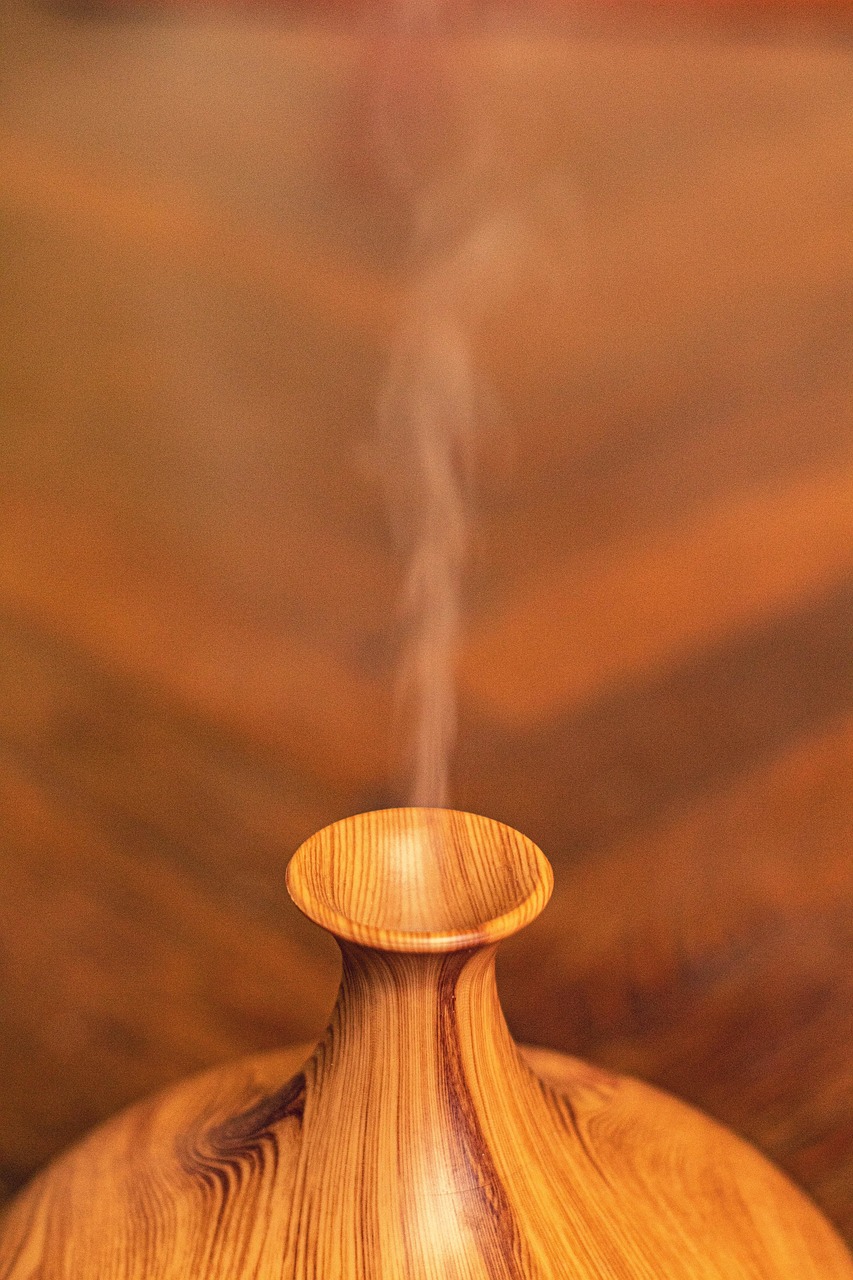
Diffusion and Aromatic Use
Both chamomile oils work beautifully in home diffusion, though they suit different moods and settings.
Roman chamomile diffuses into a soft, dreamy sweetness that many people associate with a quiet evening atmosphere. It pairs naturally with lavender, bergamot, clary sage, sandalwood, and cedarwood. A simple bedtime wind-down blend might use Roman chamomile as the aromatic anchor, supported by a few drops of lavender and a touch of vetiver. The resulting atmosphere is soft and unhurried.
German chamomile is less commonly used as a primary diffusion oil because of its intensity and somewhat challenging raw scent profile. It comes into its own as a supporting player in more complex diffuser blends, adding a grounding earthy dimension to blends built around other florals or herbaceous oils. Try a small amount alongside rose geranium, frankincense, or sandalwood.
A general guideline: start with 1 to 2 drops of German chamomile in any diffuser blend and adjust upward slowly. Roman chamomile is more forgiving and can be used in slightly larger quantities without the risk of overwhelming the blend.
Skin and Cosmetic Formulations
Both oils have established places in cosmetic formulation, though they serve different purposes and suit different product types.
German Chamomile in Skin Care
German chamomile is prized in cosmetic formulation primarily for its high alpha-bisabolol content. Bisabolol has been extensively studied by cosmetic chemists and appears in a wide range of commercially produced skin-care products. When working with the whole essential oil in DIY formulations, that bisabolol content is part of the full aromatic package.
German chamomile is commonly used in facial serums, botanical facial oils, sensitive-skin formulations, and products designed for mature skin. The deep blue color can be a feature (tinting a finished product a beautiful pale blue at low concentrations) or something to account for in clear formulations where color matters. At very low use levels (0.5 percent and below in a finished product), the color contribution is minimal.
A sensible starting dilution for a facial oil is 0.5 to 1 percent in a suitable carrier such as jojoba, rosehip, or marula oil. Patch testing is non-negotiable with either chamomile oil, and particularly important for anyone with known sensitivities to plants in the Asteraceae family, which includes ragweed, chrysanthemums, and marigolds. People with Asteraceae sensitivities should consult a healthcare professional before using either chamomile oil on skin.
Roman Chamomile in Skin Care
Roman chamomile is a popular choice for cosmetic formulations aimed at promoting a sense of calm, softness, and comfort in a skin ritual. Its gentle, sweet scent makes it appealing in products like facial mists, body oils, bath preparations, and leave-on facial products. The ester-rich chemistry gives it a reputation for being one of the gentler essential oils in skin use, though no essential oil is universally gentle and patch testing remains essential.
It is commonly blended with lavender, rose, neroli, and sandalwood in prestige skin-care formulations. The combination of Roman chamomile and lavender at a combined 1 to 2 percent dilution in a carrier oil is a classic pairing that has appeared in natural skin-care products for decades.
A note on organic options: because chamomile flowers are harvested and distilled in quantity and because the agricultural practices of the grower directly affect what ends up in the oil, many formulators and consumers choose to prioritize organic certification. Our look at whether organic Roman chamomile essential oil is worth the premium covers the certification landscape and what organic labeling actually means for oil quality.
Bath and Body Rituals
Chamomile oils have a long tradition of use in bathing rituals. Both oils can be incorporated into bath preparations with some important caveats.
Essential oils do not disperse in water. Adding undiluted essential oil directly to a bath creates floating droplets that can contact skin and mucous membranes at full concentration, which is a skin sensitization risk. Always pre-mix essential oils into a dispersant before adding to bath water. Suitable dispersants include unscented bath salts, a small amount of a liquid carrier oil, full-fat milk, or a commercially formulated bath dispersant. A typical usage level is 3 to 6 drops of essential oil per bath, pre-dispersed.
Roman chamomile's sweet, apple-like scent creates a particularly pleasant aromatic bath experience. German chamomile's deeper profile can feel grounding in a bath blend, though its color may tint light-colored bath salts a faint blue, which many people actually find appealing.
Blending Reference by Application
| Application | Roman Chamomile | German Chamomile |
|---|---|---|
| Bedtime diffuser blend | Primary oil, 3-4 drops | Supporting note, 1 drop maximum |
| Facial serum or oil | 0.5-1% dilution | 0.5-1% dilution |
| Body oil or lotion | 1-2% dilution | 0.5-1% dilution |
| Aromatic bath blend | 3-5 drops, pre-dispersed | 1-2 drops, pre-dispersed |
| Perfume work | Heart note | Base/grounding note |
Safety and Dilution Guidelines
Dilution matters. Both chamomile oils should always be diluted in a suitable carrier oil or formulation base before any skin contact. A 1% dilution equals approximately 6 drops of essential oil per 1 fluid ounce (30 ml) of carrier. For facial use or for anyone with sensitive skin, starting at 0.5% or below is a reasonable approach. Always perform a patch test 24 hours before using any new essential oil on larger areas of skin. If you are pregnant, nursing, or have known plant allergies in the Asteraceae family, consult a qualified healthcare provider before using either oil. Keep all essential oils away from children and pets.
Quality, Sourcing, and What to Look for When Buying
Reading the Label
The most important piece of information on any essential oil label is the Latin botanical name. For Roman chamomile, look for Anthemis nobilis or Chamaemelum nobile. For German chamomile, look for Matricaria chamomilla or Matricaria recutita. If a label says only "chamomile" without specifying the botanical name, that is a quality red flag. You have no reliable way of knowing what you are getting.
Other information to look for on a quality label or in a product listing:
- Country of origin. This affects aromatic character and chemistry. A reputable supplier will specify this.
- Plant part used. For chamomile oils, this should be the flower (or flowers and upper plant material for German chamomile).
- Extraction method. Should be steam distillation for both. CO2 extract is a legitimate but different product and should be labeled as such.
- Lot or batch number. Essential oils are a natural product with inherent batch-to-batch variation. Suppliers with proper quality systems track lots and can provide batch-specific GC/MS reports.
- Certification status. Organic certification from a recognized body (USDA Organic, ECOCERT, Soil Association) is worth noting if it matters to your purchasing criteria.
GC/MS Testing and Why It Matters
Gas chromatography and mass spectrometry testing is the most reliable analytical tool for verifying essential oil composition. A GC/MS report for a given batch will list the identified compounds and their approximate percentages. For German chamomile, this lets you verify chamazulene content and bisabolol levels. For Roman chamomile, you can confirm that the expected ester profile is present at appropriate levels.
Reputable suppliers either conduct GC/MS testing in-house or use accredited third-party laboratories, and they make batch-specific reports available on request or via their website. If a supplier cannot or will not provide a GC/MS report, that is worth factoring into your purchasing decision.
Color as a Quality Indicator
For German chamomile specifically, color is one of the most immediate quality indicators. A deep, vivid blue indicates significant chamazulene content. Oil that is pale blue-gray, greenish, or brown may indicate older stock, improper storage, adulteration, or a low-chamazulene cultivar or origin. It is not automatically inferior (low-chamazulene German chamomile still contains bisabolol and other valuable compounds), but for buyers specifically seeking the full-spectrum chamazulene-rich profile, color matters.
Chamazulene does degrade over time, and German chamomile oil naturally shifts from vivid blue toward green and eventually toward an olive-brown as it oxidizes or ages. Proper storage (dark amber or cobalt glass bottles, away from heat and light, with minimal headspace) slows this significantly.
For Roman chamomile, color is less diagnostically useful. Pale yellow to faintly blue is normal. The scent is a better quality indicator: fresh Roman chamomile should smell sweet, fruity, and recognizably apple-like. An off, musty, or flat scent suggests the oil may be oxidized or poorly stored.
Choosing Between Suppliers
The essential oil market ranges from pharmaceutical-grade suppliers serving the fragrance and food industries all the way to resellers offering inexpensive oils with little traceability. For chamomile specifically, given the adulteration risks and price premiums, sourcing from suppliers who specialize in essential oils (rather than general wellness retailers who carry oils as a secondary category) tends to yield better results.
Direct relationships with distillers or growers, common in the small-batch artisan market, can offer exceptional traceability. You may pay more per milliliter, but you also get far more information about exactly what you are buying. The price tiers section below breaks down the economic factors behind pricing at various quality tiers.
Storage Best Practices
- Store both oils in tightly sealed dark glass bottles (amber or cobalt).
- Keep away from direct light, heat, and temperature fluctuations. A cool, dark cabinet is ideal.
- Minimize the air space in the bottle. As the oil level drops, consider transferring to a smaller bottle to reduce oxidation.
- Typical shelf life is 2 to 3 years for Roman chamomile and 2 to 4 years for German chamomile when properly stored, though peak aromatic quality is often best in the first year or two after distillation.
- Note the batch date (or best-by date) when you purchase and use older stock first.
Price, Value, and Getting the Most from Your Purchase
Why Both Oils Cost More Than Many Essential Oils
Chamomile essential oils are among the more expensive options in the aromatherapy market, and the price gap between chamomile and commodity oils like sweet orange or eucalyptus can surprise newcomers. The reasons are straightforward when you understand the production realities.
Both species produce very small amounts of essential oil relative to the weight of flowers required. Estimates vary by source and by growing season, but rough figures suggest that somewhere between 50 and 200 kilograms of fresh Roman chamomile flowers are needed to produce a single kilogram of essential oil. For German chamomile, the figures can run even higher because the flower heads are smaller and the oil content per flower is lower.
Harvesting is labor-intensive. Chamomile flowers do not all bloom simultaneously. A single field may require multiple passes by hand or with specialized harvesting equipment across a several-week blooming window. Any delay past peak bloom can reduce both yield and quality.
German Chamomile Typically Costs More
As a general market observation, German chamomile essential oil tends to command a higher price per milliliter than Roman chamomile of comparable quality. Several factors drive this premium.
- Lower oil yield per unit of flower material
- Annual replanting requirement (it is not a perennial like Roman chamomile)
- High demand for its cosmetic applications, particularly alpha-bisabolol content
- The prestige and recognizability of the deep blue color in finished cosmetic products
That said, price alone is not a reliable quality indicator for either oil. The market includes expensive oils of mediocre quality and modestly priced oils from excellent producers. Research the supplier as much as you research the price.
Practical Value Considerations
Both oils are used at low dilution levels in finished preparations, which means a 5 ml or 10 ml bottle goes further than the sticker price might suggest. At a 1% dilution in a 30 ml carrier, a 5 ml bottle of essential oil provides enough for 150 ml of finished product. Used thoughtfully, a single bottle of quality chamomile essential oil can last a committed user six months to a year or more.
If budget is a constraint and you can only start with one, Roman chamomile's approachability, versatility in blending, and slightly lower average price point make it the more accessible entry point for most people. That said, the choice ultimately depends on what you want to do with the oil, a question we address directly in the next section.
For a granular look at price tiers, market positioning, and what you should realistically expect to pay at each quality level, see the next section.
What Should You Expect to Pay? Price Tiers and Typical Ranges
If you have ever shopped for chamomile essential oil and found prices ranging from $8 to $80 for what seems like the same product, you are not imagining things. The spread reflects real differences in species, origin, certification, and quality tier. As a broad guide, genuine Roman chamomile from a reputable supplier typically runs between $25 and $55 for a 5 ml bottle at retail, with certified organic versions pushing toward the higher end of that range or beyond. German chamomile commonly retails between $15 and $60 for 5 ml depending on origin, chamazulene content, and certification, with premium organic material from established European distilleries at the top of the range.
Entry Level: $15 to $25 for 5 ml
At this price point you will mostly find mainstream Roman chamomile and non-organic German chamomile from wider growing regions. A quality entry-level oil will still have a clear botanical name on the label, come in dark glass, and ideally include a link or QR code to testing documentation. Brands that sell primarily through natural food retailers or specialty aromatherapy shops tend to be more consistent here than heavily discounted marketplace listings. Expect a gentle, pleasant scent that works well in diffuser blends or simple diluted applications.
Mid Range: $30 to $55 for 5 ml
This is where you start finding better-sourced Roman chamomile and high-grade German chamomile. At this tier, look for brands that specify the growing region (not just the country), that publish GC/MS reports with batch numbers, and that offer some customer service transparency. The scent quality becomes noticeably more complex. German chamomile at this price should show genuine blue color, not a watered-down greenish tinge that might suggest dilution or poor distillation.
Premium: $60 and above for 5 ml
Premium chamomile oils often reflect wildcrafted or certified organic sourcing, single-origin growing regions, or small-batch artisan distillation. Some producers in Hungary or France sell directly to consumers or through specialist importers. At this level, you should expect full traceability, a distinct and complex aroma, and documentation that goes beyond a basic label. If a premium-priced oil cannot provide GC/MS data on request, it is not worth the premium.
Price as a Quality Signal
Genuine chamomile essential oil is not cheap to produce, for all the yield and harvest reasons covered above. If you see a 10 ml bottle of either species for under eight or ten dollars, treat that as a red flag rather than a bargain. It is almost certainly adulterated, synthetic, or mislabeled. A suspiciously cheap Roman chamomile oil may not be Roman chamomile at all, and a colorless "German chamomile" is either heavily adulterated or a different plant entirely.
A useful rule: the more a brand talks about scent character, sourcing story, and testing transparency, the more seriously they take quality. Marketing that leans entirely on vague wellness language and says almost nothing about the plant or the distillation process is worth reading skeptically.
Smart Shopping: Red Flags, Bottle Size, and Where to Buy
Red Flags to Avoid
The following patterns appear consistently in lower-quality or misleading chamomile oil listings. Recognizing them before you check out saves frustration.
- "Chamomile fragrance oil" labeled as essential oil: Fragrance oils are synthetic compositions. They have their uses in candle making and some cosmetic applications, but they are not essential oils and should not be priced or marketed as such.
- No Latin name anywhere on the bottle or listing: This is the single fastest way to spot a vague or potentially mislabeled product.
- Suspiciously uniform pricing across many oils: Some retailers sell every essential oil at the same price point regardless of the plant. Chamomile, rose, and neroli all priced at $9.99 per bottle is a clear sign that something is off.
- Plastic bottles: Never appropriate for undiluted essential oils.
- No batch traceability: If you cannot trace the product back to a specific harvest or distillation run, you have no way to verify what you are getting.
- "Pure and natural" as the only quality claim: These phrases have no regulatory definition in the essential oil market. They are marketing language, not quality assurance.
- German chamomile that is yellow or clear: Genuine German chamomile is blue. A colorless version is either heavily adulterated or is not German chamomile at all.
How Much Should You Actually Order?
New chamomile oil buyers often either under-order (and pay high per-milliliter costs repeatedly) or over-order (and end up with more oil than they can use before it begins to oxidize). The guide on chamomile essential oil sizes and which bottle to order covers this in practical detail. The short answer: a 5 ml bottle is sensible for a first purchase of either variety, giving you enough to test in formulas and diffuser blends without committing to a large volume before you know how you will use it.
Where to Buy
Specialist aromatherapy retailers. Companies that focus specifically on essential oils and aromatherapy supplies have more incentive to maintain quality standards. They often publish GC/MS data, employ staff with botanical knowledge, and source from established distillery relationships.
Natural and organic grocers. Physical retail locations allow you to read the label before you buy. Selection tends to be limited to a handful of brands, but those brands have often passed some level of retailer vetting.
Direct from distillers or importers. Buying directly from a distillery, farm, or specialty importer often gives you the best combination of traceability and value. Look for producers in Hungary, Bulgaria, Egypt, France, or the UK who sell directly to consumers or work with vetted distribution partners.
General online marketplaces. These platforms offer enormous selection and competitive pricing, but the quality range is equally enormous. If you shop here, stick to brands you have already researched, check that testing documentation is available, and read the one- and two-star reviews carefully for patterns around scent inconsistency or labeling concerns.
A Note on Pre-Blended Chamomile Products
Some brands offer pre-blended chamomile products that combine both species, or mix chamomile with complementary oils like lavender or frankincense. These can be excellent for beginners who want a ready-to-use option without the learning curve of building their own blend. The trade-off is transparency: you get less control over ratios, and some blends use very small percentages of chamomile while still leading with it in the name. Read the ingredient list and apply the same label and documentation standards you would to a single-origin oil.
Which Chamomile Oil Should You Choose?
The Short Version
If you primarily want an oil for aromatic use, diffuser blends, and gentle skin rituals centered around a sweet floral scent, Roman chamomile is probably the better starting point. If you are formulating cosmetic products with a specific interest in bisabolol-rich botanical ingredients, and if you want to work with one of the most chemically distinctive and visually striking oils in the botanical palette, German chamomile deserves serious consideration.
Many enthusiasts end up with both. They serve genuinely different purposes and rarely compete with each other in practical use.
Decision Framework by Use Case
| Primary Goal | Better Choice | Notes |
|---|---|---|
| Diffusion for a calm evening atmosphere | Roman chamomile | Sweeter, more approachable scent profile |
| Skin-care formulation with botanical bisabolol | German chamomile | High bisabolol content; deep blue may tint products |
| Perfumery and scent blending | Both, for different roles | Roman as heart/top bridge; German as grounding base |
| Bedtime routine body oil | Roman chamomile | Light, comforting scent complements wind-down rituals |
| Prestige facial oil with visual interest | German chamomile | Vivid blue imparts beautiful color at low levels |
| First chamomile purchase on a moderate budget | Roman chamomile | Lower average price; highly versatile starting point |
| Gift for an experienced essential oil user | German chamomile | Distinctive, collectible, and deeply interesting to explore |
Working with Both: A Suggested Approach for New Buyers
If you are new to chamomile essential oils and want to make an informed first purchase, the most practical path is usually to start with Roman chamomile. Get to know its scent thoroughly. Smell it on a test strip at various intervals over 20 to 30 minutes to observe how it evolves. Blend it in a simple carrier oil and use it in a diffuser blend. Once you have a real sensory baseline for Roman chamomile, experiencing German chamomile for the first time becomes far more meaningful because the contrast is so striking.
That sequential approach also protects you from a common frustration: buying German chamomile first, finding the earthy intensity surprising, and concluding (incorrectly) that you simply do not like chamomile oil.
The smart shopping section above walks through this decision with more specific purchasing recommendations and what to watch for when evaluating products.
A Note on Varieties and Specialty Oils
Beyond the two main chamomile essential oils, you may encounter a few related products worth knowing about. Cape chamomile (Eriocephalus punctulatus) is a South African plant that produces a distinctly different sweet-fruity oil and is not a true chamomile, though it shares some aromatic similarities with Roman chamomile. Moroccan chamomile or wild chamomile (Ormenis multicaulis) is another unrelated species sometimes sold under the chamomile name. These are interesting oils in their own right, but they should not be confused with or substituted for authentic Roman or German chamomile essential oil.
Always, again, check the Latin binomial on the label.
Bringing It All Together
The roman vs german chamomile essential oil question does not have a single correct answer. It has two very different and complementary answers, depending on what you are trying to accomplish. Roman chamomile offers sweetness, gentleness, and aromatic accessibility. German chamomile offers depth, complexity, visual drama, and a chemical profile that has earned it a distinct place in serious botanical cosmetic formulation.
Both oils reward patience, careful sourcing, and a willingness to explore them slowly rather than using them as background ingredients without real attention. Smell them separately. Blend them together. Compare batches from different origins. The more you engage with these two oils as individual botanical products, each with a specific plant origin and a specific set of characteristics, the more you will appreciate what makes the roman chamomile essential oil and the german chamomile essential oil so different from each other, and why both have earned their respected positions in the world of botanical aromatics.
For a guided starting point, revisit the smart shopping checklist above, or dive deeper into each oil individually through our dedicated profiles on Roman chamomile's aroma and character and what makes German chamomile stand apart.