Why Is Blue Chamomile Essential Oil Blue? Chamazulene Explained
Open a bottle of genuine German chamomile essential oil for the first time and the color stops you. It is not pale yellow, not clear, not the soft honey tone you might expect from dried chamomile flowers. It is a deep, inky blue that looks almost impossible for a plant-derived oil. New users sometimes wonder whether dye has been added, or whether the bottle is simply mislabeled. Neither is true. That color is real, it is natural, and it tells you something important about what is inside.
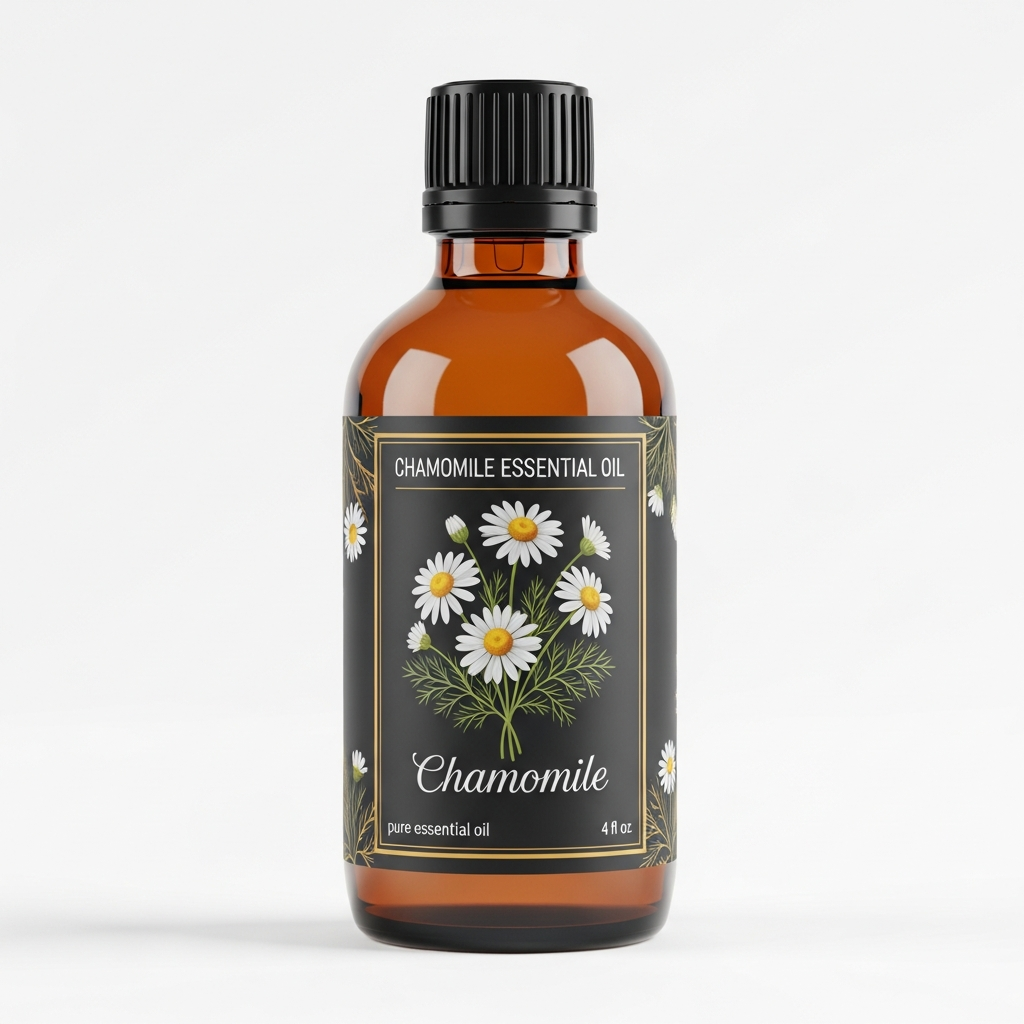
Chamomile Essential Oil
Our own Chamomile Essential Oil, in sizes from 0.5 oz to bulk.
From $29.38
Shop Now →The pigment responsible is a compound called chamazulene, and understanding it unlocks a much richer picture of what blue chamomile essential oil actually is, how it is made, and what to look for when you buy it.
The Short Answer: Chamazulene Does Not Exist in the Living Plant
Here is the detail that surprises most people. Chamazulene is not present in chamomile flowers before distillation. Fresh chamomile blossoms do not contain it. Instead, the flowers contain a precursor compound called matricine (sometimes written matrizine), which sits quietly in the plant tissue doing nothing visually dramatic at all.
When steam distillation begins and heat is applied, matricine undergoes a chemical transformation. The heat causes decarboxylation and dehydration of the molecule, and what emerges on the other side is chamazulene: a sesquiterpene with a vivid blue color and a molecular structure that absorbs red and yellow light, leaving blue visible to the eye. The deeper the blue in a finished oil, the higher the chamazulene content tends to be.
This is why the color is considered a quality signal, though not the only one. It means the distillation actually processed chamomile with a meaningful matricine load, and that the heat conversion worked as expected.
Chemical Composition of Blue Chamomile Essential Oil
Chamazulene gets most of the attention because of its visual drama, but it is one part of a more complex chemical profile. German chamomile oil is a sesquiterpene-rich oil, meaning the majority of its active constituents belong to this class of compounds, each with a distinct character.
Key Compounds and What They Contribute
| Compound | Type | Typical % Range in German Chamomile | Notes |
|---|---|---|---|
| Chamazulene | Sesquiterpene | 1% to 35% | Responsible for the blue color; varies widely by origin and harvest |
| Alpha-bisabolol | Sesquiterpene alcohol | 10% to 65% | Often the dominant compound; associated with a mild, smooth aroma character |
| Alpha-bisabolol oxide A | Sesquiterpene oxide | 5% to 50% | A key variable in distinguishing oil origins and quality grades |
| Alpha-bisabolol oxide B | Sesquiterpene oxide | Trace to 25% | Present at lower levels; contributes to the overall sesquiterpene profile |
| Cis-en-yn-dicycloether | Polyacetylene ether | Variable | Less commonly discussed; some research notes its presence in high-quality distillates |
These percentages shift considerably depending on the botanical species, the geographic origin of the plant, the time of harvest, and the distillation process used. A German chamomile oil from Egyptian cultivation may look and smell noticeably different from one produced in Hungary or Croatia, even though both are genuine Matricaria chamomilla (also called Matricaria recutita) oils.
What Research Observations Tell Us About Chamazulene
Chamazulene has attracted genuine scientific curiosity, and a body of published research does exist around it. The framing here matters. These are observations from laboratory and preliminary studies, not established clinical findings, and they do not translate into health claims about any product you might use at home.
Some research suggests that chamazulene may interact with certain biological pathways at a cellular level. Studies have examined its behavior in laboratory settings, observing how it interacts with oxidative processes. Research published in botanical and phytochemical journals has noted that chamazulene demonstrates particular behavior in free radical scavenging assays, meaning it appears to interact with unstable molecules in controlled test conditions.
Alpha-bisabolol, the other major constituent, has its own research trail. Some studies suggest it may support the appearance of skin that looks calm and even-toned. Cosmetic formulators have used bisabolol as an ingredient for decades, particularly in formulations intended for skin that appears sensitive or reactive. This is a cosmetic application, not a medical one, and the distinction is important.
Research into the overall chemical complexity of chamomile essential oil suggests that its various compounds may work in a synergistic way, though exactly how these interactions function is still an area of active study. What is clear is that the oil is not a single-compound product. Its character comes from the entire profile working together.
Why Chamazulene Content Varies So Much

One of the most common questions from buyers is why one blue chamomile oil looks almost navy while another looks closer to teal. The answer lies in several overlapping variables.
Botanical Species
Chamazulene is primarily associated with German chamomile (Matricaria chamomilla). Roman chamomile (Chamaemelum nobile) produces a very different oil with a much lighter color, typically pale yellow to clear. If you are looking for the blue color specifically, you want the German species. For a comparison of these two distinct oils and how they differ in aroma, application, and character, see our guide on Roman chamomile essential oil.
Harvest Timing
Matricine content in the flowers peaks at a specific window of bloom. Flowers harvested slightly early or past their prime may contain less matricine, which means less chamazulene after distillation and a paler oil. Skilled growers and distillers pay close attention to this window, and producers who prioritize quality will often harvest in multiple passes to catch flowers at their peak.
Distillation Conditions
The conversion of matricine to chamazulene requires heat, but the relationship between temperature, distillation time, and yield is not perfectly linear. Extended distillation at lower pressure, for example, can influence how much chamazulene forms and how much of the delicate volatiles are preserved. This is why artisanal small-batch distillers often produce oils with profiles that differ from those of high-volume industrial operations, even when using the same plant material.
Geographic Origin and Soil
Soil composition, climate, and altitude all influence the secondary metabolite profile of chamomile. Egyptian chamomile tends to be high in chamazulene content, producing deeply colored oils. Hungarian and German-grown chamomile often produces oils with higher bisabolol ratios. Neither is inherently superior. They are simply different, and each suits certain applications better than others.
Safety Profile and Contraindications
Blue chamomile essential oil is generally considered one of the gentler oils in the botanical world, but gentle does not mean risk-free. A thoughtful approach to safety is always appropriate.
Dilution
As with all essential oils, undiluted application directly on skin is not recommended. A standard dilution for most adults is 1% to 2% in a carrier oil for facial or sensitive skin applications, and up to 3% for general body use. For children, elderly individuals, or those with reactive skin, staying at or below 1% is a reasonable starting point. Always measure rather than estimate.
Patch Testing
Before using blue chamomile essential oil in any new way, perform a patch test. Apply a small amount of your diluted blend to the inner forearm, cover loosely, and wait 24 hours. If no reaction appears, you can proceed with more confidence. Even oils with a gentle reputation can cause reactions in some individuals.
Ragweed and Compositae Family Sensitivity
Chamomile belongs to the Asteraceae (Compositae) plant family, which includes ragweed, marigold, and chrysanthemum. People who have known sensitivities to plants in this family should approach chamomile oil with extra caution and consult a qualified healthcare provider before use.
Pregnancy and Nursing
The safety of concentrated essential oil use during pregnancy or while nursing has not been thoroughly studied. Out of caution, most aromatherapy practitioners advise avoiding most essential oils during the first trimester and using them only with professional guidance thereafter. Always consult your healthcare provider.
Photosensitivity
German chamomile essential oil is not considered a photosensitizing oil, unlike many citrus oils. However, if you are using a blend that contains multiple oils, check each one individually for photosensitivity concerns before sun exposure.
Sourcing and Quality Indicators
Given how much chamazulene content can vary, and how easily a pale or diluted oil could be passed off as genuine, knowing what to look for when sourcing matters a great deal.
Gas Chromatography and Mass Spectrometry (GC/MS) Reports
A reputable supplier of blue chamomile essential oil should be able to provide a GC/MS analysis report for each batch. This report shows the actual chemical constituents and their percentages, giving you a verifiable picture of what is in the bottle. Look for chamazulene content listed, along with alpha-bisabolol and its oxides. If a supplier cannot or will not provide this documentation, that is worth noting.
Color as an Indicator, Not a Guarantee
A vivid blue color is a good sign, but it is not a foolproof marker of quality on its own. Synthetic chamazulene or azulene compounds can produce a blue color in a base oil without the full botanical complexity of genuine steam-distilled German chamomile. The GC/MS report remains the most reliable verification tool.
Botanical Transparency
Look for suppliers who disclose the Latin species name (Matricaria chamomilla or Matricaria recutita), the country of origin, the plant part used (the flower heads), and the extraction method (steam distillation). All of this information should be readily available. Vague labeling that simply says "chamomile oil" without further detail leaves too many questions open.
Packaging
Essential oils degrade with light and heat. Blue chamomile oil should be packaged in dark glass (amber or cobalt) with a tight seal. Avoid any product sold in clear glass or plastic containers.
Aroma Profile
Genuine high-chamazulene German chamomile oil has a strong, complex scent: sweet, herbaceous, slightly earthy, and distinctly different from the lighter, fruitier scent of Roman chamomile. An oil that smells flat, faint, or purely floral may have been diluted or adulterated. Experience with the scent develops over time, but a distinctive richness is something to expect from quality German chamomile oil.
The Color Is the Chemistry
What makes blue chamomile essential oil so visually arresting is the same thing that makes it botanically interesting. The blue is not decoration. It is direct evidence of a specific chemical transformation that happened during distillation, a transformation from a colorless plant precursor into a vividly colored sesquiterpene through the application of heat and steam.
Chamazulene content, the full sesquiterpene profile, the origin of the plant material, and the skill of the distiller all combine to produce what ends up in the bottle. That depth of complexity is exactly why blue chamomile essential oil continues to attract attention from cosmetic formulators, aromatherapy enthusiasts, and researchers alike. For anyone curious about how this oil compares in practice to its Roman counterpart, a detailed look at both species side by side is available in our Roman vs. German chamomile essential oil guide.