
How to Store Chamomile Oil: Shelf Life, Bottles, and Freshness
You spent real money on a quality bottle of chamomile essential oil. Maybe it was a small-batch Roman chamomile from a trusted distiller, or a rich, deep-blue German chamomile you ordered specifically for a blending project. Either way, the last thing you want is to open it six months later and find the scent has gone flat, the color has shifted, or the oil smells faintly rancid.
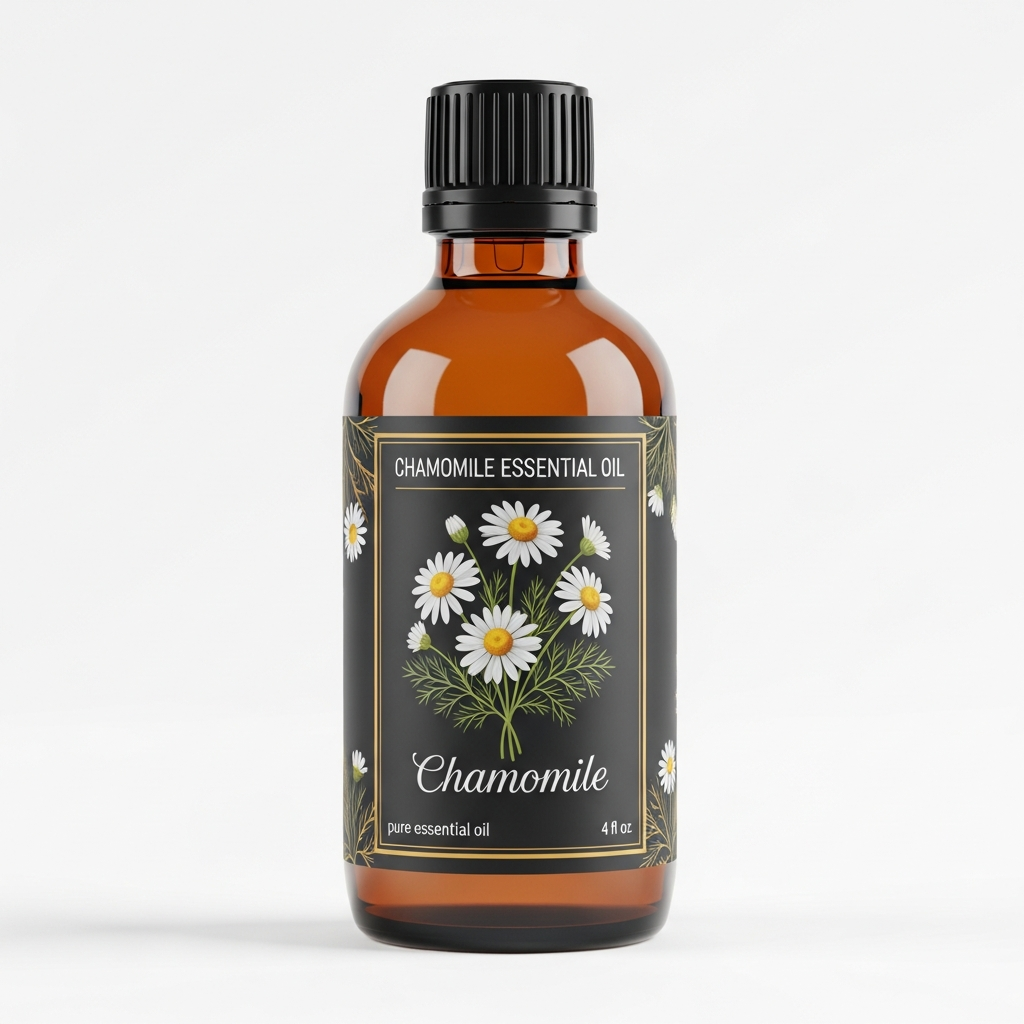
Chamomile Essential Oil
Our own Chamomile Essential Oil, in sizes from 0.5 oz to bulk.
From $29.38
Shop Now →Proper chamomile oil storage is not complicated, but it does require some deliberate choices about containers, conditions, and habits. This guide walks through everything you need to know to protect your investment and keep your chamomile oil in excellent condition from first use to last drop.
For a broader look at what makes this oil worth preserving in the first place, the complete guide to chamomile essential oil covers its botanical origins, varieties, and aromatic profiles in detail.
Understanding Chamomile Essential Oil Shelf Life
Before getting into the step-by-step storage process, it helps to understand what you are working with. Chamomile essential oil shelf life varies by type, and the two most common types behave quite differently over time.
Roman chamomile (Chamaemelum nobile) has a shelf life of approximately two to three years when stored well. Its lighter, more herbaceous character makes it somewhat more volatile, meaning its aromatic top notes fade faster than those of heavier oils.
German chamomile (Matricaria chamomilla) tends to hold up a little longer, often three to four years under ideal conditions. Its distinctive deep-blue color (from the compound chamazulene, formed during steam distillation) can actually deepen with age before eventually fading as the oil oxidizes.
Both types are vulnerable to the same four enemies: heat, light, air, and moisture. Your storage approach should address all four.
What You Will Need
- Amber or cobalt blue glass bottles with tight-fitting caps (ideally orifice reducers rather than open caps)
- A cool, dark storage location (a cabinet, drawer, or dedicated oil box)
- Labels with purchase dates and opening dates
- A permanent marker or label printer
- Optional: a small refrigerator or wine cooler dedicated to oil storage
- Optional: nitrogen spray canisters (for collectors with large or expensive stock)
Step-by-Step: How to Store Chamomile Oil Properly
Step 1: Choose the Right Bottle
Glass is non-negotiable. Essential oils are concentrated botanical extracts, and over time they can degrade certain plastics, pulling compounds from the container into the oil itself. Dark glass is your best option. Amber glass blocks most UV light. Cobalt blue glass does the same. Clear glass looks attractive but offers almost no protection from light exposure.
If your chamomile oil arrived in a clear bottle from the supplier, transfer it as soon as possible. Small amber bottles (5 ml to 15 ml) with orifice reducer caps are ideal because they limit how much air enters the bottle each time you use the oil.
Step 2: Label Everything Immediately
This step sounds obvious, but it is easy to skip in the moment. Write two dates on every bottle: the purchase date and the date you first opened it. Opened bottles begin oxidizing faster than sealed ones. Knowing when you first broke the seal tells you how much working time you realistically have left.
Also note the variety (Roman or German), the supplier, and the lot number if available. This information matters if you ever want to reorder a batch that performed particularly well in a blend.
Step 3: Store Away from Heat Sources
Heat accelerates oxidation and speeds the evaporation of volatile aromatic compounds. A kitchen cabinet above the stove is one of the worst possible spots. So is a bathroom shelf near a shower, where temperature and humidity fluctuate constantly.
Aim for a storage environment that stays consistently below 70 degrees Fahrenheit (21 degrees Celsius). A lower shelf in an interior closet, a dedicated wooden oil box, or a drawer in a room that does not get direct afternoon sun all work well. Consistency matters more than achieving an exact temperature. Repeated warming and cooling cycles are harder on oils than a steady moderate temperature.
Step 4: Keep Bottles Away from Light
UV light breaks down the chemical constituents in essential oils. Even indirect sunlight through a window can degrade chamomile oil over time. Dark glass helps, but it is not a complete solution on its own. The best approach is to store bottles in a location that simply does not receive light: inside a closed cabinet, a box, or a drawer.
If you keep oils on a display shelf for aesthetic reasons, choose a spot that receives no direct sunlight and consider placing the shelf away from windows entirely.
Step 5: Minimize Air Exposure
Every time you open a bottle, oxygen enters and begins interacting with the oil. A few practical habits dramatically reduce this effect.
- Replace the cap immediately after each use. Do not leave a bottle open on your workbench while you blend.
- Use orifice reducers so that drops dispense slowly and the opening stays small.
- When a bottle is more than three-quarters empty, consider transferring the remaining oil to a smaller bottle. Less headspace means less oxygen sitting above the oil.
- For valuable or rarely used oils, some enthusiasts use nitrogen spray (food-grade or wine-preservation canisters work fine) to displace the oxygen in the headspace before recapping. This is a step beyond what most people need for everyday use, but it is genuinely effective for preserving shelf life.
Step 6: Consider Refrigeration for Long-Term Storage
Refrigeration is one of the most effective ways to extend chamomile essential oil shelf life, particularly if you have bought a larger quantity than you will use quickly. A dedicated mini-fridge or wine cooler set to around 35 to 45 degrees Fahrenheit works well. Do not use your main kitchen refrigerator if you can avoid it; the constant opening, humidity, and food odors are not ideal.
One important note: cold storage can cause some oils to temporarily thicken or become more viscous. German chamomile, which is naturally a bit thick due to its chamazulene content, may appear almost gel-like when very cold. This is normal. Allow the bottle to come to room temperature before use, and the oil will return to its usual consistency.
Step 7: Perform Periodic Freshness Checks
Even with ideal storage, oils change over time. Get into the habit of doing a simple freshness check every few months.
- Open the bottle and take a slow, gentle sniff.
- Compare the scent to your memory of the oil when it was new, or to a fresh reference bottle if you have one.
- Look at the color. German chamomile that has fully lost its blue color and turned a brownish-yellow has likely oxidized significantly.
- Check the consistency. Oils that have become noticeably thicker, stickier, or cloudy (beyond the expected effects of cold) may be past their prime.
An oil that smells noticeably sharp, harsh, or simply wrong should be retired from cosmetic use. You can often repurpose older oils for diffusion, cleaning blends, or scenting candles before discarding them entirely.
Common Mistakes to Avoid
Storing in the Bathroom
The bathroom is tempting because that is often where people use their oils. But heat from showers and baths, combined with humidity, creates poor conditions for long-term storage. Keep oils in a bedroom or closet and bring only what you need into the bathroom for each session.
Leaving Bottles in a Car
Vehicle interiors can reach extreme temperatures, especially in summer. Even a short period of intense heat can significantly degrade an oil's aromatic profile. Do not transport chamomile oil in a hot car any longer than necessary, and never store bottles in your glove compartment as a habit.
Using the Wrong Cap
A loose or ill-fitting cap allows far more air exchange than you realize. Always check that your bottle caps seal properly. If a cap feels loose or the bottle tips and leaks, replace it before putting the oil into long-term storage.
Buying More Than You Can Use
It is easy to stock up when you find a good price, but chamomile essential oil shelf life is finite. A large bottle of oil you will not finish within its useful window is not actually a bargain. Buy quantities that match your realistic usage rate, especially for a more delicate oil like Roman chamomile.
A Note on Homemade Chamomile Infusions

Storage rules for true essential oils differ from those that apply to carrier-based chamomile infusions (chamomile flowers infused into a fixed oil like jojoba or sweet almond). Infused oils have their own shelf considerations, largely driven by the carrier oil used rather than the essential oil itself. If you work with both, keep them separate in your storage system and label them clearly.
Curious about making your own infusion at home? The guide on how to make chamomile oil at home covers the process from start to finish, including which carriers hold up best over time.
When to Restock
Good storage extends the life of your chamomile oil considerably, but it does not last forever. Plan to assess your stock at the two-year mark for Roman chamomile and the three-year mark for German chamomile, even if the bottles were stored under excellent conditions. Fresh oil simply performs better in both aromatic blending and cosmetic formulation.
When you are ready to source a new supply, take your time with the purchase. Reputable suppliers list GC/MS (gas chromatography/mass spectrometry) test results, country of origin, and harvest year. These details help you evaluate freshness before the bottle even arrives. For help navigating the online marketplace, the article on where to buy chamomile essential oil online is a practical starting point.
The Payoff of Good Storage Habits
Chamomile essential oil rewards careful stewardship. An oil stored properly throughout its useful life retains its characteristic softness, its subtle apple-like top notes (particularly in Roman chamomile), and its depth in blends. One that has been left on a sunny windowsill for a year will still smell like chamomile in a general sense, but the nuance will be gone.
Dark glass, cool temperatures, minimal air exposure, and consistent labeling are not complicated steps. Build them into your routine from the moment a new bottle arrives, and your chamomile oil collection will stay in genuinely good condition for as long as the oil has to offer.