
Roman vs German Chamomile Price Guide: Why Costs Differ So Much
Walk into any apothecary shop or scroll through an online oil retailer and you will notice something odd: two bottles labeled "chamomile essential oil" can sit at wildly different price points, sometimes triple. That gap is not a pricing error. Roman chamomile (Chamaemelum nobile) and German chamomile (Matricaria chamomilla) are different plants entirely, grown differently, distilled differently, and yielding differently. If you have ever wondered why chamomile oil is expensive in the first place, or why roman chamomile oil cost tends to run higher than its German cousin, the answer starts in the field long before the bottle reaches a shelf.
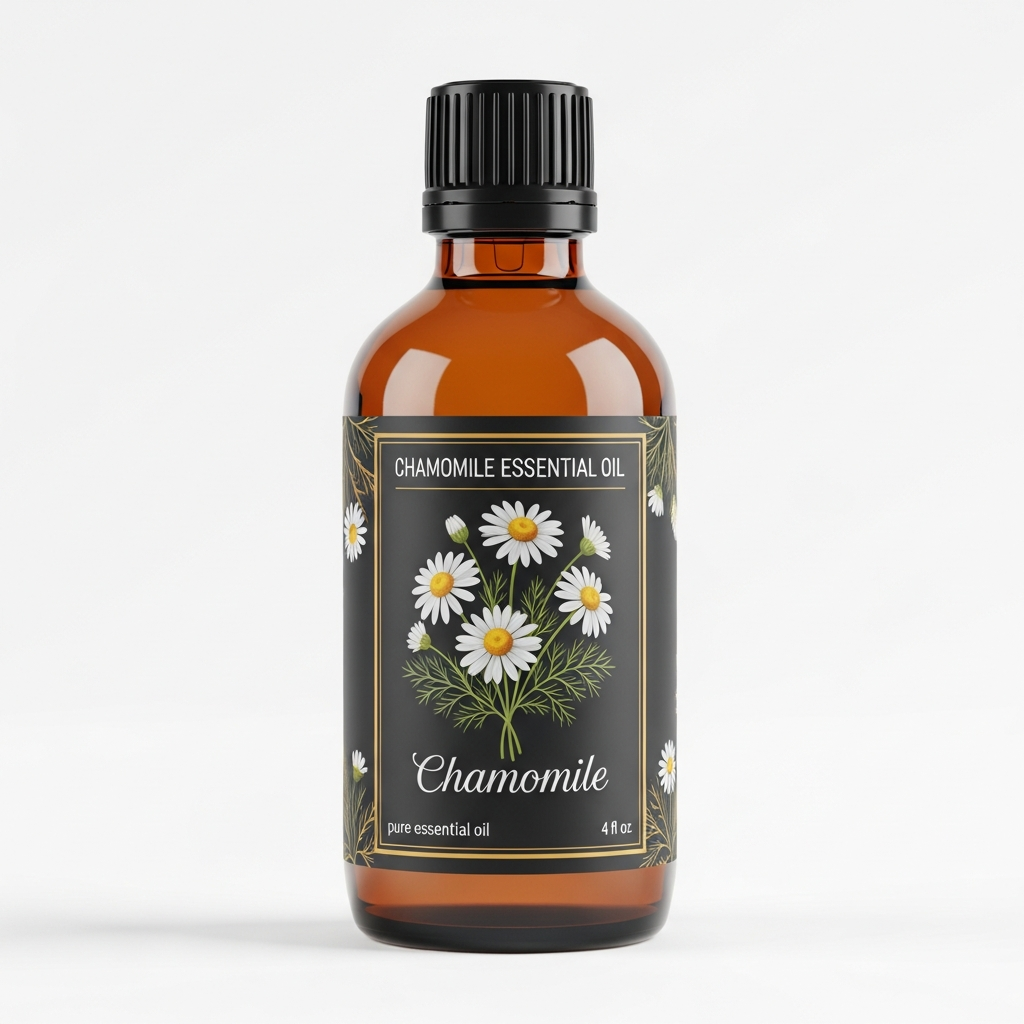
Chamomile Essential Oil
Our own Chamomile Essential Oil, in sizes from 0.5 oz to bulk.
From $29.38
Shop Now →Roman and German Chamomile Are Not the Same Plant
Both share the common name "chamomile" and both belong to the daisy family, but that is roughly where the resemblance ends. Roman chamomile is a low, spreading perennial that behaves almost like a ground cover, with small, dense, apple-scented flowers. German chamomile grows as a taller annual with a thinner, more upright stem and a distinctly hollow, cone-shaped flower center. The essential oils reflect that split. Roman chamomile oil is typically pale yellow, sometimes with a faint blue-green cast, and smells sweet, fruity, and unmistakably apple-like. German chamomile oil is famous for its deep, saturated blue color, a pigment called chamazulene that forms only during steam distillation, and it carries a warmer, more herbaceous, almost hay-like scent.
For a deeper look at how these two plants diverge botanically and aromatically, our full breakdown of Roman versus German chamomile walks through the comparison in more depth.
Side-by-Side Comparison
| Attribute | Roman Chamomile | German Chamomile |
|---|---|---|
| Botanical name | Chamaemelum nobile | Matricaria chamomilla |
| Growth habit | Low, spreading perennial | Upright annual |
| Oil color | Pale yellow to soft blue-green | Deep azure blue |
| Scent profile | Sweet, fruity, apple-like | Warm, herbaceous, hay-like |
| Approximate flower-to-oil yield | 0.8% to 1.5% | 0.3% to 1% |
| Typical price range, 5ml | $18 to $35 | $12 to $28 |
| Typical price range, 15ml | $40 to $75 | $25 to $55 |
| Main growing regions | UK, France, Hungary, Croatia, US Pacific Northwest | Egypt, Eastern Europe, Germany |
| Common cosmetic uses | Skin-care blends, evening diffuser blends, bedtime wind-down rituals | Skin-care blends, after-sun routines, evening diffuser blends |
| Shelf stability | Roughly 2 to 3 years, stored cool and dark | Roughly 2 to 3 years, stored cool and dark |
Prices above are general market ranges and will shift with harvest quality, currency swings, and how a given batch is certified. Always check a seller's current listing and batch documentation rather than relying on published averages alone.
Why Is Chamomile Oil Expensive? The Cost Drivers
Essential oil pricing mostly reflects how much raw plant material, labor, and time went into that small bottle, not the liquid itself. A gram of oil can represent several pounds of flowers, hand-picked at a specific stage of bloom, then distilled for hours. That math is different for each chamomile species, which is exactly why their price tags diverge.
Roman Chamomile Oil Cost: What Drives the Price
Roman chamomile flowers mature unevenly across a field, so harvest crews often pick by hand over several passes rather than machine-cutting a whole plot at once. The plant's yield per acre is modest compared to bulkier annual crops, and because it is a perennial, expanding supply takes seasons, not a single planting cycle. Farms growing it well are concentrated in a handful of regions, mainly the UK, France, and Croatia, which limits how much competition can push prices down. Organic certification, when a grower pursues it, adds another layer of cost on top of an already labor-heavy crop. If you are weighing whether that premium is justified, our look at whether organic Roman chamomile is worth the extra cost breaks down what certification actually buys you.
German Chamomile and the Blue Color Premium
German chamomile is an annual, which makes it easier to scale acreage year to year, and large growing operations in Egypt keep raw material costs comparatively low. That should make the finished oil cheaper across the board, and often it is. But distillation tells a more complicated story. Developing that signature blue color requires a longer cook time so the plant's precursor compounds can convert into chamazulene, which means more fuel and equipment time per batch. A deep, richly blue lot of German chamomile can end up priced close to standard-grade roman chamomile, even though the flowers themselves cost less, simply because buyers are willing to pay for that visual marker of quality. This is also where the cheap end of the market gets risky: a thin, barely tinted German chamomile oil sold at a bargain price is a signal worth investigating rather than a lucky find.
Pros and Cons
Roman Chamomile: Pros and Cons
- Pro: Sweeter, gentler aroma that most people find easy to enjoy in a diffuser blend.
- Pro: Pale color blends invisibly into lotions, serums, and creams without tinting the base.
- Pro: Long-standing association with calm evening rituals and unwinding routines.
- Con: Consistently higher roman chamomile oil cost per milliliter than its German counterpart.
- Con: Supply is more limited, so prices can swing more with a poor harvest year.
- Con: True organic-certified lots are scarcer and carry an added premium.
German Chamomile: Pros and Cons
- Pro: Generally lower entry price point, especially for standard, uncertified grades.
- Pro: Distinctive blue color that many buyers associate with visible product quality.
- Pro: A more established, scalable supply chain out of Egypt and Eastern Europe.
- Con: Stronger, more herbaceous, hay-like note that not everyone enjoys as much as chamomile's sweeter side.
- Con: Blue pigment can tint pale soaps, lotions, or light fabrics if used carelessly.
- Con: Premium deep-blue lots often erase most of the price advantage over roman chamomile.
Best For: Matching the Oil to Your Use Case
- Evening wind-down diffuser blends: roman chamomile, for its sweeter, more approachable scent.
- Facial serums and light-colored skin-care formulas: roman chamomile, since it will not tint a pale base.
- Bath and body products where a visible blue tone is part of the branding: German chamomile.
- Budget-conscious starter diffuser kits: German chamomile, standard grade rather than premium blue.
- Small-batch, organic-forward skin-care lines: roman chamomile, with attention to certification.
Our Verdict
Neither oil is objectively better. They solve different problems at different price points. If budget is the deciding factor and a warmer, hay-like note does not bother you, German chamomile is the more approachable answer on chamomile essential oil price alone. If you want the sweeter, apple-like scent most people picture when they think of chamomile in perfumery, and you do not mind paying more for it, roman chamomile earns its higher tag through genuinely lower yield and slower, more labor-intensive harvest.
Before buying either one, ask the seller for a batch-specific lab report and compare the price against what you now know about yield and scarcity. A number that looks too high, or suspiciously too low, usually has a reason behind it once you check the paperwork. For a step-by-step checklist to run through before you commit to a bottle, see our guide on quality checks to run before you buy chamomile oil.
Quick FAQ
Is roman chamomile always more expensive than German chamomile?
Not always. Standard-grade German chamomile is usually cheaper, but a premium, deeply blue German chamomile lot can cost as much as a mid-range roman chamomile oil, since both the color development and the raw flower yield factor into price.
Why do prices for the same species vary so much between sellers?
Harvest year, growing region, whether the oil is organic-certified, and how the bottle is packaged and marketed all move the price. A batch-specific lab report is the most reliable way to compare oils that look similar on paper but are priced very differently.