Why Chamomile Oil Turns Blue During Distillation
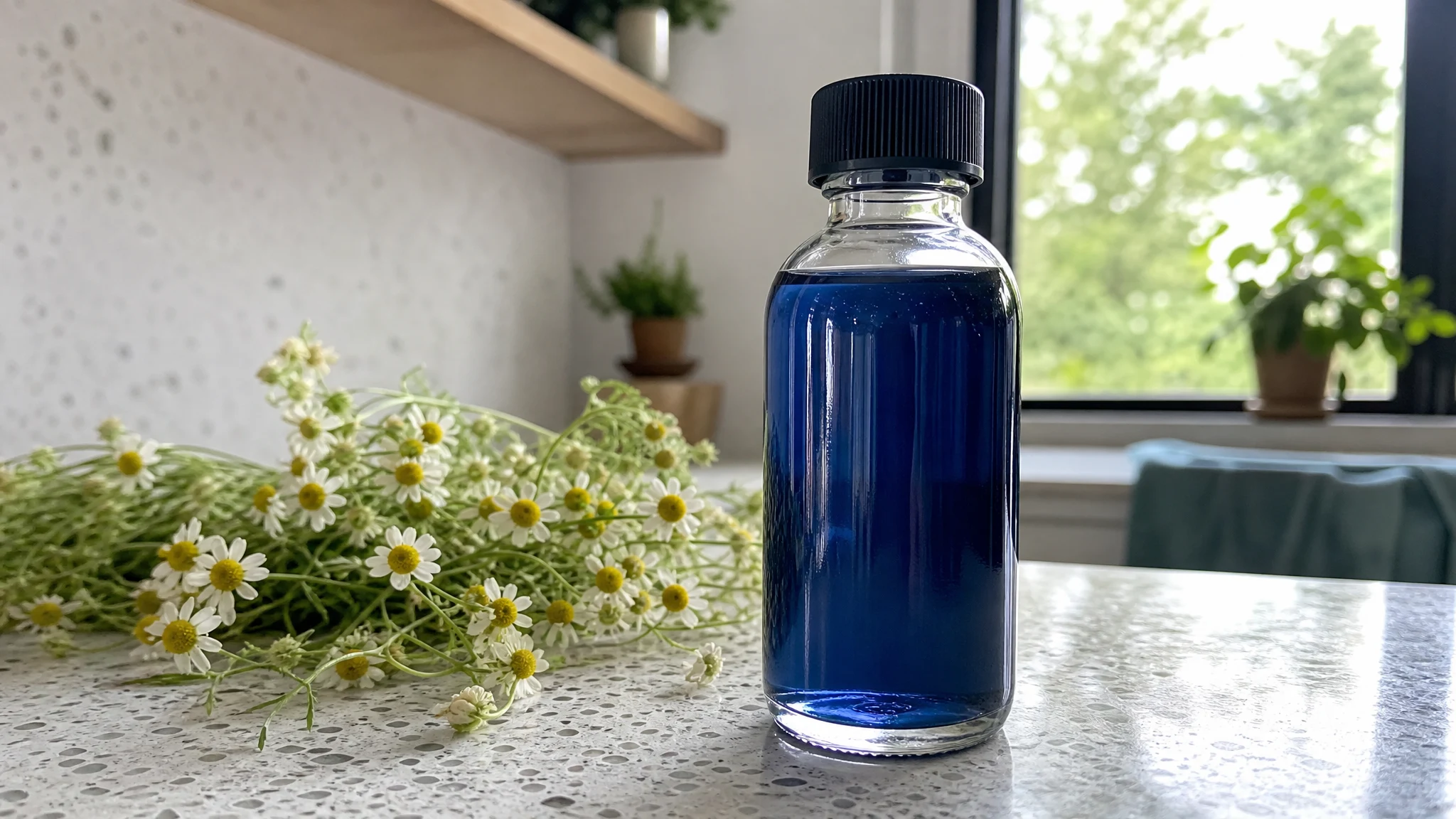
The chamomile flower is white and yellow, and nothing about it is blue. Yet one of the oils we sell, our German chamomile, has a deep inky blue tint. That colour does not come from the flower. It is created in the still.
Roman Chamomile Essential Oil
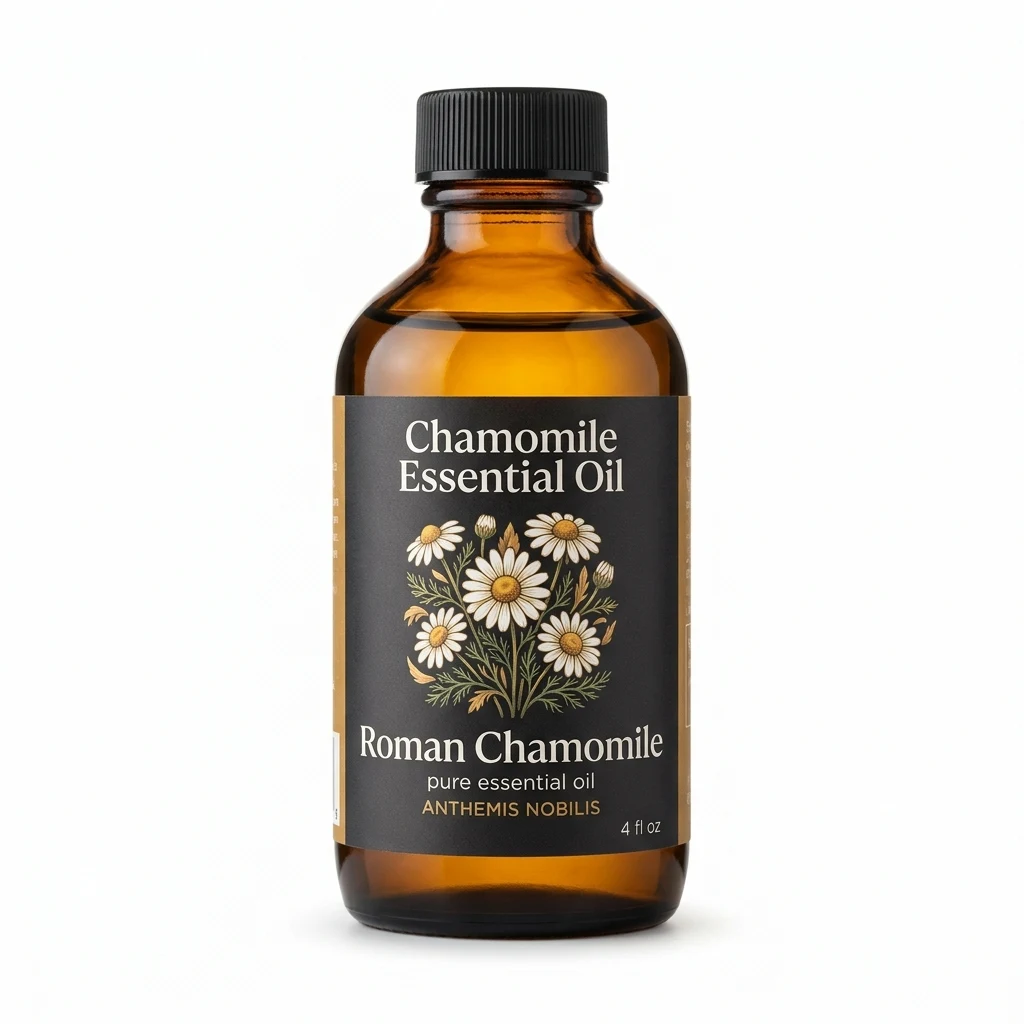
Our own Roman Chamomile Essential Oil, in sizes from 0.5 oz to bulk.
From $32.99
Shop Now →A blue compound that appears during distillation
A review of Matricaria chamomilla describes chamazulene as an artifact formed from matricin, a compound in the flower, during hydrodistillation or steam distillation (Singh et al., 2011). In plain terms, the flower carries a colourless precursor, heat and steam convert it, and the blue product ends up in the oil. The same review puts chamazulene at roughly 2% to 11% of the flower oil across reported samples. Most of the oil is colourless bisabolol compounds, and a minority ingredient supplies the colour, which says a lot about how powerful a little chamazulene is.
Our German chamomile page attributes its inky blue tint to naturally occurring chamazulene. Roman chamomile contains less of it (Srivastava et al., 2010), so we describe the Roman oil by its aroma and not its colour.
Why the shade of blue varies
Do not be surprised if two bottles of chamomile oil are not the same blue. How much chamazulene a batch holds depends on the origin and age of the plant material, and it drops when flowers are stored before distilling (Singh et al., 2011). The colour changes with time too: fresh oil can range from brilliant blue to deep green and turns dark yellow after storage (Srivastava et al., 2010).
That is why we treat colour as a clue and not a certificate. A deep blue fits German chamomile, but depth alone does not tell you the oil is authentic, and a paler shade does not tell you it has been cut. Identity is confirmed by GC-MS, and a comparison of the two chamomiles found bisabolol and its oxides in Matricaria but only one oxide in Chamaemelum (Dai et al., 2022). If authenticity matters to your project, ask any supplier, us included, about documentation before ordering, and see how to read a report in our GC-MS guide. Blue also is not unique to chamomile, as our German chamomile vs blue tansy comparison shows.
Keeping the colour
Light is the thing to watch. In a laboratory study, strong UVA light broke chamazulene into several oxygen-containing products, while a sample held at 50 C in the dark for 50 days showed no degradation (Gabbanini et al., 2024). That is one study on the isolated compound, so we read it as a hint: keep the bottle away from light first, and heat second. We recommend tightly capped, cool and dark, and our German oil is bottled in amber glass in all sizes. The storage guide goes further.
Working with a blue oil
Plan for the stain. Our German chamomile is undiluted and will mark fabric, soap bases and balms, so test on a swatch of the actual material first. In a diluted product the tint softens fast. In a skin oil at 0.5% to 2%, our recommended range, we would expect only a faint trace of blue, which is reasoning from the dilution, not an observation. Chamomile belongs to the daisy family, so patch test and skip it if you react to ragweed or daisies.
The blue is a small chemical story with a big visual payoff, and it is part of why German chamomile is such a pleasure to open.
Roman Chamomile Essential Oil
Roman Chamomile Essential Oil from our own shop, in sizes from 0.5 oz to bulk.
From $32.99
Shop Now →Sources & Further Reading
- Singh et al., Pharmacognosy Reviews, 2011: Matricaria chamomilla review
- Srivastava, Shankar and Gupta, Molecular Medicine Reports, 2010: chamomile chemistry and uses
- Dai et al., Molecules, 2022: Matricaria chamomilla and Chamaemelum nobile compared
- Gabbanini et al., Molecules, 2024: chamazulene degradation under UVA light