Chamomile Oil and Hydrosol Share a Still, Not a Strength
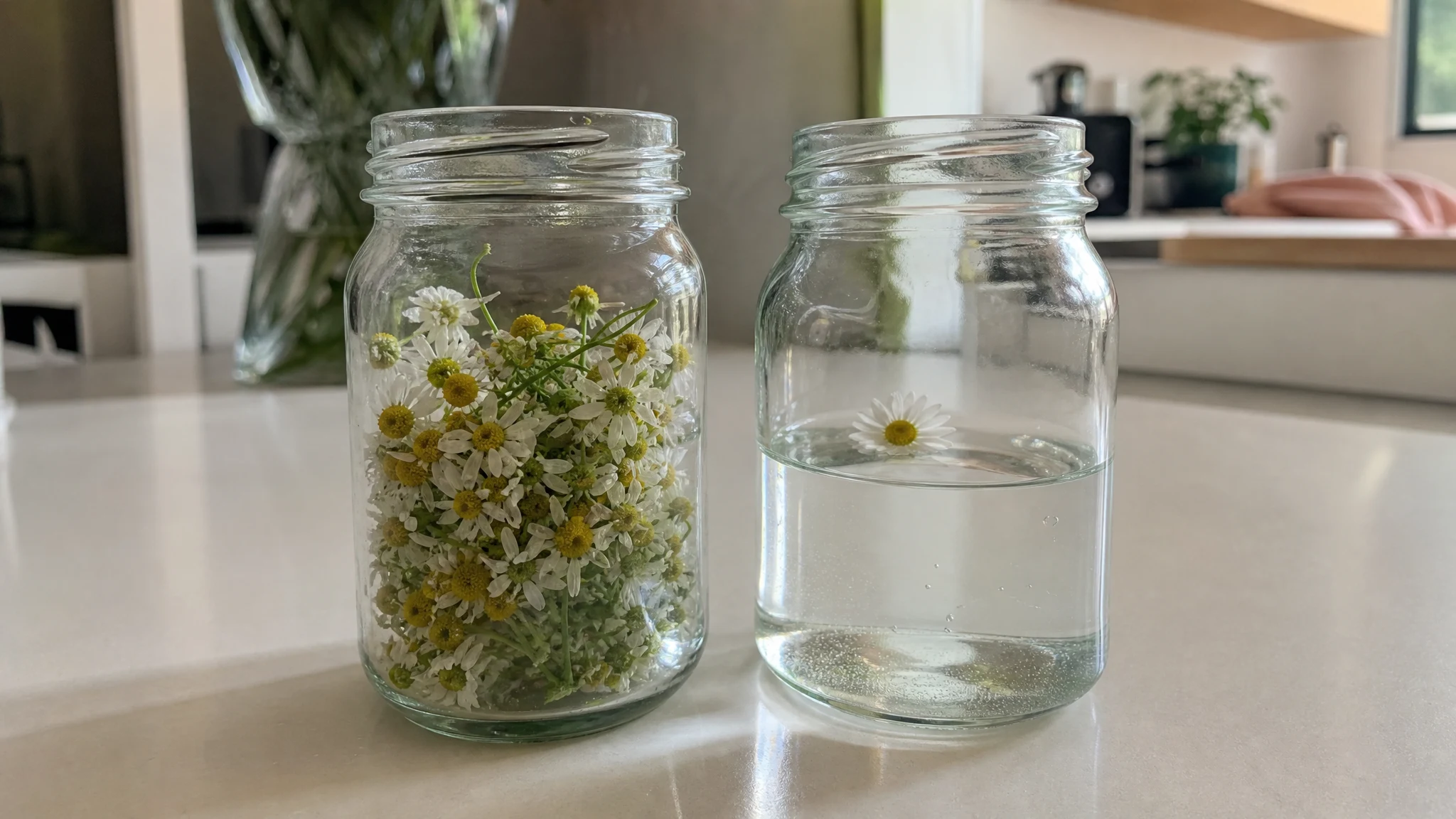
Chamomile oil and chamomile hydrosol come out of the same still, but they are not a strong and a weak version of one thing. The oil is the concentrated aromatic fraction. The hydrosol is the water that condensed alongside it, carrying far less aromatic material. We sell the oil (Roman and German, neat and undiluted) and no hydrosol, so this is a guide to telling them apart.
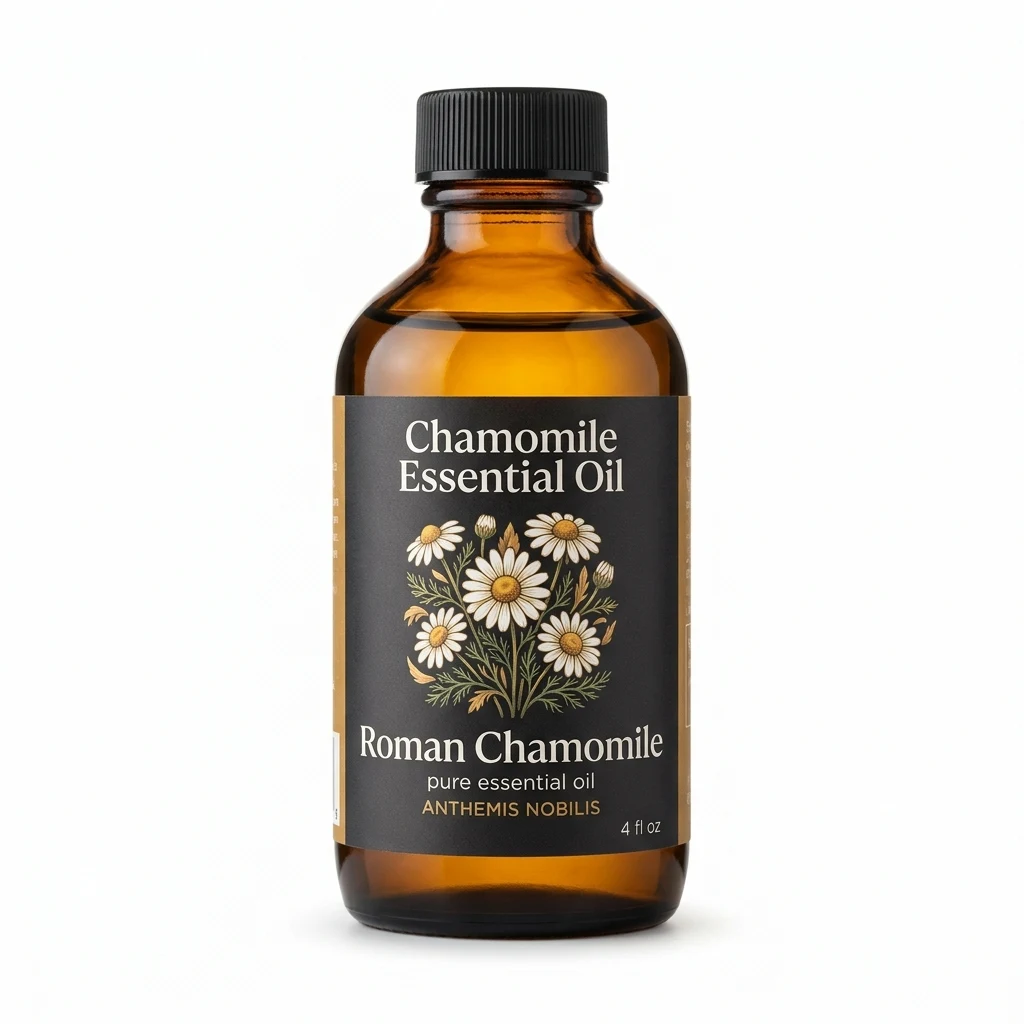
Roman Chamomile Essential Oil
Our own Roman Chamomile Essential Oil, in sizes from 0.5 oz to bulk.
From $32.99
Shop Now →Same still, two products
A 2018 review of the Matricaria genus describes chamomile oil as collected by steam distillation of the flower heads. The water that condenses with it is the hydrosol, also called hydrolat or floral water. The Tisserand Institute describes hydrosols as floral waters with a significantly lower concentration of aromatic molecules than essential oils.
Lower concentration is only part of the story. When researchers analyse both layers from one plant, the chemistry differs, not just the strength. In a study of pili tree resin, the oils were dominated by alpha-phellandrene while the hydrosols were rich in its oxidised derivatives. That is a different plant, so it says nothing about chamomile's ratios, but it shows why "a hydrosol is just diluted oil" is a shortcut. We have not seen a published analysis of chamomile hydrosol, so we cannot describe its composition, and we would be cautious of a seller who claims to without a report.
Oil in water is not a hydrosol
A common shortcut is to drop essential oil into a spray bottle of water and call it chamomile water. It is not. Oil does not dissolve in water; it beads and floats, and a spritz can land concentrated droplets on skin in uneven doses. It is the same trouble we describe in Chamomile Oil in a Bath. A genuine hydrosol is a distillation product, and a homemade oil-and-water mix is an unstable one that can also grow microbes without a preservative. A water-based product that includes chamomile oil is a formulation job, with a solubiliser and a preservative system, and it belongs with a cosmetic chemist.
Water changes the storage question
Essential oil has no water in it, which makes it a poor home for most microbes. A hydrosol is mostly water, so one meant for skin needs a stability plan that an oil does not. We could not find a source on how chamomile hydrosols behave microbially, so this part is reasoning: ask the seller what preserves it, when it was distilled or bottled, how to store it and how long it lasts once opened. The FDA states that manufacturers and marketers are legally responsible for the safety of their cosmetics, so that answer is the seller's to give.
The infused oil people often confuse with both is a third product, with its own rule about dry ingredients; see How to Make Chamomile Oil at Home and Chamomile Essential Oil vs Infused Oil vs CO2 Extract.
Which one for what
| Question | Essential oil | Hydrosol |
|---|---|---|
| What is it | The distilled aromatic fraction of the flower heads | Distillation water carrying a lower concentration of aromatic molecules |
| On skin as it is | No. Dilute to 0.5% to 2% in a carrier and patch test first | Depends on the product and its preservation; ask the seller and patch test |
| Contains water | No | Mostly water |
| Do we sell it | Yes, Roman and German | No |
| In a candle, balm or soap | Yes, as a scent material at sensible limits | No; water does not mix with wax |
The last row is simple chemistry rather than a sourced claim: water and wax do not mix. If you want chamomile character in a balm or a candle, the oil is the ingredient, and Chamomile Essential Oil Safety and How to Dilute Chamomile Essential Oil cover the limits.
Check the species either way
A bottle labelled only "chamomile hydrosol" has the same problem as one labelled only "chamomile oil": German and Roman are different plants. A seller who gives the Latin name, the plant part and a production date has told you more than one with a poetic description. We name the botanical on each of our oil labels, and the Certificate of Analysis we publish for one German batch names Matricaria chamomilla.
The allergy question does not go away
Switching to hydrosol does not remove the chamomile allergy question. NCCIH notes that people allergic to ragweed, chrysanthemums, marigolds or daisies are more likely to react to chamomile. Whether a hydrosol is less likely to trigger that than an oil is something we have no source for. The Tisserand Institute presents hydrosols as a lower-concentration option around young children, but that is general framing, not chamomile data. For a child, pregnancy or breastfeeding, ask a pediatrician, OB-GYN or midwife; Chamomile Oil in Pregnancy and Breastfeeding sets out what sources say.
What to ask any seller
- Which species, with the Latin name on the label?
- For a hydrosol: preservative or none, date made, storage and shelf life after opening.
- For an oil: lot number, and whether a GC-MS report exists for that lot. For ours, the published certificate covers one German batch and lists density and refractive index; ask us in writing for anything beyond that.
- Is anything added? Our oils are sold with no additives or fillers.
Pick the oil when you want a concentrated aroma material and are ready to dilute it, and a hydrosol only when its seller can show what is in the water and how it is kept.
Roman Chamomile Essential Oil
Roman Chamomile Essential Oil from our own shop, in sizes from 0.5 oz to bulk.
From $32.99
Shop Now →Sources & Further Reading
- Sharifi-Rad M et al., 2018. Matricaria genus as a source of antimicrobial agents. Microbiol Res. pubmed/30172312
- Tisserand Institute. Hydrosols. tisserandinstitute.org
- Mercier et al., 2020. Pili tree resin essential oil and hydrosol. Chem Biodivers. pubmed/33095499
- FDA. FDA Authority Over Cosmetics. fda.gov
- NCCIH. Chamomile. nccih.nih.gov