Chamomile Oil in a Home With Babies and Kids
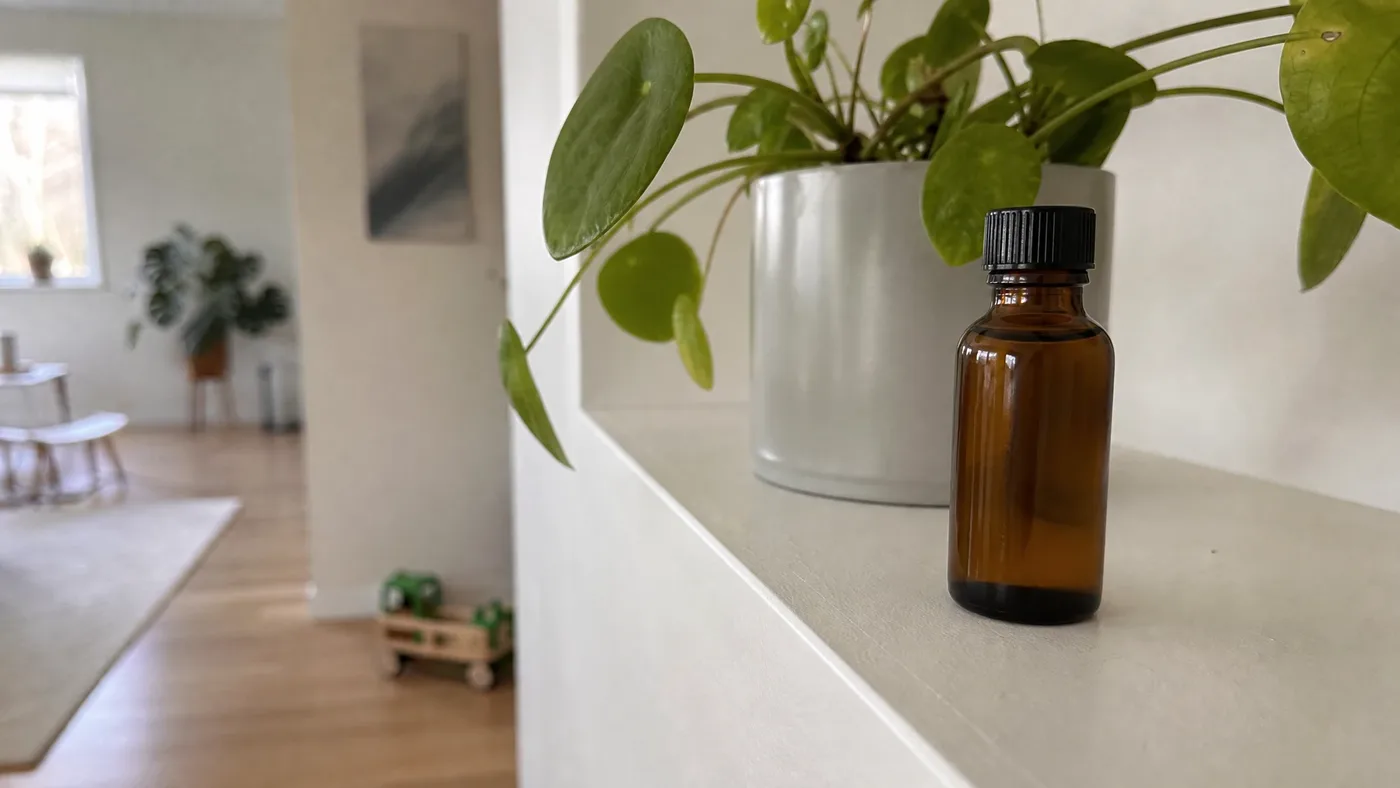
In a home with a toddler, the first question about chamomile oil is not what dilution to use. It is where the bottle lives. A small bottle of concentrated oil is exactly the sort of thing a curious two-year-old can reach, open and taste, and that is where the real risk sits.
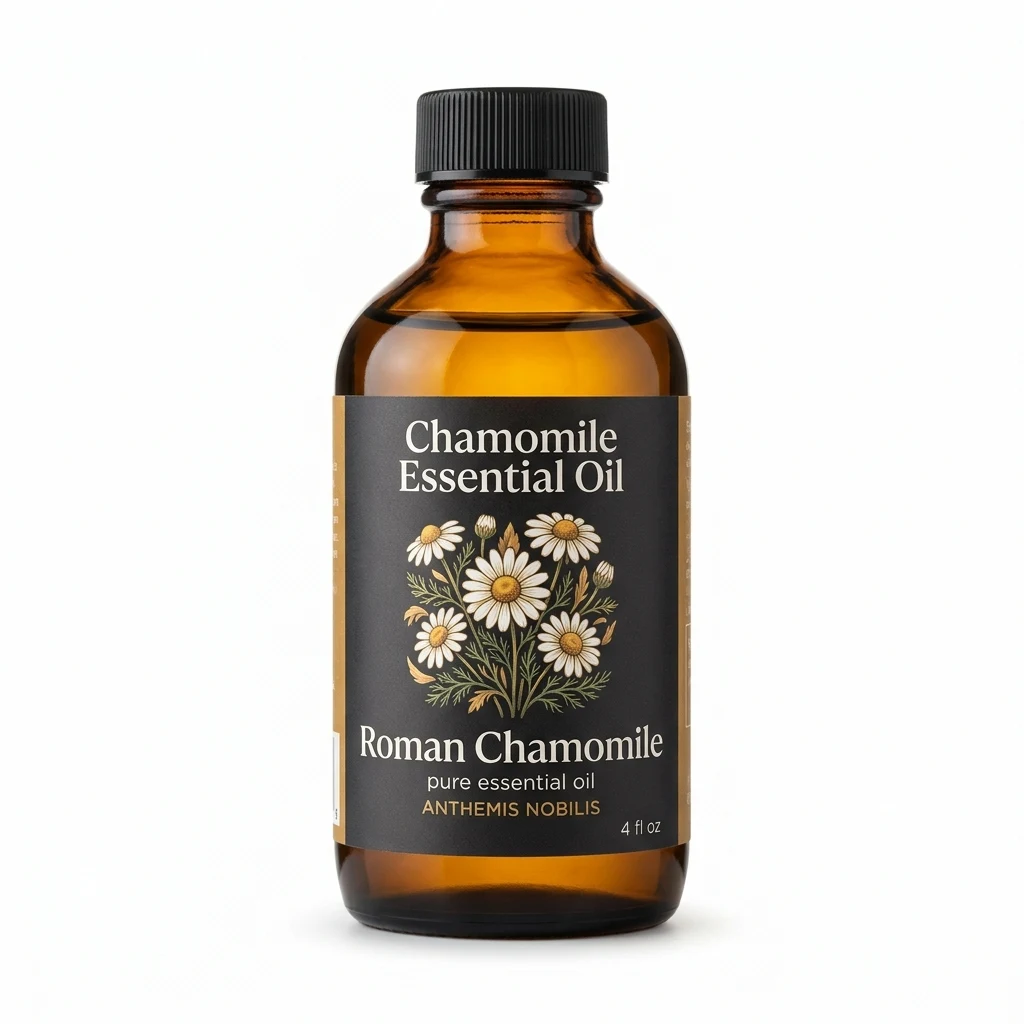
Roman Chamomile Essential Oil
Our own Roman Chamomile Essential Oil, in sizes from 0.5 oz to bulk.
From $32.99
Shop Now →The bottle comes first
Poison Control's advice on essential oils is blunt: if you have young children, consider discarding bottles you do not need, and otherwise keep them locked up, out of sight and out of reach of children and pets (Poison Control). It also warns that if a child swallows oil and chokes, some can enter the lungs, and that children have thin skin and immature livers, which may make them more susceptible than adults to toxic effects. Tisserand's page for neat Roman chamomile carries the same kind of wording, calling it a flammable liquid that may be fatal if swallowed and enters the airways (Tisserand).
Our oils arrive undiluted, and we say plainly to keep them away from children and pets. So the habits that matter are simple ones. Store the bottle high and locked, never decant it into an unlabelled container, keep it away from children's medicines so it cannot be mistaken for one, and wash your hands after handling it, especially before you pick up a baby. If a child swallows any, call Poison Control at 1-800-222-1222 right away.
Why we do not give a dilution for babies
For adults we recommend 0.5% to 2% in a carrier oil with a patch test first. We do not extend that to infants or young children, and the reason is mostly practical. Dilutions suitable for the very young are lower still, and at those levels a few drops per ounce become fractions of a drop, which no home dropper can measure reliably. At that point the recipe is a guess. For babies and small children the right person to ask about any aromatic product, including diffusing, is your pediatrician.
The daisy-family question applies to kids too
Chamomile belongs to the daisy family, and the National Center for Complementary and Integrative Health notes that people are more likely to react to chamomile if they are allergic to related plants such as ragweed, chrysanthemums, marigolds or daisies (NCCIH). If ragweed or daisy-family allergy runs in your family, mention it to your pediatrician or an allergist before any chamomile product comes near a child. Our patch test guide explains the adult process, but it is not a recommendation to try it on a child.
Nursing and the oil on your skin
If you are breastfeeding, the European Medicines Agency's assessment of German chamomile notes that data on skin use of chamomile products during lactation are not available, and its proposed wording is that nipples should be cleaned of chamomile-containing products before nursing, to prevent sensitization of the baby (EMA/HMPC/55837/2011, draft). The same logic applies to anything you wear on your chest, neck or hands, so a diluted blend belongs on skin a baby will not touch. Our article on pregnancy and breastfeeding has more on what the sources say.
What this leaves for the household
Chamomile oil can still have a place in an adult's routine in a home with children: a diluted body oil applied at a time and place where small hands will not meet it, a bottle that goes straight back on the high shelf. Pets deserve the same thought, and our guides on dogs and cats cover them. For our broader notes, see the safety overview.
The simplest rule is the best one: the bottle is for grown-ups, and the shelf is for the bottle.
Roman Chamomile Essential Oil
Roman Chamomile Essential Oil from our own shop, in sizes from 0.5 oz to bulk.
From $32.99
Shop Now →