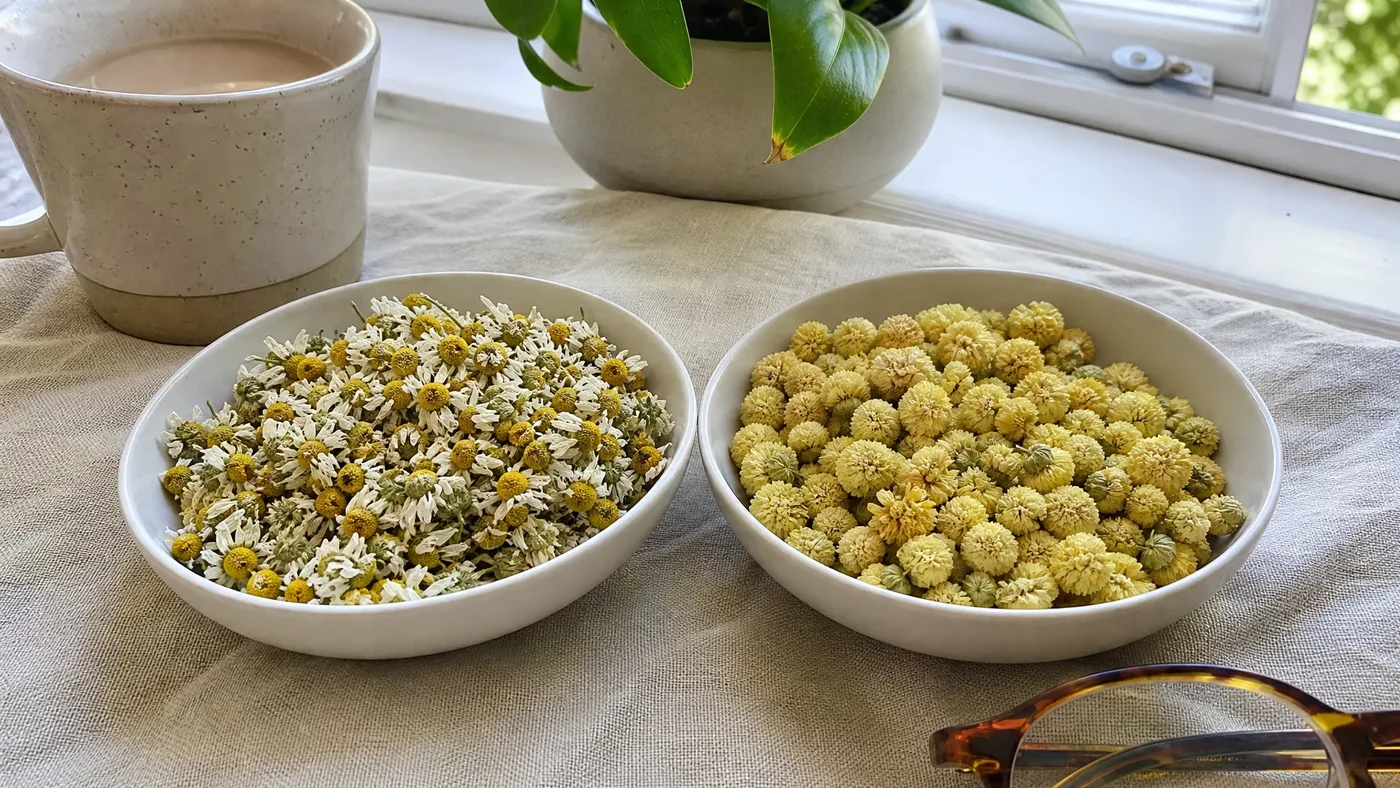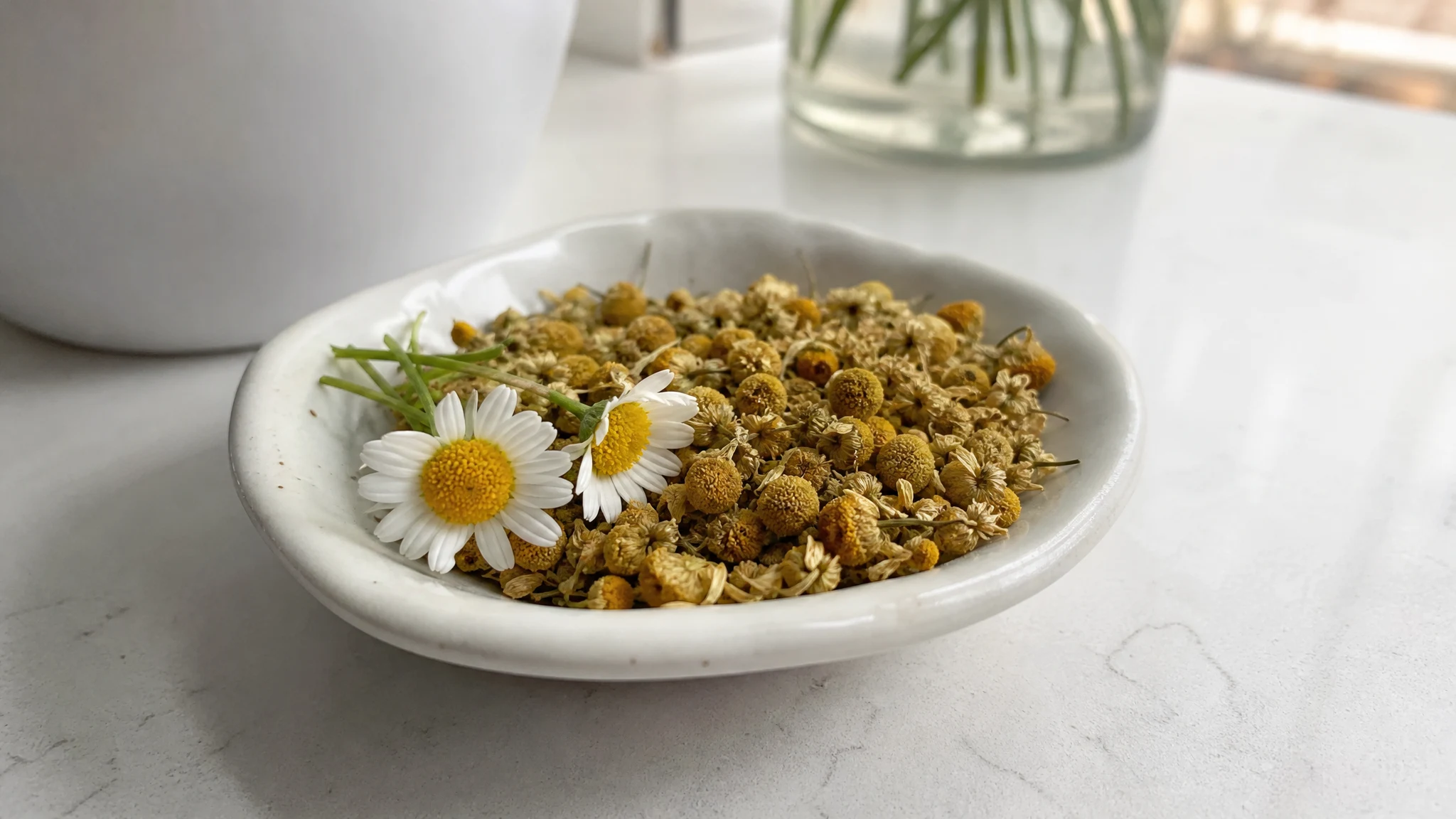
The History of Chamomile: From Ground Apple to Blue Oil
Chamomile has a way of arriving with a ready-made legend attached. The records that survive are better than the legend: a modest, low-growing plant mentioned in a few lines by Greek writers, a name people have argued about for two thousand years, and a bright blue molecule that took chemists most of a century to understand.
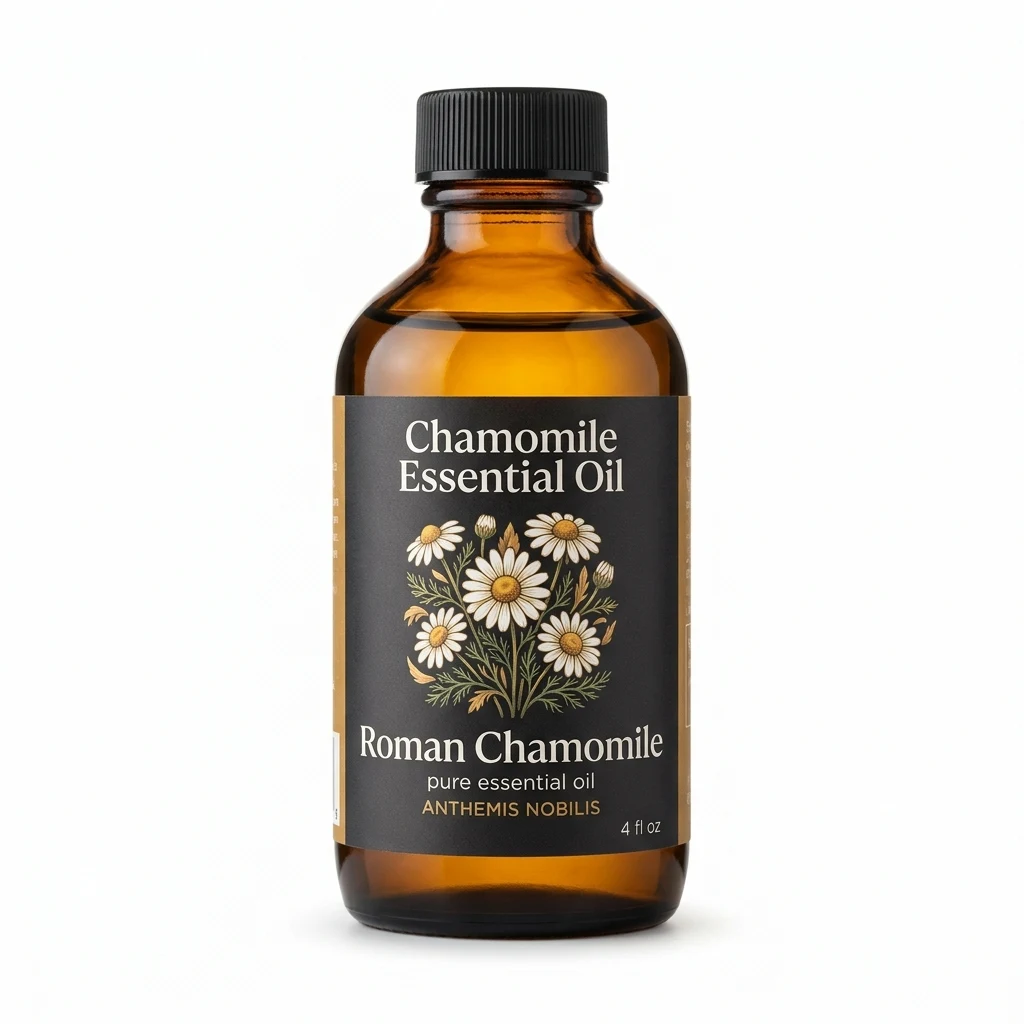
Roman Chamomile Essential Oil
Our own Roman Chamomile Essential Oil, in sizes from 0.5 oz to bulk.
From $32.99
Shop Now →A plant that hugs the ground
Historians of ancient medicine Alain Touwaide and Emanuela Appetiti trace chamomile in the written record for the American Herbal Products Association. Its first appearances are small. The Hippocratic treatise Nature of Women, possibly from the mid-fifth century BCE, mentions it in a postpartum context. Theophrastus, the successor to Aristotle and often called the father of botany, barely mentions it, filing it among the low, creeping plants in his Historia plantarum (AHPA, Herbs in History: Chamomile).
The plant gains real standing in the first century BCE, when, according to Pliny, the physician Asclepiades of Bithynia praised it. Asclepiades' writings are lost, so we only have Pliny's word. Pliny and Dioscorides then give similar descriptions: a plant about a span high, in three kinds distinguished by flower colour. Galen, in the second century CE, discusses its action in detail, and Avicenna, centuries later, gives it a long chapter. All of these are mentions of the plant in medical texts. None of them describes a distilled oil.
It is easy to picture how a plant like this earned a place in people's gardens long before anyone wrote about it. Low to the ground, covered in small white daisies and smelling of fruit when you step on it, chamomile is the kind of plant that gets noticed at ankle height. Many old gardens used it as a scented path or a seat for just that reason.
What does the name mean?
The popular answer is "ground apple", from the Greek chamaimelon. Pliny already read the name as a reference to the plant's apple-like smell, and anyone who has opened a bottle of Roman chamomile can see why. Our Roman oil's aroma is sweet, apple-like and herbaceous.
The AHPA authors offer another reading, though. Because Theophrastus groups chamomile with low plants, they argue the name more likely points to a low-growing plant or dwarf fruit, with melon carrying the sense of fruit generally. They also note that the genus name Matricaria echoes the Latin for womb, matrix, reflecting how often chamomile appeared in women's medicine. We like the fact that the name itself is still up for debate, and the smell is real either way.
From herbals to modern monographs
The record then moves through medieval herbals, including the Herbarium Apulei, a thirteenth-century southern Italian treatise and fourteenth-century English texts. It also includes the Nine Herbs Charm, possibly from the tenth century, where chamomile sits in a folk and magical setting. Through all of it chamomile is taken or applied as plant material, in drinks, lozenges and poultices.
The modern endpoint is regulatory. The European Medicines Agency's monograph on chamomile flower rests on traditional use, meaning plausible effect and at least 30 years of use, with clinical evidence described as insufficient (EMA, Matricariae flos). The old herbal tradition belongs to tea and poultice, and a concentrated essential oil is a modern form of the plant, so we treat the history as a story about the plant and not as a promise about a bottle.
It is a small leap from the old herbals to the bottle on your shelf, and the leap is worth pausing over. The people who first wrote about chamomile never saw an inky blue oil, because distillation of this kind came much later. When you open a bottle today, you are smelling something that grew out of that same low plant, shaped by a technique those early writers never knew.
The blue molecule
The best-documented part of the story is the oil's colour. A history of azulene research records that in 1863 Septimus Piesse suggested the name azulene, from "azure blue", for the blue substance found in certain distilled oil fractions, from chamomile, yarrow and wormwood among other sources. It then took until the 1930s, with Pfau and Plattner, to pin down the structure (Hansen, Chimia, 1996). Chamomile chemistry papers add a lovely twist: chamazulene is not sitting in the fresh flower waiting to be extracted, but is formed from a precursor called matricin during hydro and steam distillation (Singh et al., Pharmacognosy Reviews, 2011). The blue in a German chamomile oil is a product of the still. Our blue chamomile explainer follows that thread, and the guide to our two chamomile oils shows how Roman and German differ today.
If the plants and places behind the oil interest you, chamomile oil origins picks up where the geography begins. Chamomile is related to ragweed and daisies, so as with any chamomile product, patch test first and skip it if you have a known daisy-family allergy; our safety overview has the details.
A plant that started life as a line about low, creeping herbs and ended up as a blue distillate is a pretty good arc for something that grows near the ground.
Roman Chamomile Essential Oil
Roman Chamomile Essential Oil from our own shop, in sizes from 0.5 oz to bulk.
From $32.99
Shop Now →Sources & Further Reading
- Touwaide A, Appetiti E. Herbs in History: Chamomile. American Herbal Products Association. ahpa.org/herbs_in_history_chamomile
- European Medicines Agency. Matricariae flos, herbal medicinal product. ema.europa.eu/en/medicines/herbal/matricariae-flos
- Hansen HJ, 1996. Die Geburt einer Struktur: the azulene formula of Pfau and Plattner. Chimia. chimia.ch/chimia/article/view/1996_489
- Singh O et al., 2011. Chamomile (Matricaria chamomilla L.): an overview. Pharmacogn Rev. pmc.ncbi.nlm.nih.gov/articles/PMC3210003