What Is Moroccan Chamomile Oil? One Name, Two Plants
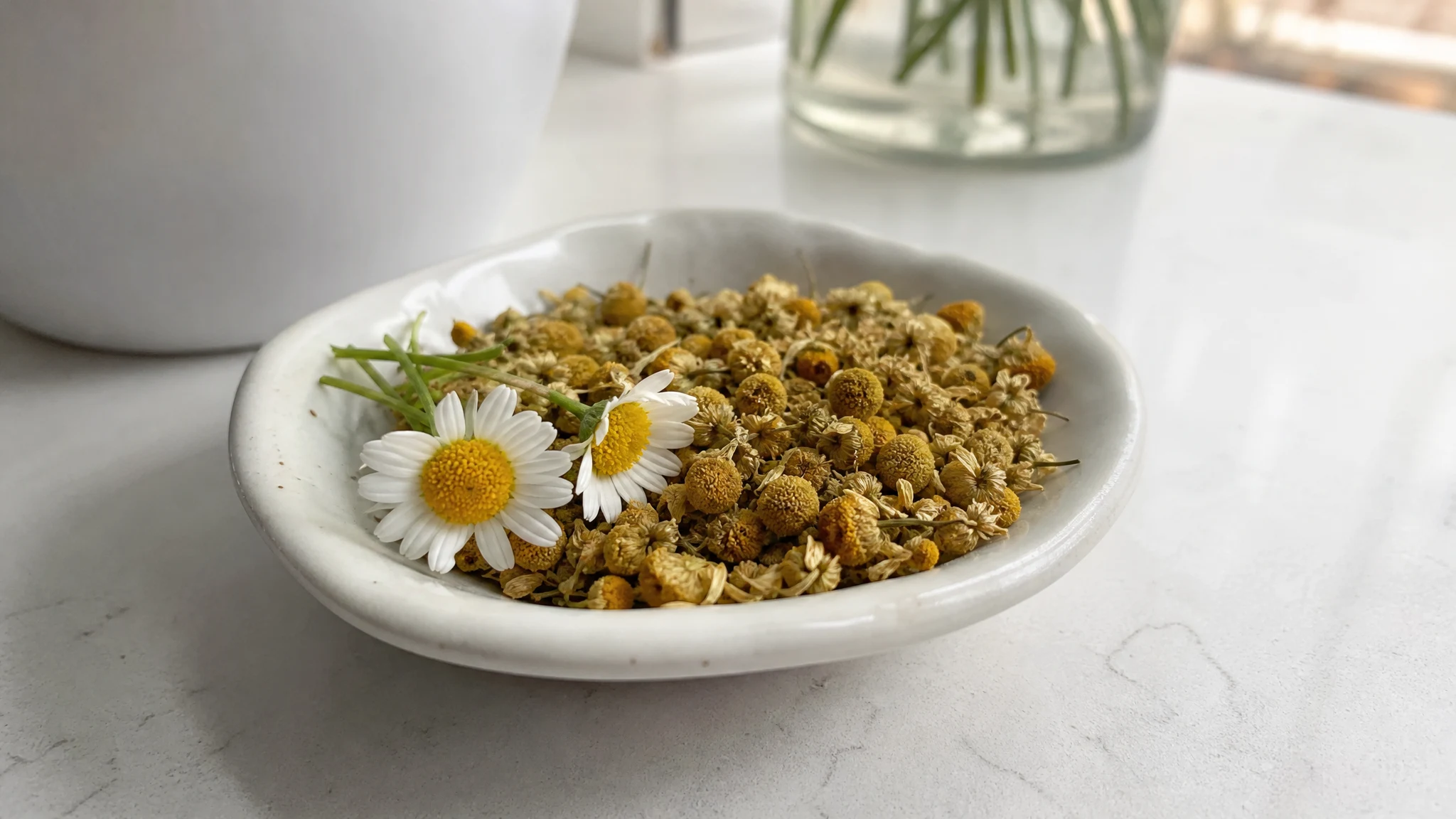
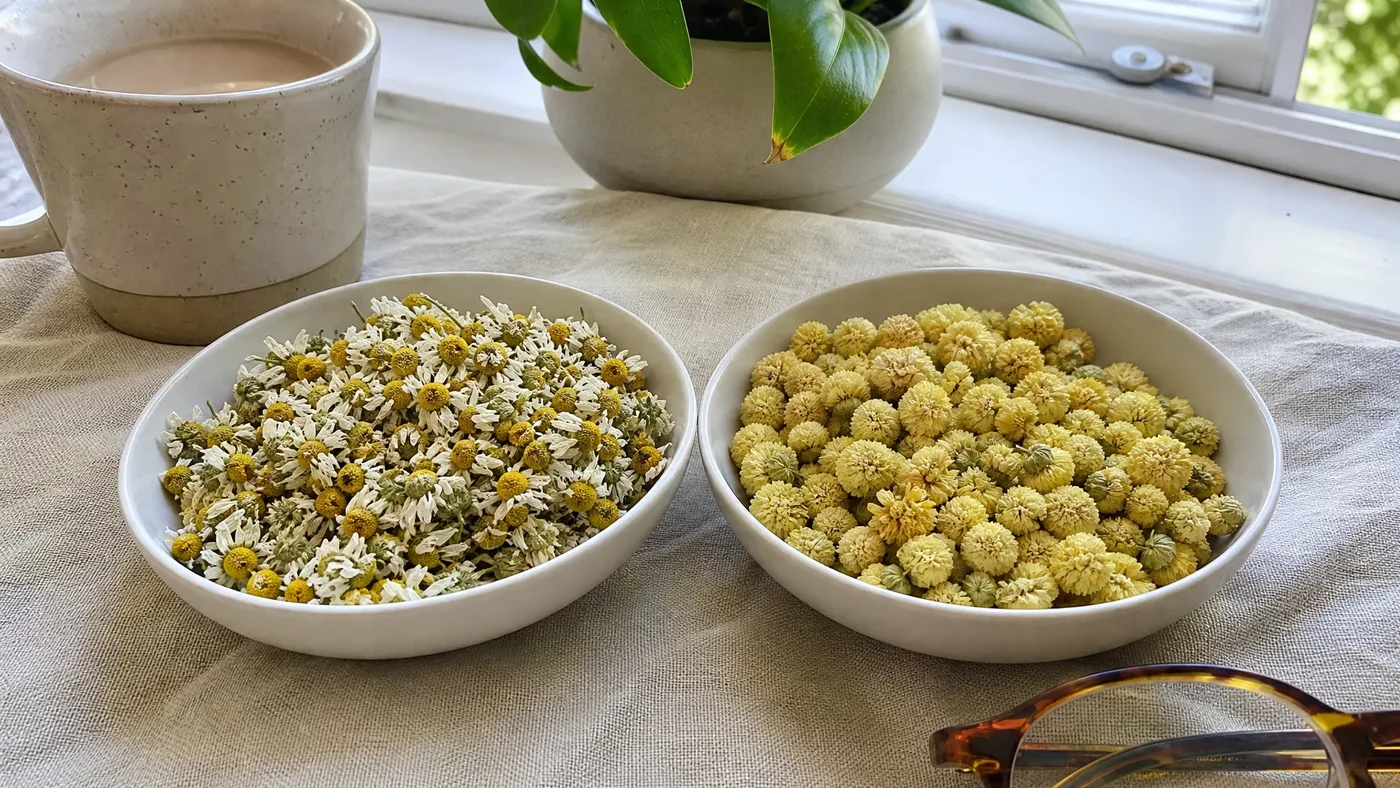
A bottle labelled "Moroccan chamomile" can hold one of two quite different plants, and the label alone will not tell you which. One is a wild daisy relative with several names, Cladanthus mixtus or Ormenis mixta, often just called wild chamomile. The other is Roman chamomile, Chamaemelum nobile, grown in Morocco. Our two oils are Roman and German chamomile, and we do not sell a Moroccan chamomile, so think of this as a buying guide for anyone comparing.
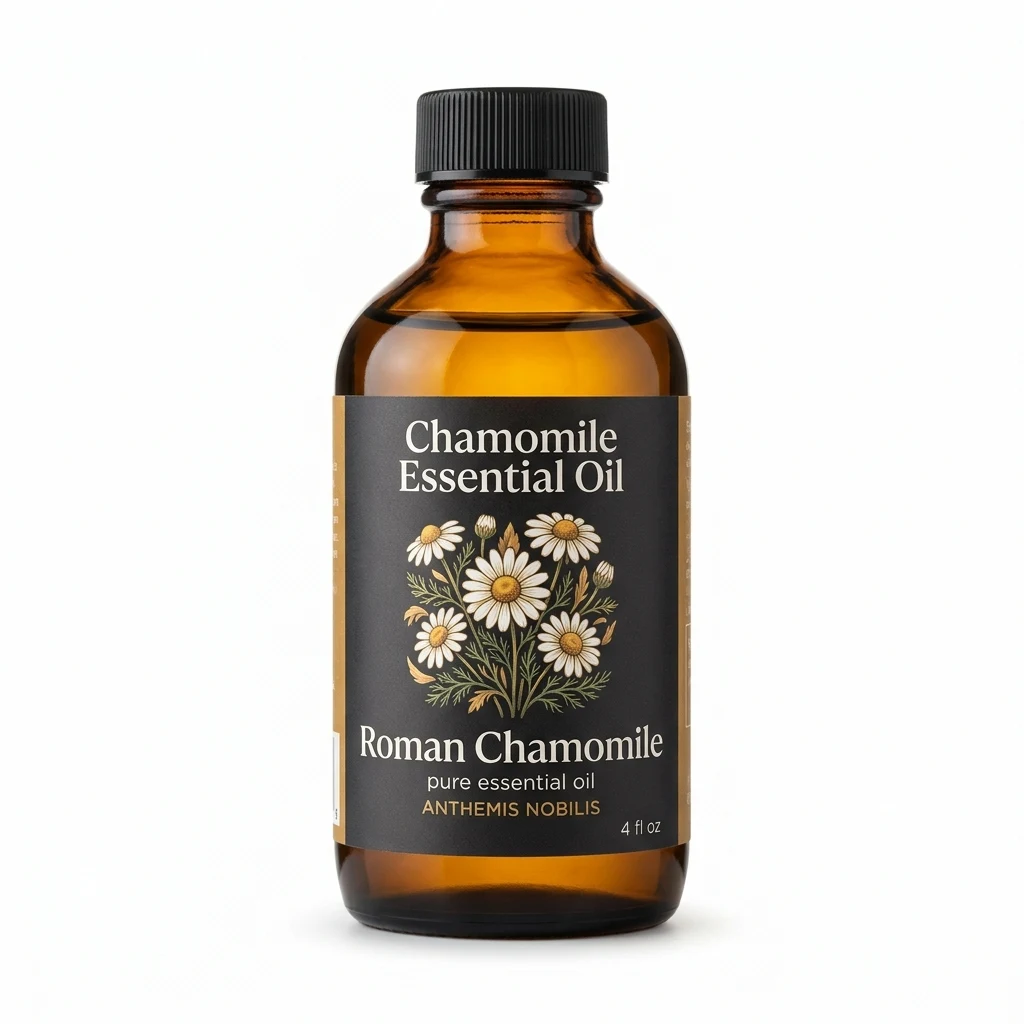
Roman Chamomile Essential Oil
Our own Roman Chamomile Essential Oil, in sizes from 0.5 oz to bulk.
From $32.99
Shop Now →Not a budget stand-in
It is tempting to treat Moroccan chamomile as a cheaper cousin of the Roman or German oils. The composition papers suggest otherwise. The wild plant produces an oil built from different molecules, and its chemistry shifts a lot from one hillside to the next.
One Moroccan study collected wild Cladanthus mixtus in two regions, Bouznika and Oujda, and distilled 40 individual plants. It found two chemotypes, a word for the same species producing chemically distinct oils. Bouznika plants were led by a methacrylate ester, while the Oujda plants were led by trans-beta-farnesene at 35.5 to 50.3% (Elouaddari et al., Natural Product Communications, 2014). That is not a small difference in emphasis. It is two recognisably different oils from one plant species, and it is why a country name on a label tells you very little.
The other Moroccan chamomile
Roman chamomile is also grown in Morocco. A 2025 study distilled dried Roman chamomile flowers collected near Taounate and found an oil led by beta-oplopenone (18.66%), spathulenol (14.90%) and himachalene (12.47%) (El-Assri et al., Frontiers in Chemistry, 2025). Roman chamomile oil is usually described as mostly esters of angelic and tiglic acid, which are the fruity molecules behind its apple-like character (Srivastava et al., Molecular Medicine Reports, 2010). That Moroccan sample looks quite different, though it is one sample from one locality, so it describes that batch of flowers, not Moroccan Roman chamomile as a whole.
The practical lesson is that "Moroccan chamomile" might be a wild daisy-family oil with a farnesene or methacrylate lead, or a Roman chamomile with its own local profile. Both are real oils. They just are not interchangeable with each other or with German chamomile.
If you have ever stood in front of a shelf of bottles that all say "chamomile" and wondered why they look and smell so different, this is why. A common name is a convenience, and a Latin name is a map. The first one gets you into the right shop and the second one tells you which door to open.
What to check on a label
- The Latin name. Cladanthus mixtus, Ormenis mixta, Chamaemelum nobile (also written Anthemis nobilis) and Matricaria chamomilla (or M. recutita) are four different labels for different plants. A listing that says only "chamomile oil" has not told you enough.
- The plant part. The wild-plant study distilled aerial parts, not just flower heads, and that changes the chemistry.
- The colour. The blue in German chamomile oil comes from chamazulene, and the wild Moroccan papers we looked at do not name it among their leading compounds. That is our inference from what they list, not a rule for every bottle. Our blue chamomile explainer has the details.
- A batch report. Variation between populations is the reason a lot-specific analysis beats a country name. Our guide to reading a GC-MS report walks through what to look for, and our quality-check guide covers questions worth putting to any seller.
- Oil or extract. Some products carry a chamomile name without being a distilled essential oil. See our essential, infused and CO2 comparison if a listing says "extract".
Smelling the difference
If you do get hold of a Moroccan-labelled bottle, give yourself a few minutes with it. Open it, smell it, close it, and then compare it with one of ours or with another chamomile you already know. Our Roman is sweet, apple-like and herbaceous, and our German has that hay-like softness behind its blue color. A different plant will usually read as a different smell, and noticing that for yourself is the quickest way to understand why a label matters. Write the name, the Latin name and the date on a card and keep it with the bottle.
How ours differ
Our Roman oil is the sweet, apple-like one, and our German oil is the blue one with a hay-like softness; our Roman versus German comparison sets them side by side. Both are sold undiluted. For skin, our guidance is 0.5% to 2% in a carrier oil with a patch test first. We have no skin guidance to offer for the wild Moroccan oil, so if you buy one, start with the supplier's safety data. Daisy-family allergies matter for any chamomile-named oil: NCCIH notes that people allergic to ragweed, daisies, marigolds or chrysanthemums are more likely to react to chamomile (NCCIH), and an allergist can advise if you have one.
If you came for a chamomile with a Moroccan name, the useful thing to take away is a short list of questions to ask the seller, and a sense of how much variety hides behind one word.
Roman Chamomile Essential Oil
Roman Chamomile Essential Oil from our own shop, in sizes from 0.5 oz to bulk.
From $32.99
Shop Now →Sources & Further Reading
- Elouaddari A, El Amrani A, JamalEddine J, 2014. Intraspecific variability of the essential oil of Cladanthus mixtus from Morocco. Nat Prod Commun. pubmed.ncbi.nlm.nih.gov/24660482
- El-Assri EM et al., 2025. Chamaemelum nobile essential oil from Taounate, Morocco. Front Chem. pubmed.ncbi.nlm.nih.gov/39968372
- Srivastava JK, Shankar E, Gupta S, 2010. Chamomile: a herbal medicine of the past with bright future. Mol Med Rep. pmc.ncbi.nlm.nih.gov/articles/PMC2995283
- NCCIH. Chamomile. nccih.nih.gov/health/chamomile