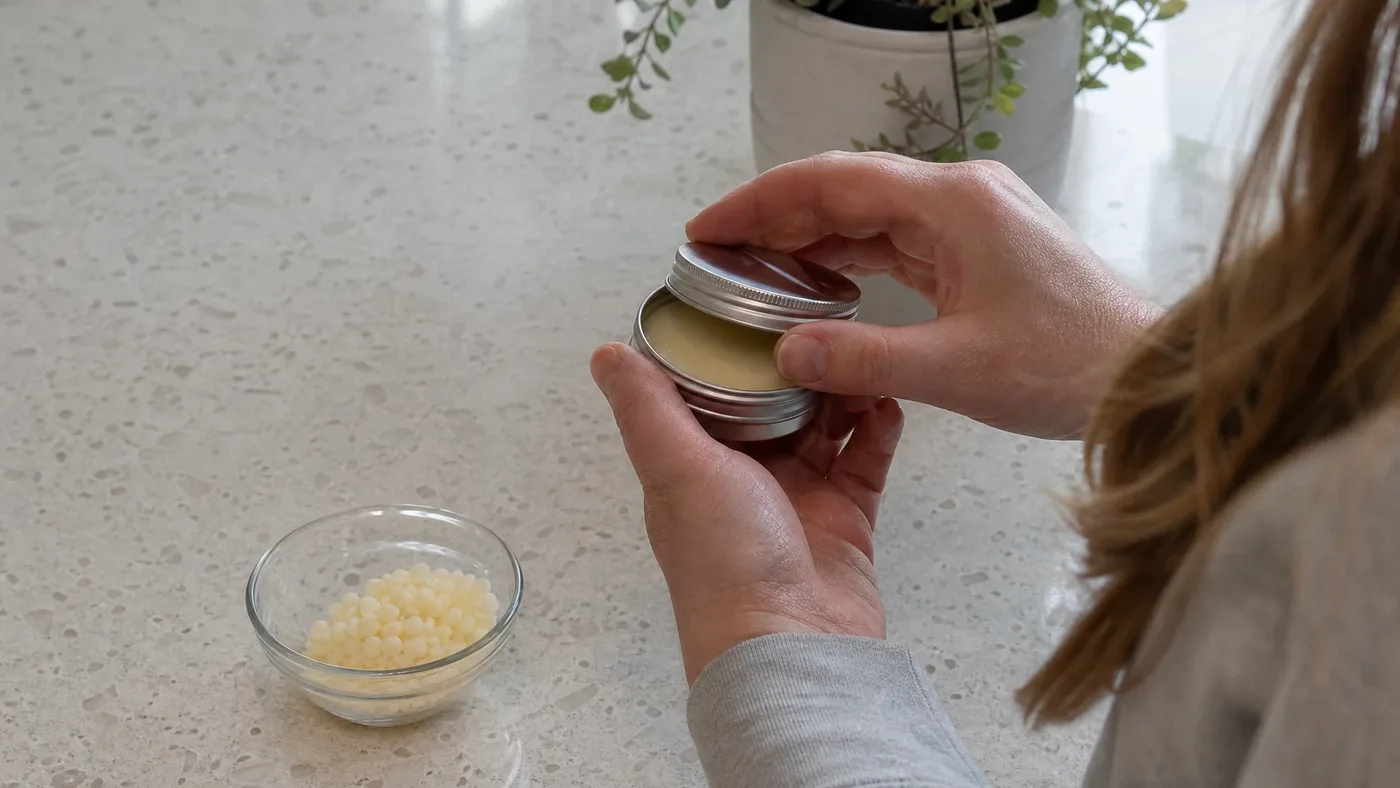
How to Make a Chamomile Balm: Wax and Drop Ratios
A balm is one of the most forgiving things you can make with chamomile oil, because there is no water to manage and only a few ingredients. It is also a recipe where a little arithmetic pays off: how much wax gives the texture you want, and how many drops of an undiluted oil belong in a 30 g jar. Here is the sheet.
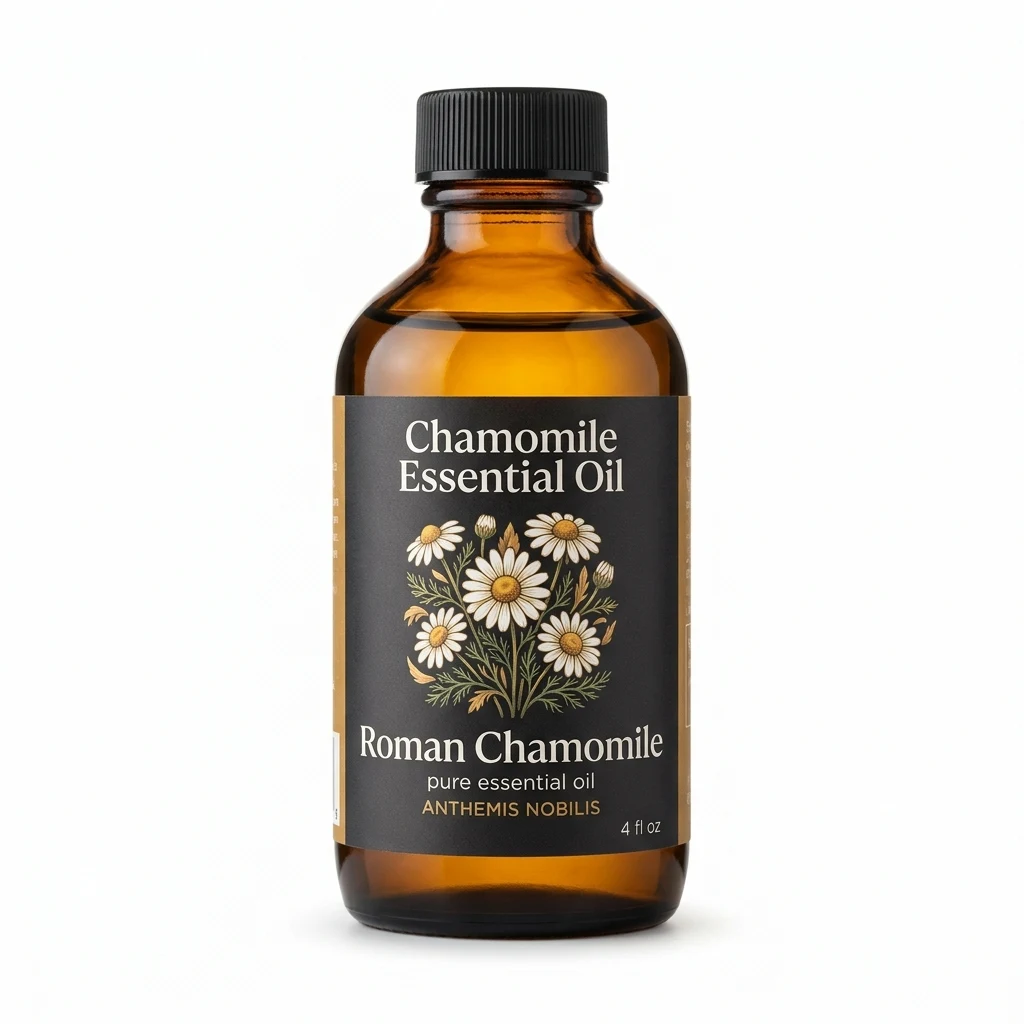
Roman Chamomile Essential Oil
Our own Roman Chamomile Essential Oil, in sizes from 0.5 oz to bulk.
From $32.99
Shop Now →The batch sheet for one 30 g jar
Everything is by weight, which is the only way wax recipes scale cleanly. The wax fraction sets the hardness, and the three fractions below are round numbers for a soft salve, a balm and a firm stick style; adjust to taste on a small batch. The chamomile oil is held at 1% of the jar, which is 0.3 g. We sell the chamomile oils, and the beeswax and carrier oil come from a craft or supply shop.
| Texture | Wax fraction | Beeswax | Carrier oil | Chamomile oil (1%) |
|---|---|---|---|---|
| Soft salve | 20% | 6.0 g | 23.7 g | 0.3 g |
| Balm | 25% | 7.5 g | 22.2 g | 0.3 g |
| Firm stick style | 33% | 10.0 g | 19.7 g | 0.3 g |
Each row adds up to 30 g. The carrier is whatever is left after the wax and the essential oil, so if you change the oil dose, change the carrier by the same weight.
Before you start, set everything out on the counter: the jar, a clean spoon, a small pan, a scale and a pencil. Wax recipes move quickly once the pan is warm, and it is surprisingly easy to forget the label until the jar is full. A little preparation makes the whole thing feel unhurried.
From grams to drops
An undiluted oil is usually dosed by the drop even in a weighed recipe. Assume about 20 drops per ml, which reproduces the "3 to 12 drops per ounce" we give for 0.5% to 2%, and a density near 0.9 g per ml, so a drop weighs roughly 0.045 g. For a 30 g jar:
- 0.5%: 0.15 g, about 3 drops.
- 1%: 0.3 g, about 7 drops.
- 2%: 0.6 g, about 13 drops.
Where in that range? We recommend 0.5% to 2%, and the Tisserand Institute lists 0.5% to 1.2% for facial products and sensitive areas and 1% to 3% for body products (Tisserand Institute). Put the two together and we would keep a face balm at 1% or less, and save 2% for hands, elbows and feet. We would not use this oil in a lip balm, because lip products are partly swallowed and our oils are not for internal use. For the general method, see our dilution guide.
Why the oil goes in last
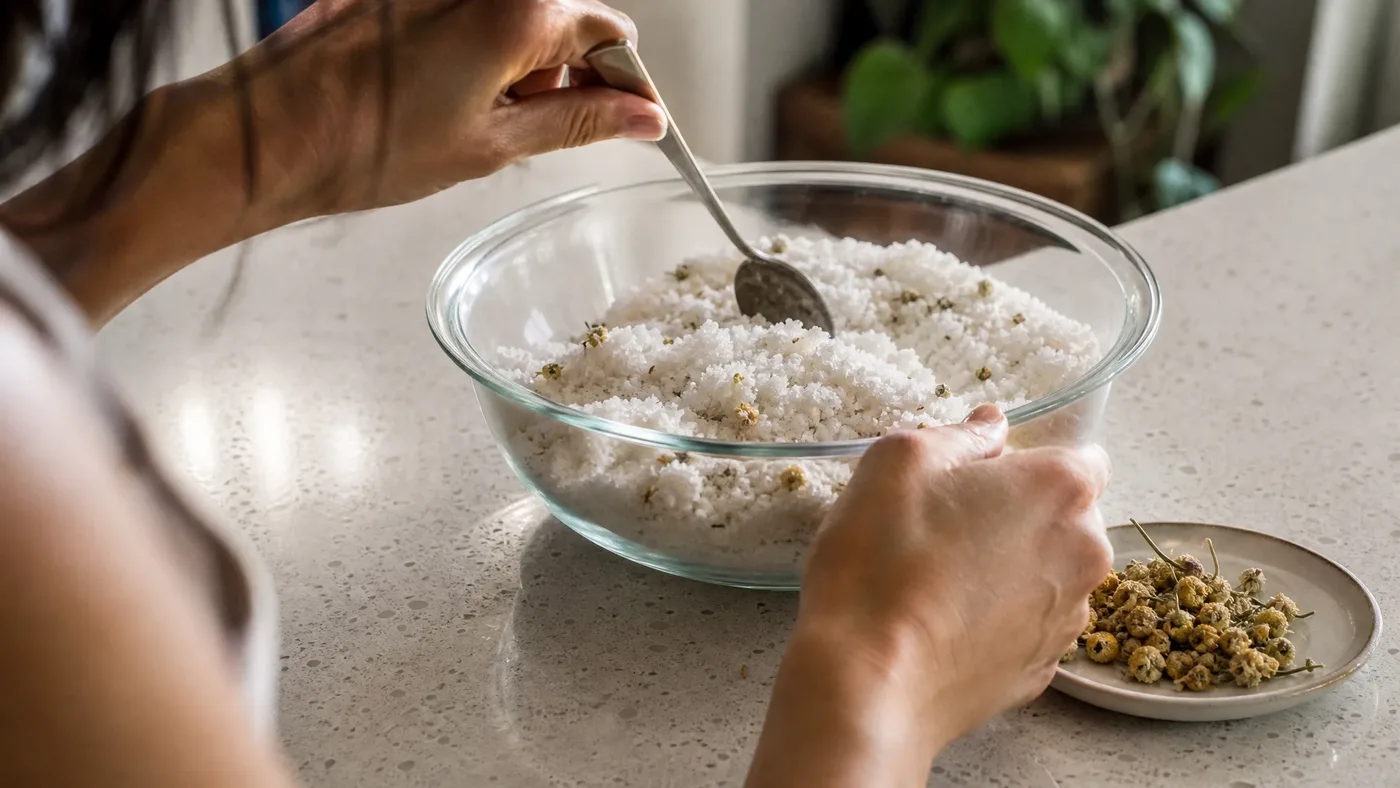
Beeswax melts at about 62 to 65 C, according to the FAO/WHO food additive monograph (JECFA beeswax monograph). Essential oil is volatile, so the order that makes sense is to melt the wax and carrier together just until clear, take the pan off the heat, let it cool until it starts to thicken at the edge but still pours, then stir in the chamomile and fill the jars right away. Cooler than the wax's melting range is better for the aroma, and a jar left open while it cools just lets the scent out.
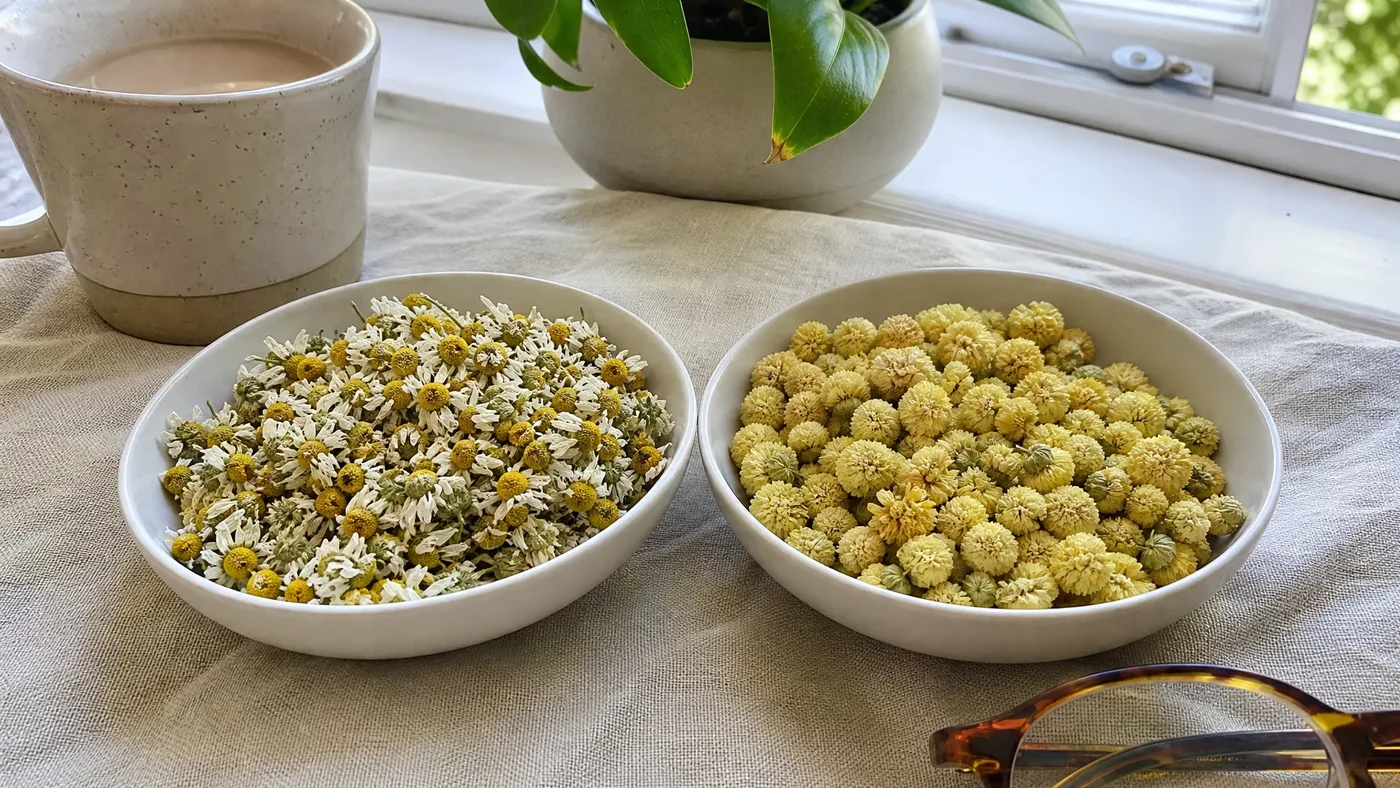
A word about the finishing touch. Once the balm is poured, leave the jar alone until it sets. Resist the urge to move it or to peek, because a jar that is jostled while it cools can end up with a rough surface. When it has set, put the lid on, write the date, and pick up the jar to smell it. Roman gives you a sweet, apple-like balm, and German a softer, hay-like one with a faint blue cast at the edges.
What limits the life of a balm
A balm has no water phase, which takes away the main thing microbes need. Water can sneak back in on wet fingers or in a steamy bathroom, so use a clean dry spatula, keep the lid on and keep the jar out of the shower. The usual limit on a balm's life is the carrier oil going stale, and not the wax or the chamomile. Reasoning from that, the essential oil's typical shelf life of two to three years capped, cool and dark does not carry over to the finished jar, which is only as stable as its least stable ingredient. Make 30 g at a time, date the jar, and replace it when it smells off. Our storage article covers the essential oil itself.
Who should skip it
Chamomile is a daisy-family plant, and the NCCIH notes that people allergic to ragweed, chrysanthemums, marigolds or daisies are more likely to react to it (NCCIH). If that includes you, ask an allergist first. Everyone else should patch test the finished balm on the inner forearm before wider use (our patch test guide). Skip it on eczema, open wounds or broken skin, and ask an OB-GYN or midwife if you are pregnant or breastfeeding and a pediatrician about children. Households with pets should ask a veterinarian; we cover dogs and cats.
If you give it away or sell it
The FDA says consumer cosmetics generally need an ingredient declaration on the label, with the net quantity of contents on the principal display panel (21 CFR 701.3). If you plan to sell, check with the FDA or a regulatory attorney, and list every ingredient, the essential oil included, because someone with an allergy needs to see it. For a gift, an ingredient list on the jar is the considerate minimum. A liquid alternative is our facial oil formula.
Weigh carefully, add the chamomile last, and label the jar with the date and the percentage.
Roman Chamomile Essential Oil
Roman Chamomile Essential Oil from our own shop, in sizes from 0.5 oz to bulk.
From $32.99
Shop Now →Sources & Further Reading
- Tisserand Institute. Dilution of essential oils. tisserandinstitute.org/safety/dilution
- JECFA. Beeswax, FAO/WHO food additive monograph. inchem.org
- NCCIH. Chamomile. nccih.nih.gov/health/chamomile
- US eCFR. 21 CFR 701.3, designation of ingredients. ecfr.gov