Chamomile Oil in the Bath: Why Drops Alone Float
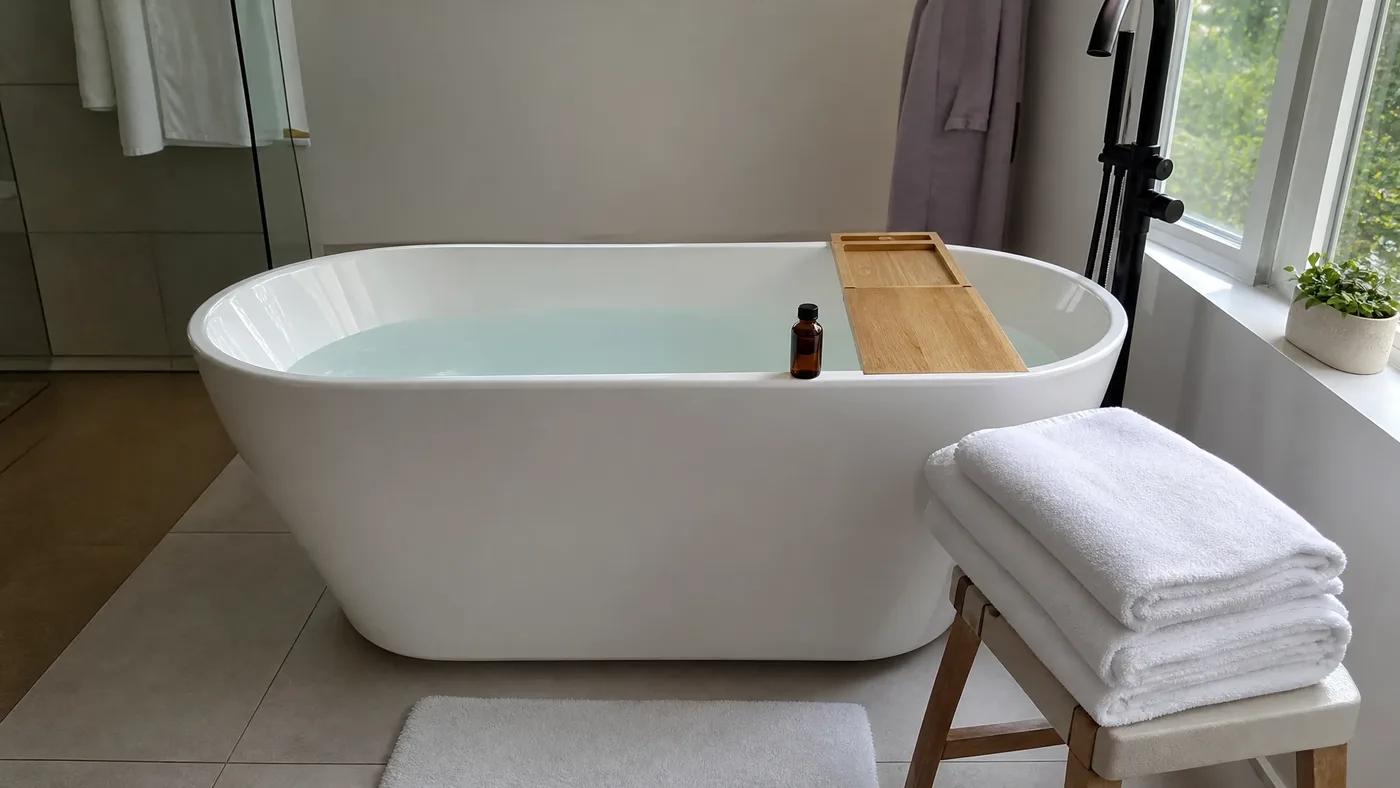
Chamomile oil and a hot bath sound like a natural pair, and most of us picture the drops spreading out through the water. Essential oil does not work that way. It does not dissolve, so it rides on the surface as a film, and that film is the first thing your skin meets when you sit down.
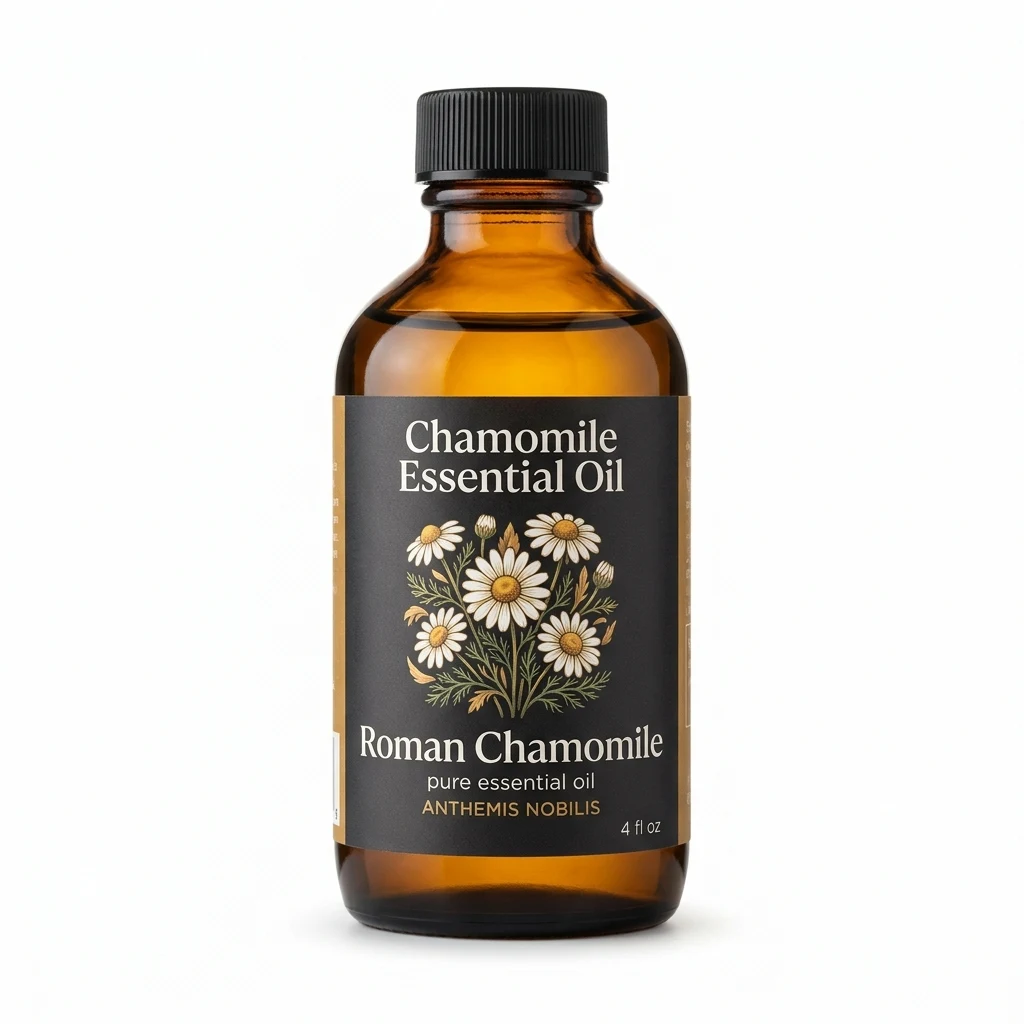
Roman Chamomile Essential Oil
Our own Roman Chamomile Essential Oil, in sizes from 0.5 oz to bulk.
From $32.99
Shop Now →What the drops do in the tub
The Tisserand Institute's bath safety page describes exactly this: pour oil straight in and you get a film of undiluted oil on top of the water. It also takes on a popular shortcut. Milk is water soluble, so it is not a carrier, dispersant or solubilizer for essential oils, and the oil still floats and still reaches your skin close to undiluted. A spoonful of carrier oil does dilute the essential oil, but it will not disperse in the water either.
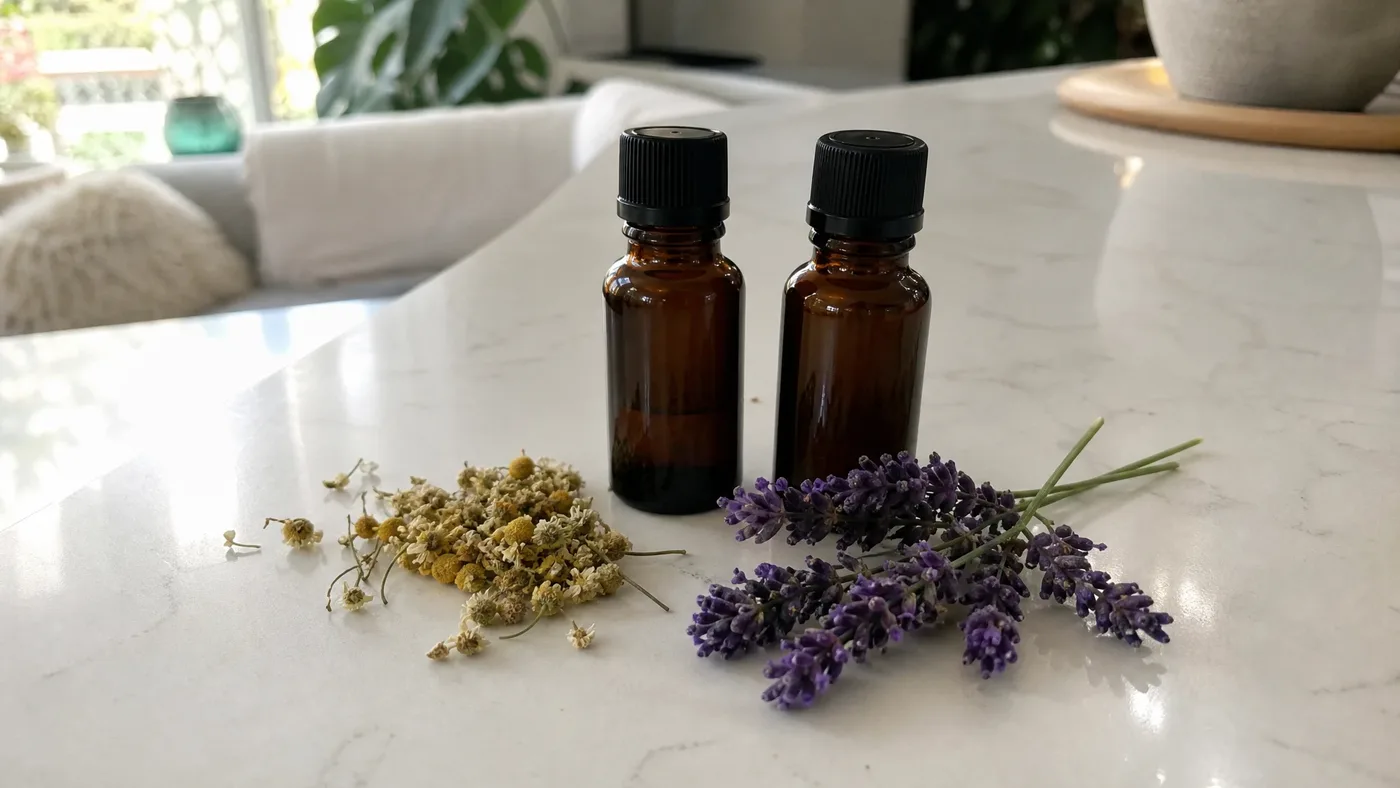
So a chamomile bath is really a mixing job first and a scent choice second. Get the mixing right and the sweet, apple-like aroma of the Roman oil, or the hay-like softness of the German oil, is a pleasant part of a long soak.
Three ways to give the oil something to hold on to
- A bath base. Tisserand gives 5 to 20 drops of essential oil per half ounce (one tablespoon) of base, such as a foaming base or a carrier oil. This dilutes the oil, though a carrier oil will still sit on the surface.
- Polysorbate 20. Mix the 5 to 20 drops with an equal amount of polysorbate 20 before it goes in the water.
- Solubol. Start at 1:1 and add more until the oil is fully incorporated. Tisserand notes it can take more than that.
We sell chamomile oil, not bases or dispersants, so you will find those at a craft or soapmaking supplier.
The drop math for chamomile
Drops vary with the bottle, but 20 drops to the milliliter is a common working figure, and it matches the 3 to 12 drops per ounce on our German oil page for 0.5% to 2%. Half an ounce is about 15 ml. Five drops is 0.25 ml, around 1.7% of that base. Twenty drops is 1 ml, around 6.7%.
Our own dilution guidance for both chamomile oils is 0.5% to 2% in a carrier, which for a tablespoon of base works out to about 1.5 to 6 drops. Tisserand's general range for bath and wash-off products is higher, 2% to 4%, but that is a class-wide figure for essential oils, not a chamomile number. Our recommendation is to start at 5 or 6 drops per tablespoon, the top of our range, or less, and not to treat the upper end of the Tisserand base range as a goal.
A quick sanity check on the tub: say it holds 100 liters. Six drops is about 0.3 ml, so spread evenly the oil would be 0.0003% of the water. That sounds tiny, but oil is only evenly spread if it has been dispersed, which is the whole point of the steps above.
Setting up before the tub fills
The easiest way to get a bath blend right is to do the mixing at the counter, not at the tub. Measure your base into a small cup, count the drops in slowly, and stir until the cup looks uniform. Then you can carry it to the bathroom and add it while the water is running, so it swirls through the tub instead of sitting in one spot.
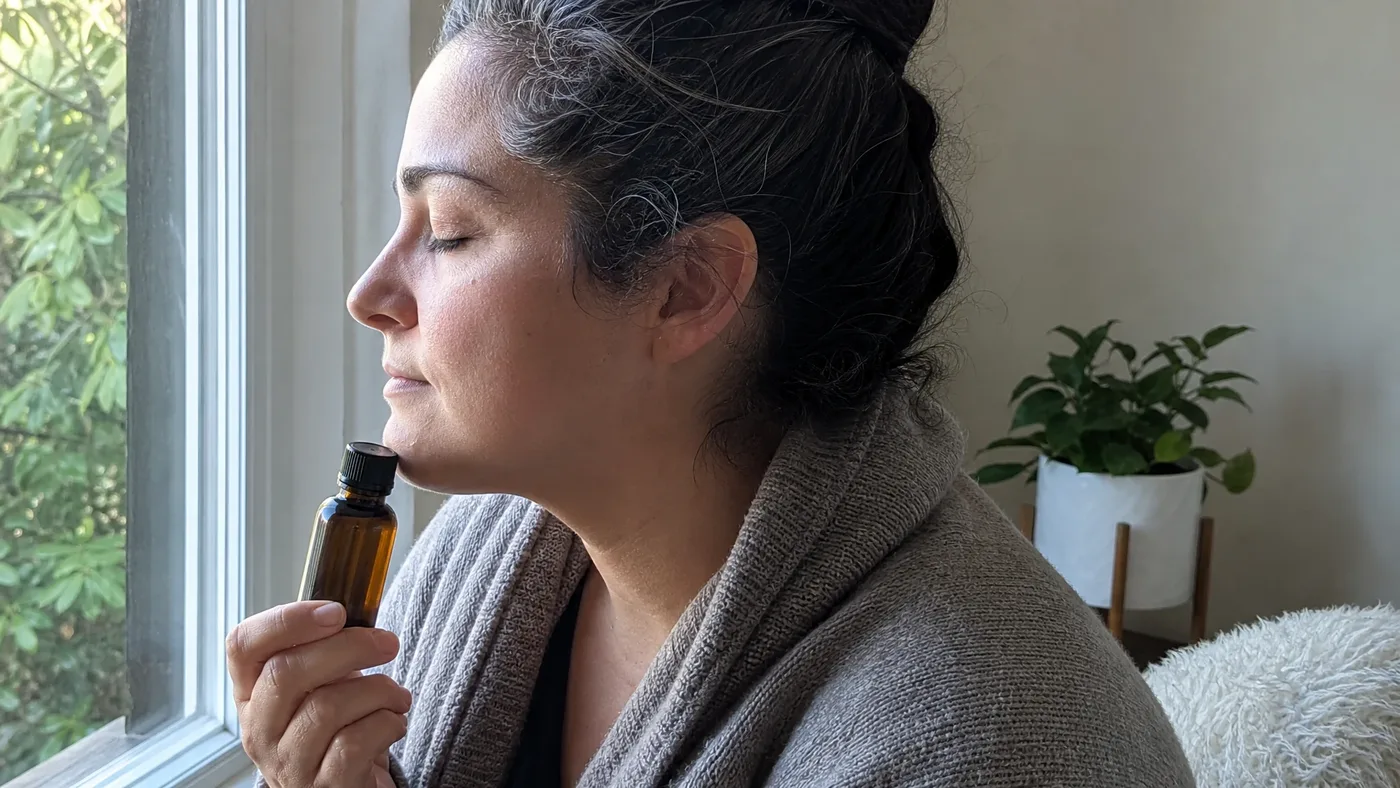
While you are at the counter, open the bottle for a moment and take one slow breath from a few inches away. You will notice the Roman oil leans sweet and apple-like, and the German oil has that dry, hay-like softness underneath. Knowing which one you are working with makes the bath feel like a choice rather than an accident, and it is a nice way to slow down before you get in.
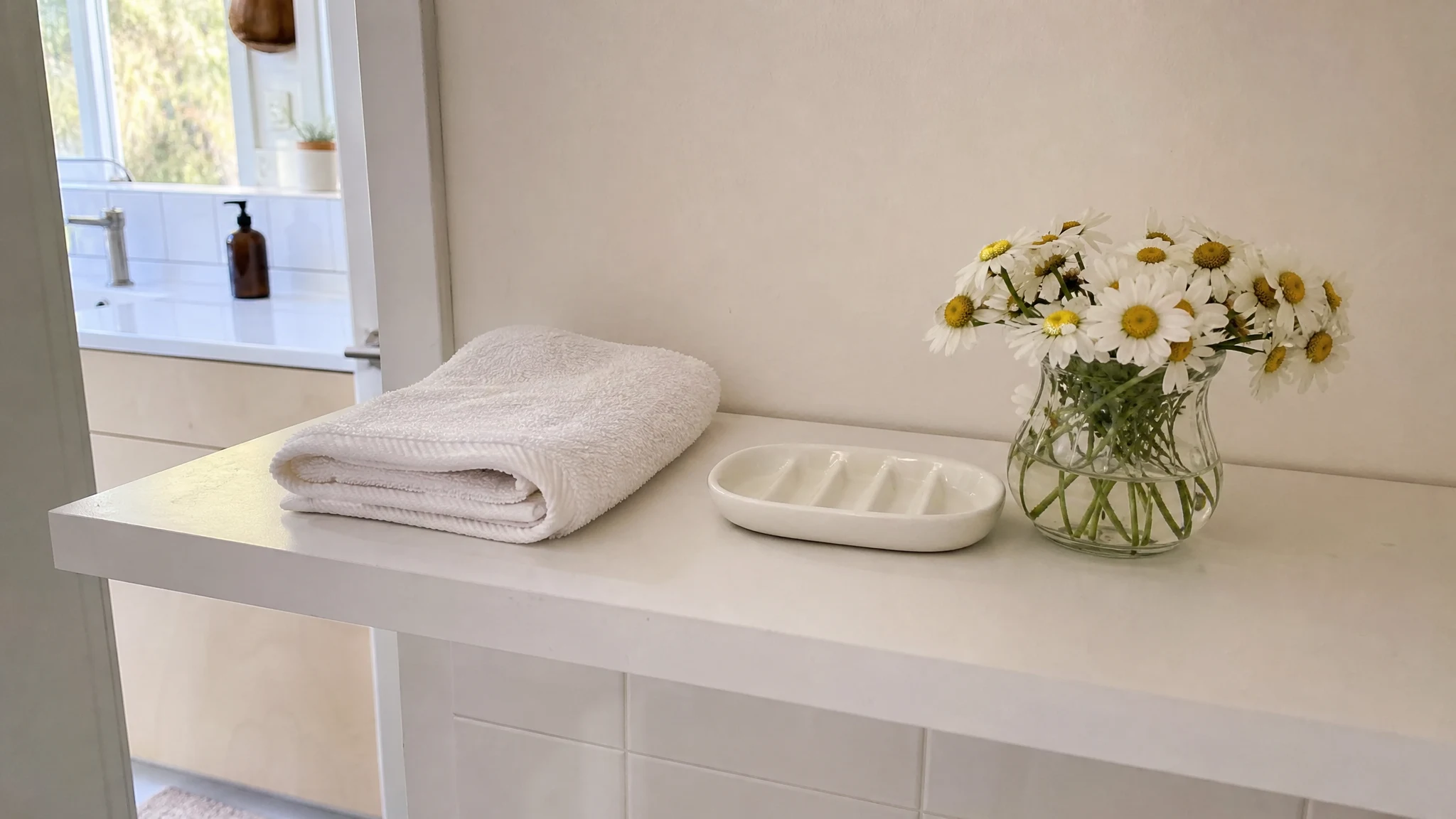
Keep your towel, mat and a cloth within reach before you start. Once you are in a warm tub, the last thing you want is to hunt for something with wet hands.
Practical points before you step in
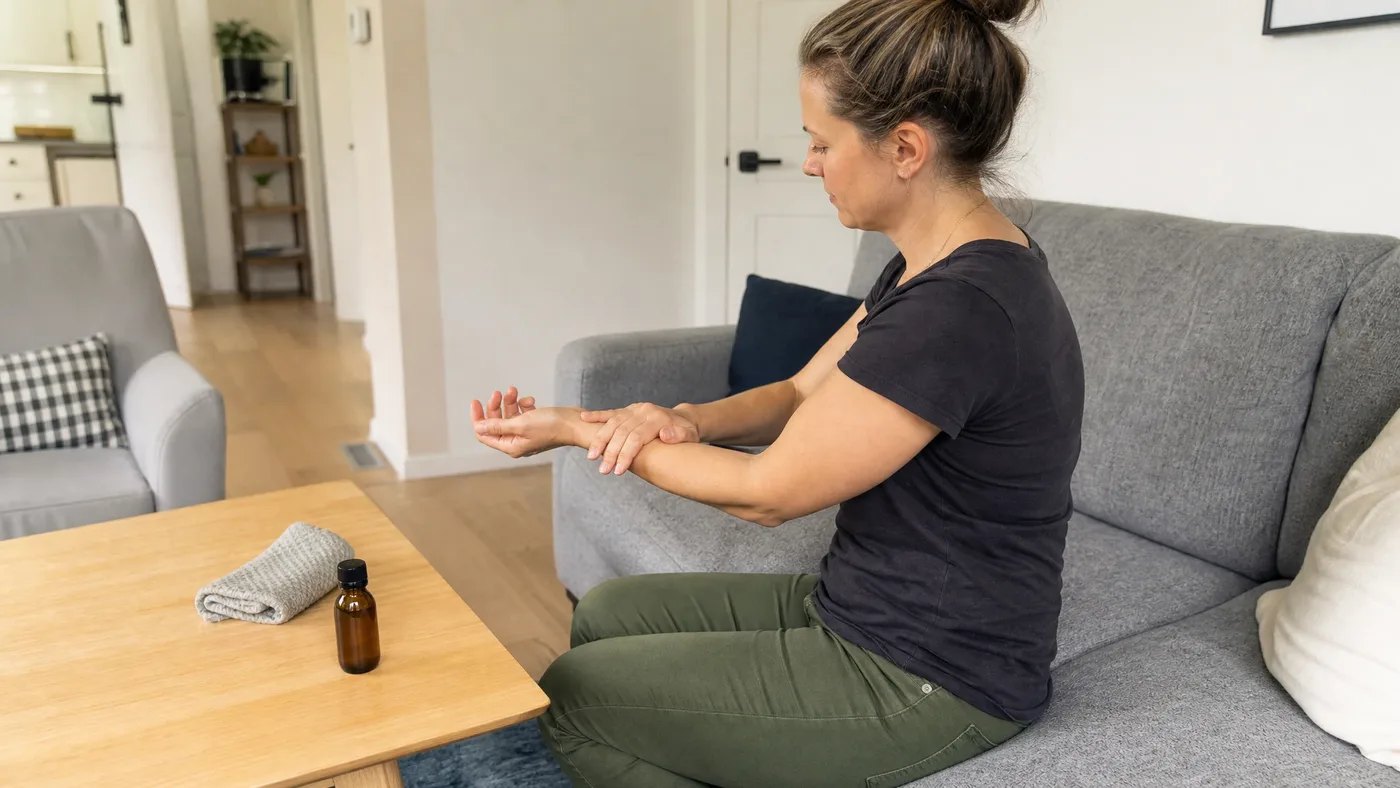
- Patch test the dispersed blend, not the neat oil. Our patch test guide shows how.
- Chamomile belongs to the daisy family. NCCIH notes that people allergic to ragweed, chrysanthemums, marigolds or daisies are more likely to react to chamomile.
- The German oil is blue and will stain pale towels, mats and porous tub surfaces, so wipe the waterline once you drain.
- Oil leaves a slick film on the tub floor. Use a mat and take your time getting out.
Who should skip it
Leave essential oil out of a baby's or young child's bath and ask a pediatrician. If you are pregnant or breastfeeding, ask your OB-GYN or midwife first. If you have eczema, broken skin or a skin condition under care, check with a dermatologist. Our oils are external cosmetic oils sold undiluted, so the dilution is yours to work out.
If you would rather use salts, the bath salts formulation covers the dispersal step, the evening routine post shows where a bath fits, and our dilution guide and safety overview go deeper.
Mix first, count your drops, and a chamomile bath is simply a pleasant, scented soak.
Roman Chamomile Essential Oil
Roman Chamomile Essential Oil from our own shop, in sizes from 0.5 oz to bulk.
From $32.99
Shop Now →Sources & Further Reading
- Tisserand Institute. Bath safety. tisserandinstitute.org/safety/bath-safety
- Tisserand Institute. Essential oil dilution. tisserandinstitute.org/safety/dilution
- NCCIH. Chamomile. nccih.nih.gov/health/chamomile