Chamomile Bath Salts That Stay Mixed: A Dispersant Recipe
The classic chamomile bath salts recipe goes like this: a cup of Epsom salt, a few drops of oil, a stir, a pretty jar. It smells lovely in the jar. The trouble starts in the tub, where the oil does not stay with the salt. Here is a version that fixes that one thing and keeps everything else simple.
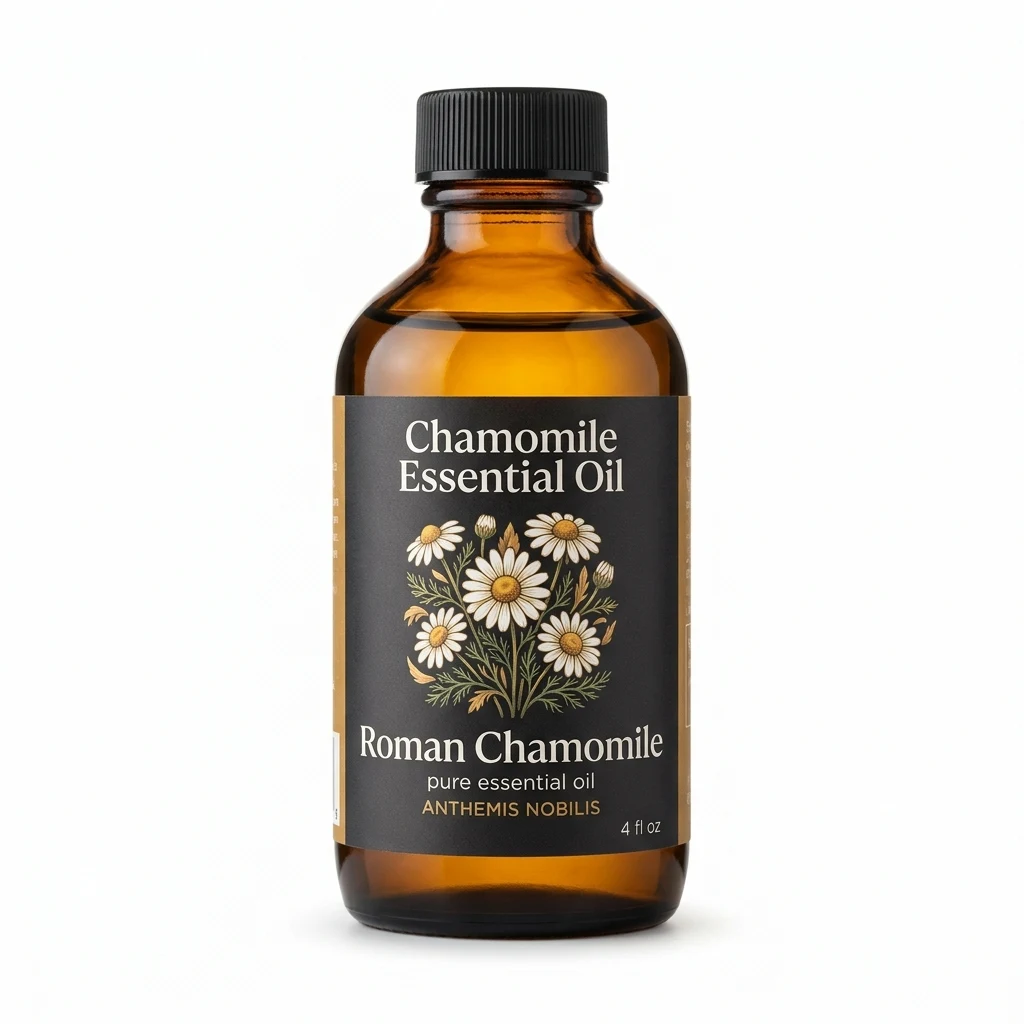
Roman Chamomile Essential Oil
Our own Roman Chamomile Essential Oil, in sizes from 0.5 oz to bulk.
From $32.99
Shop Now →Why oil on salt is not enough
Essential oils do not dissolve in water, so drops that are only dripped onto salt crystals end up floating on the surface once the salt melts away. The Tisserand Institute lists Epsom or regular salt, baking soda, cornstarch, glycerin, witch hazel and aloe vera among the things that are often assumed to disperse oil in a bath and do not (Tisserand Institute, bath safety). Oil sitting in a film on warm bathwater is the thing to avoid, and it is the reason a floating-drops bath can feel sharp on the skin. We dig into that in our bath article.
That does not make salt a bad ingredient. A salt bath is a pleasure in its own right. It just is not a carrier for oil, so the oil needs a partner first.
Choosing the partner
The same Tisserand page describes two workable dispersants. One is polysorbate 20, mixed with the essential oil first in equal amounts, using 5 to 20 drops of each. The other is Natrasorb Bath, a modified tapioca starch, with 5 to 20 drops of oil stirred into half a cup of it. Natrasorb is not interchangeable with ordinary tapioca starch, and polysorbate 20 is not the same product as Solubol, so follow whichever one you buy. We do not sell dispersants, salts or jars; a craft or soap-supply shop will have them.
Our recipe uses polysorbate 20 because it makes the arithmetic clean. The order is the whole trick: oil into dispersant, dispersant into salt, salt into the bath.
A formulation for four baths
This is a calculation worked out from the Tisserand guidance, with roughly 20 drops to the milliliter as the working convention. Your dropper may differ.
- Dose per bath. We would use the bottom of Tisserand's 5 to 20 drop range: 5 drops of chamomile oil per bath, about 0.25 ml.
- Batch size. Four baths means 20 drops of chamomile oil, about 1 ml.
- Pre-mix. Stir 20 drops of polysorbate 20 into the 20 drops of oil until the mixture looks uniform. A separate dropper for each keeps the count honest.
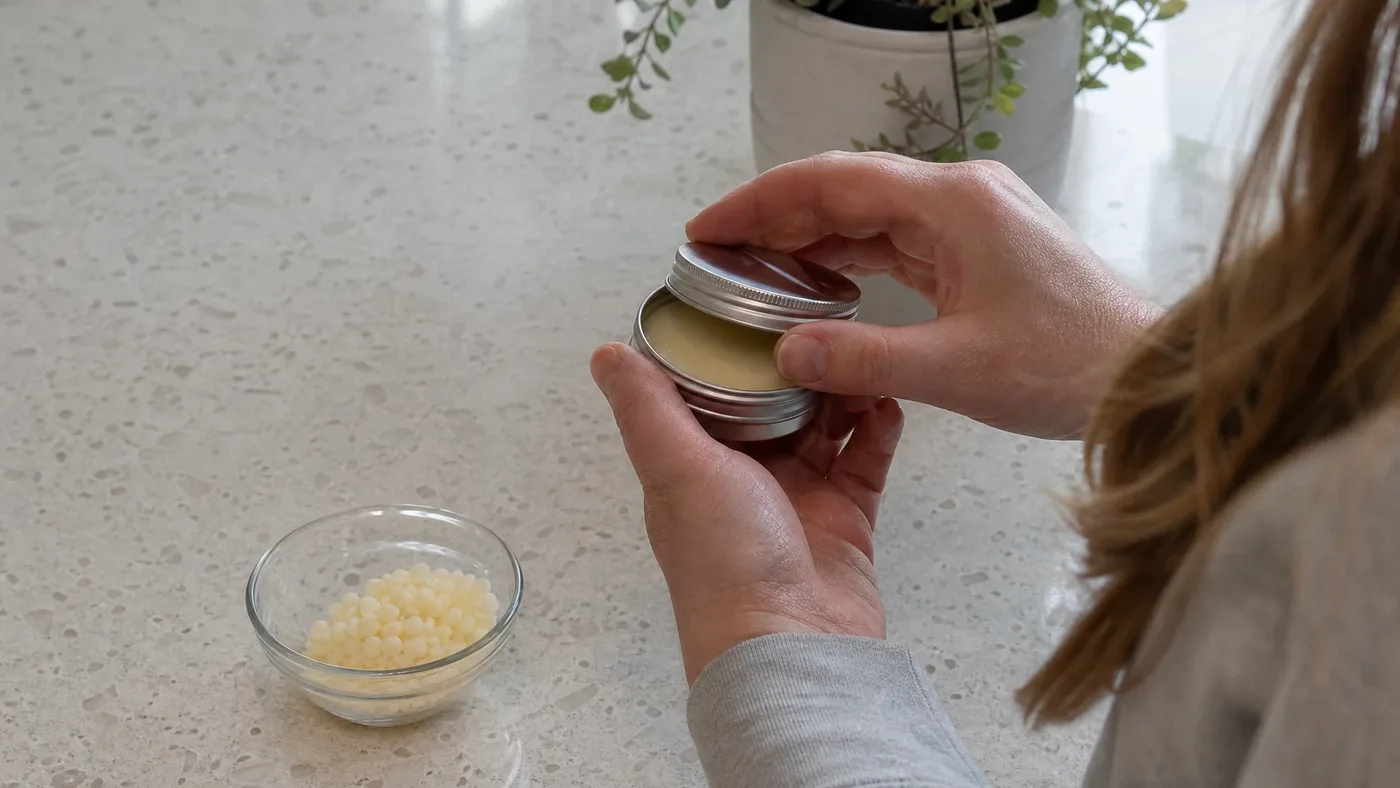
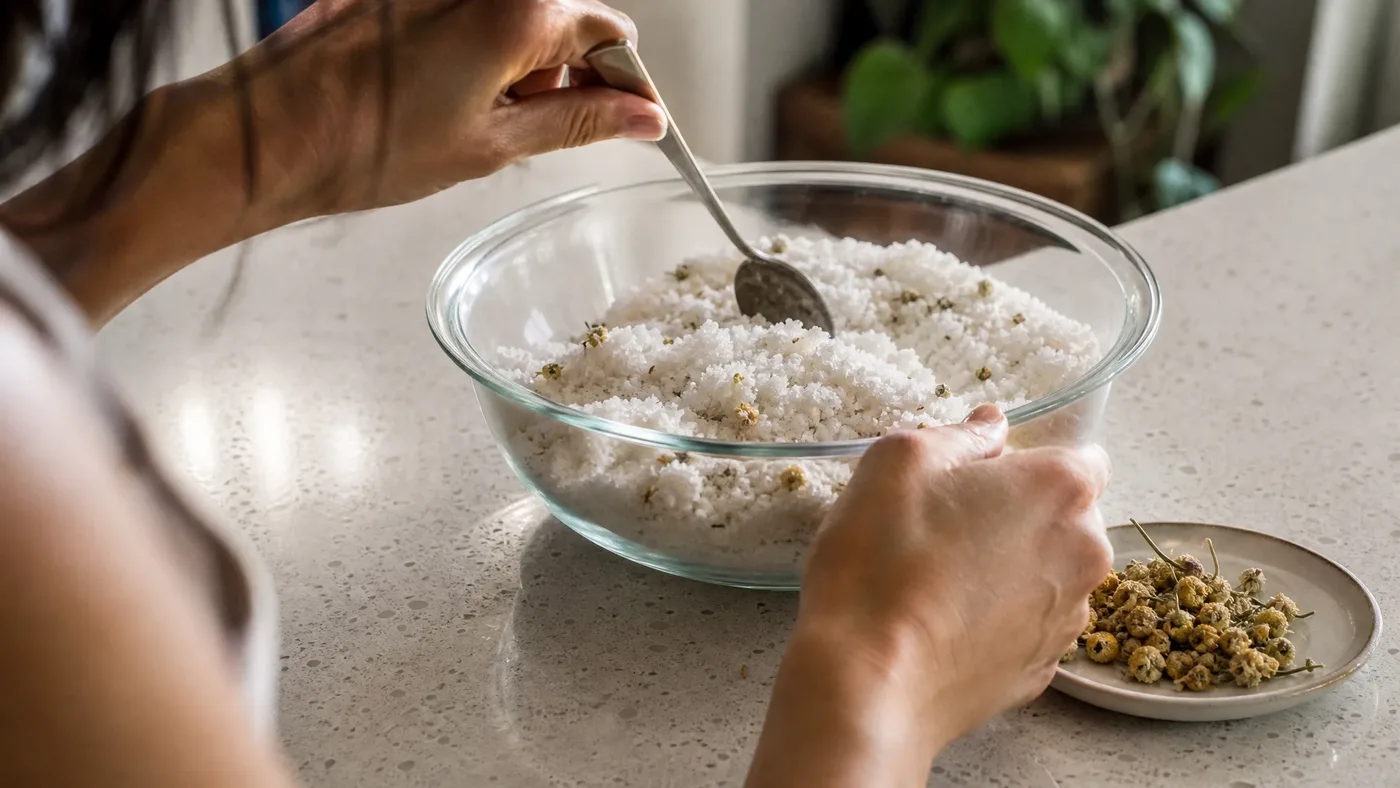
- Add to salt. Stir the 40 drops into about two cups of Epsom salt, mixing thoroughly so the liquid does not pool in one spot.
- Portion it. Divide into four equal scoops, one per bath, and use the same scoop every time. Dose is set by the scoop, not by eye.
To make ten baths instead, scale everything: 50 drops of oil, 50 of polysorbate, and one tenth of the salt per bath. The check is easy: 50 drops is about 2.5 ml, and ten baths gives 0.25 ml each, the same dose.
Roman or German
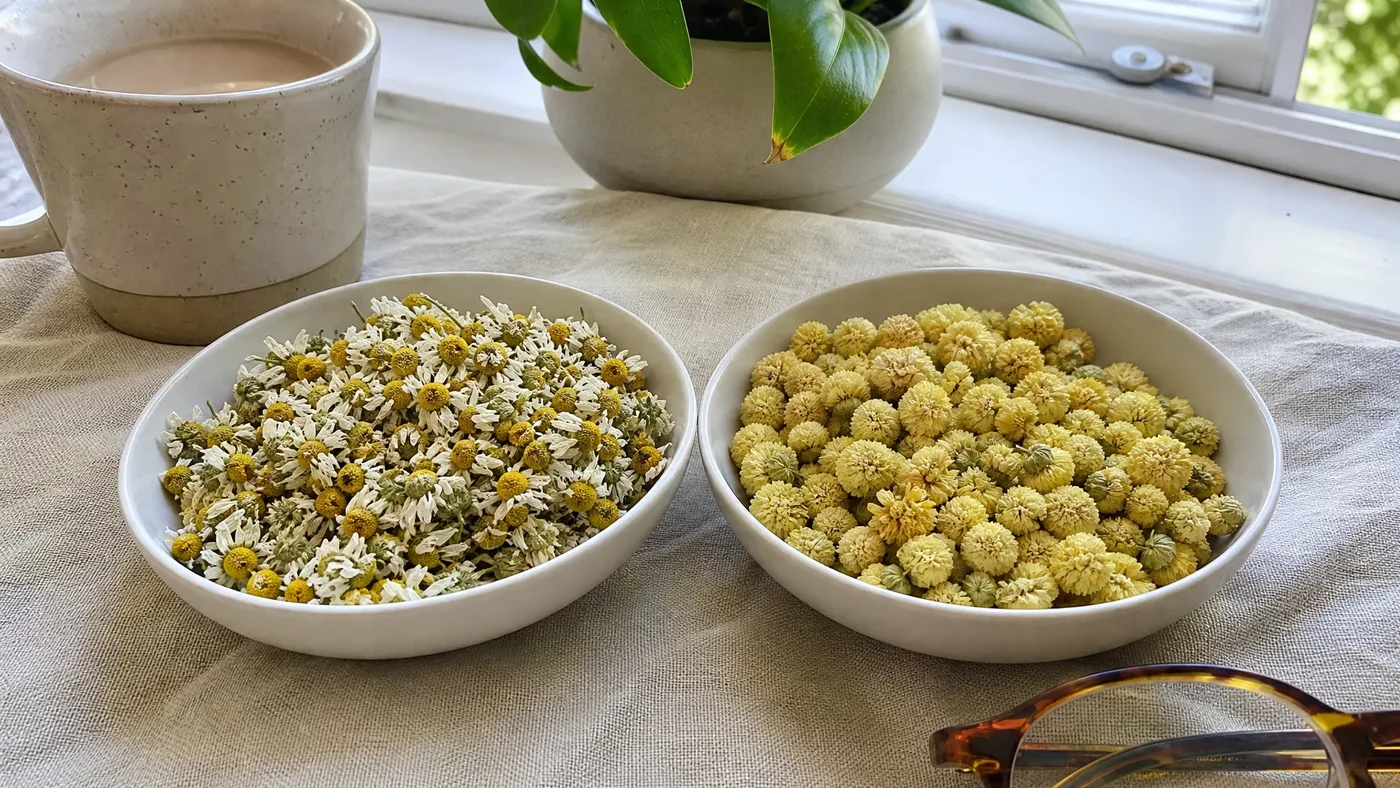
Both work. Roman is sweet, apple-like and herbaceous, and German adds a hay-like softness plus a blue tint from chamazulene. At 5 drops the tint is faint, but German chamomile can stain light fabrics, so rinse the tub after draining and watch the towels. We compare the two in our buying guide.
Setting up before you run the bath
A little preparation makes the whole thing smoother. Put the jar, the scoop and a towel within reach before you start, and set a non-slip mat in the tub. Keep one scoop just for this jar so the dose never drifts. A glass jar with a tight lid is easier to wipe clean than a plastic one, and a strip of tape with the date and the drop count tells you at a glance what is inside.
When you tip the scoop under the running tap, take a breath of the steam. You should catch a soft, sweet, fruity-herbaceous note rather than something sharp. If it smells stronger than you expected, use a little less next time. A bath scent should stay in the background.
What to leave out
- Baking soda and cornstarch as dispersants. Both are on Tisserand's list of things that do not do the job.
- Milk. Tisserand's page cautions against full-fat milk, which only makes a temporary mix with oil.
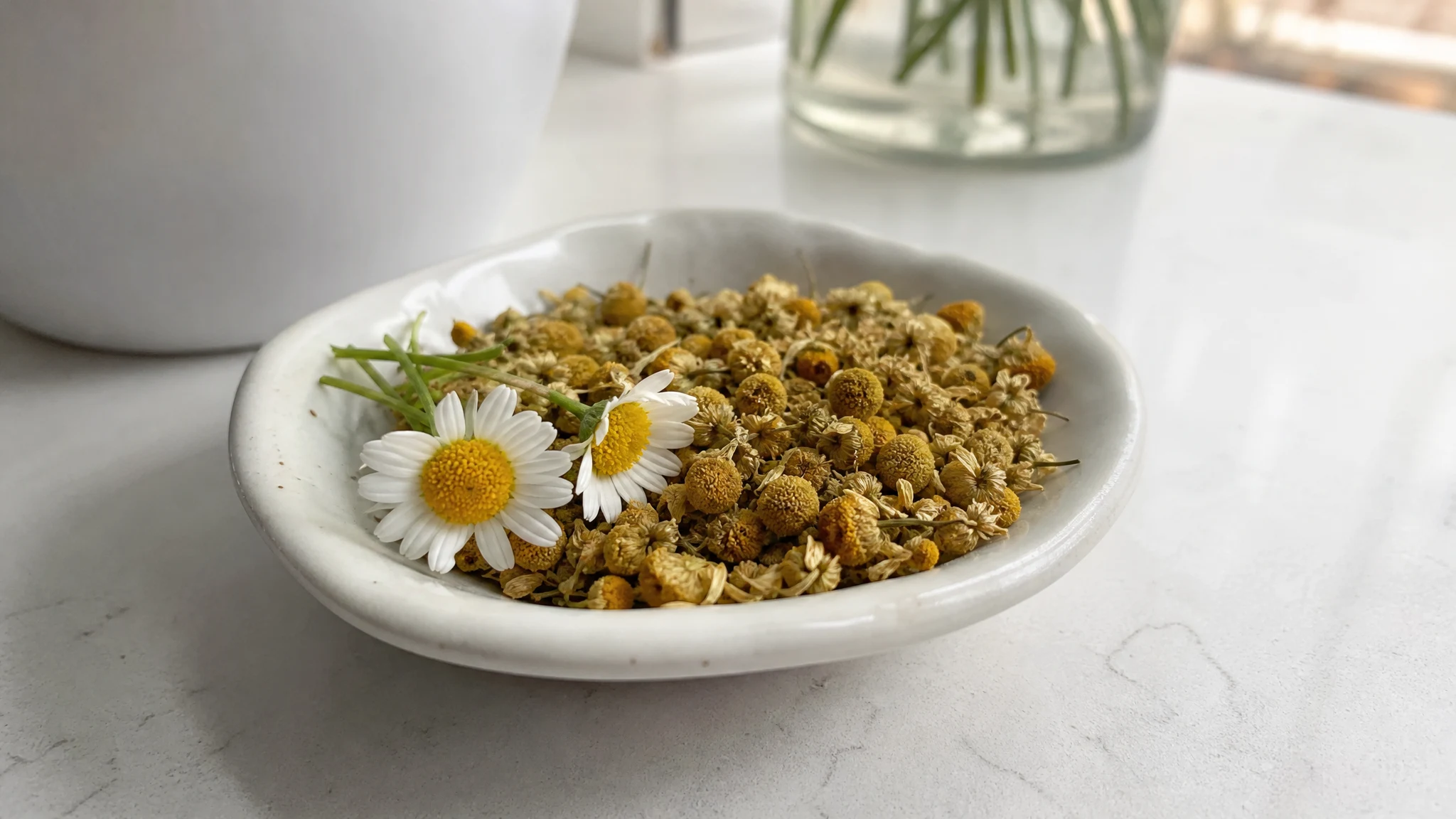
- Dried flowers. They add nothing to the aroma and one more thing to rinse out of the tub.
Keeping it and using it
The oil in its capped bottle typically keeps two to three years in a cool, dark place, but a salt blend has its own life, so make small batches, keep the jar closed and label it. It contains oil and a surfactant and is not food, so keep it away from children and never eat it. A tub with an oil film is slippery, so use a mat.
Before the first bath, patch test the dispersed blend (see our patch test guide). Skip it if you have a daisy-family allergy, eczema or broken skin, and ask a pediatrician about babies and children and an OB-GYN or midwife if you are pregnant or breastfeeding. For the dilution arithmetic in other products, see our dilution guide, and for the full list of cautions see chamomile oil safety.
Make a small batch, scoop it consistently, and enjoy a bath where the chamomile actually stays in the water.
Roman Chamomile Essential Oil
Roman Chamomile Essential Oil from our own shop, in sizes from 0.5 oz to bulk.
From $32.99
Shop Now →Sources & Further Reading
- Tisserand Institute. Bath safety: how to disperse essential oils in a bath. tisserandinstitute.org/safety/bath-safety