Chamomile Oil Safety: Allergy, Dilution and Patch Tests
Most essential oil safety advice reads like a wall of warnings, and chamomile does not deserve that treatment. For the large majority of people, a properly diluted drop or two is an ordinary part of making a scented product. But there is one question worth answering before you open the bottle, and it has nothing to do with chamomile itself: how do you get along with daisies?
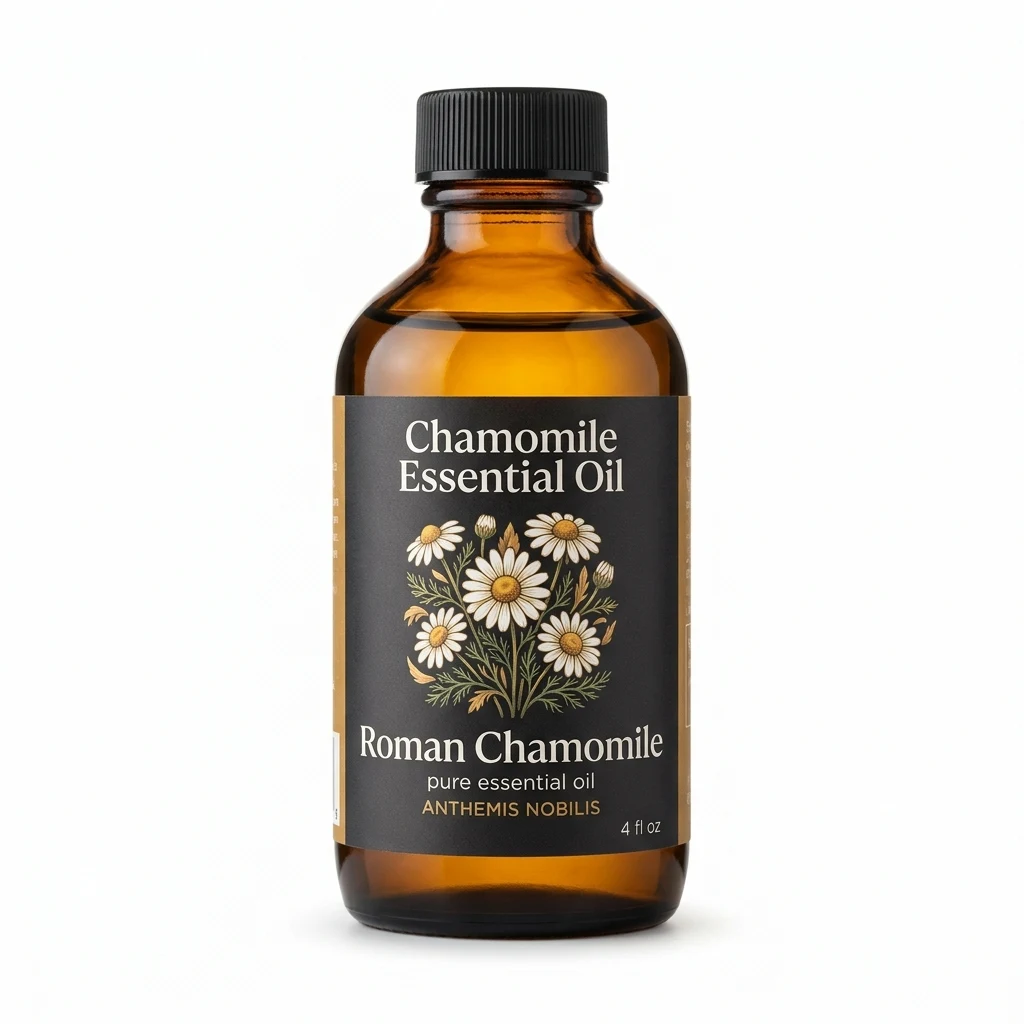
Roman Chamomile Essential Oil
Our own Roman Chamomile Essential Oil, in sizes from 0.5 oz to bulk.
From $32.99
Shop Now →The daisy-family question
Both of the chamomiles we sell belong to the daisy family, Asteraceae, also called Compositae. The National Center for Complementary and Integrative Health notes that people are more likely to react to chamomile if they are allergic to related plants such as ragweed, chrysanthemums, marigolds or daisies, and that reactions in some people can be serious (NCCIH). If hay fever season means ragweed to you, or a bouquet of chrysanthemums has ever left a rash, that is the moment to check with an allergist before trying either oil.
A dermatology review by Paulsen counts at least 15 plants in this family as suspected skin sensitizers, with chamomile on the list, and names sesquiterpene lactones as the main culprits (Paulsen, Contact Dermatitis, 2002). The same paper describes sensitization to German chamomile as rare, which is reassuring, though it is a statement about the plant in general and not a guarantee for any one person. There is also a documented case of allergic contact dermatitis from an ointment containing Roman chamomile (McGeorge and Steele, 1991).
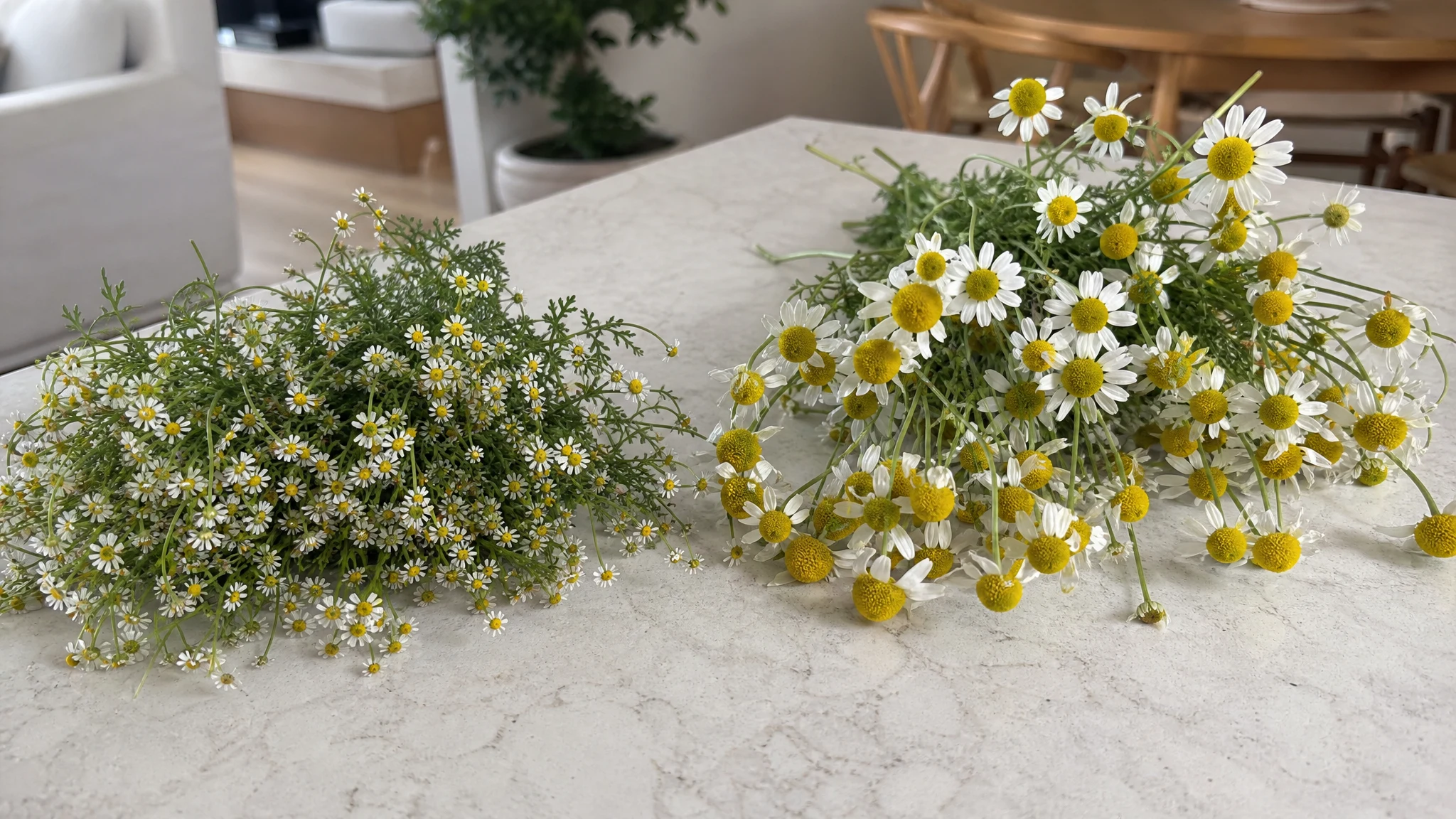
So which of our two oils is the milder one? We do not think the evidence lets anyone say. Choose between Roman and German on aroma and color, and apply the same care to either.
Dilution, in numbers you can actually measure
Both of our oils arrive undiluted, so the carrier oil is your job. We recommend 0.5% to 2% in a carrier oil, and the arithmetic is simple: one US fluid ounce is about 29.57 ml, and at the common convention of 20 drops per ml, 1% is roughly 6 drops per ounce. Drop size varies from bottle to bottle, so a small measuring syringe beats counting.
Where you land in that range depends on where the oil goes. The Tisserand Institute suggests 0.5% to 1.2% for the face and sensitive areas, 1% to 3% for body oils, and 0.2% to 1% for reactive skin (Tisserand Institute). Tisserand's own Roman chamomile page works out to about 1% for the face (2 drops in 10 ml) and up to about 2.5% for massage (5 drops in 10 ml) (Tisserand Roman chamomile). Put those together and our own recommendation follows: start at the bottom of our range for anything that touches the face, and keep 2% for hands, feet and elbows. If you plan to sell what you make, check the current IFRA standards for your product type, because a retail dilution line is not a regulatory limit.
A patch test that is worth the wait
Contact allergy is a delayed reaction, so a dab on the forearm that looks fine after ten minutes has not told you much. Put a small amount of your finished, diluted blend on the inner forearm, leave it, and check it a day or two later. Tisserand's irritation guidance is candid that a patch test is not a perfect predictor either, so stop at the first sign of redness, itching or stinging and see a dermatologist if it lingers. Our patch test walkthrough has the full routine.
Where the bottle lives
- Eyes. NCCIH lists eye irritation as a possible effect of chamomile used near the eyes, and oily fingers travel. Wash your hands after blending.
- Swallowing. Our oils are for external cosmetic use only. If someone does swallow essential oil, Poison Control (1-800-222-1222 in the US) is free, confidential and open around the clock (poison.org). We cover why in our ingestion article.
- Pets. The ASPCA lists the Roman chamomile plant as toxic to dogs, cats and horses (ASPCA). That is about the plant, but it is a good reason to ask your veterinarian before using the oil around animals. We go through it for dogs and cats.
- Heat. Tisserand lists Roman chamomile oil as flammable, so keep the bottle away from flames and hot surfaces.
- Storage. Keep it tightly capped in a cool, dark place, up out of reach of children. Stored that way, chamomile oil typically keeps for two to three years.
Small habits that keep it easy
A few tiny routines make safe use almost automatic. Write the date and the percentage on every bottle you blend, so you never have to guess what is inside. Keep a dedicated dropper or syringe for your measuring and wash your hands when you finish, since oily fingers find their way to eyes. Note whether you used Roman or German, because if a reaction ever happens, that detail is the first thing a doctor will want to know.
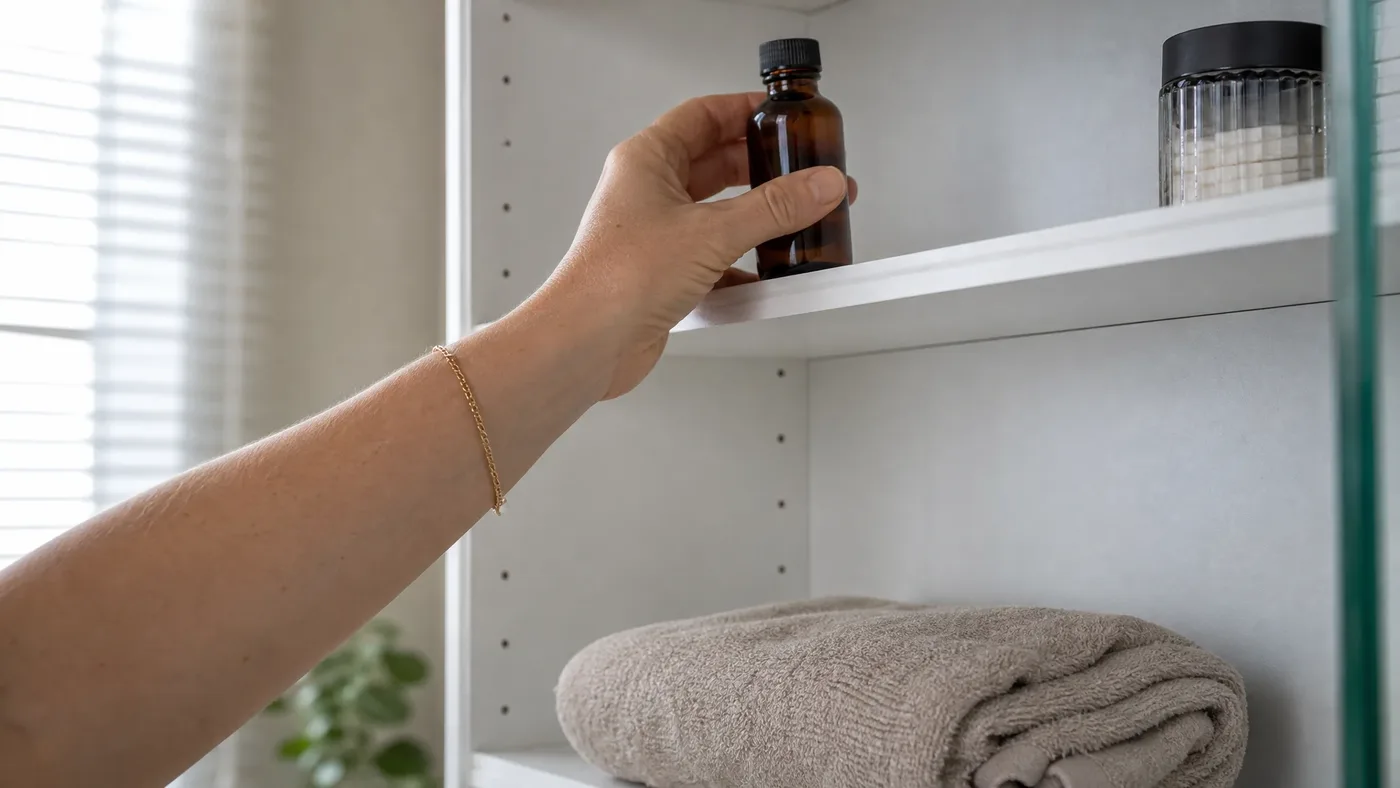
Put the bottle back on a high shelf, cap tight, as soon as you have finished. Most accidents with essential oils happen in the minute between taking a bottle down and putting it away, so make that minute short.
People who should ask a professional first
Anyone who is pregnant or breastfeeding should check with an OB-GYN or midwife (see what the sources say), and anything for babies and children belongs with a pediatrician (our article on children). The same goes for anyone with eczema, broken skin or a history of reactions to plants in the daisy family, and for anyone on regular prescription medication. We sell an external cosmetic oil, and none of this replaces their advice.
The short version: know your allergies, measure your drops, wait a day on the patch test, and keep the bottle where it belongs. Do that and chamomile is an easy oil to enjoy.
Roman Chamomile Essential Oil
Roman Chamomile Essential Oil from our own shop, in sizes from 0.5 oz to bulk.
From $32.99
Shop Now →Sources & Further Reading
- NCCIH. Chamomile. nccih.nih.gov/health/chamomile
- Paulsen E, 2002. Contact sensitization from Compositae-containing herbal remedies and cosmetics. Contact Dermatitis 47(4):189-198. PubMed 12492516
- McGeorge BC, Steele MC, 1991. Allergic contact dermatitis of the nipple from Roman chamomile ointment. Contact Dermatitis 24(2):139-140. PubMed 2040155
- Tisserand Institute. Dilution of essential oils. tisserandinstitute.org/safety/dilution
- Tisserand. Chamomile, Roman essential oil. tisserand.com
- Poison Control. Essential oils. poison.org/articles/essential-oils
- ASPCA. Roman chamomile. aspca.org