Chamomile Oil Inhalation: Why We Skip the Steam Bowl
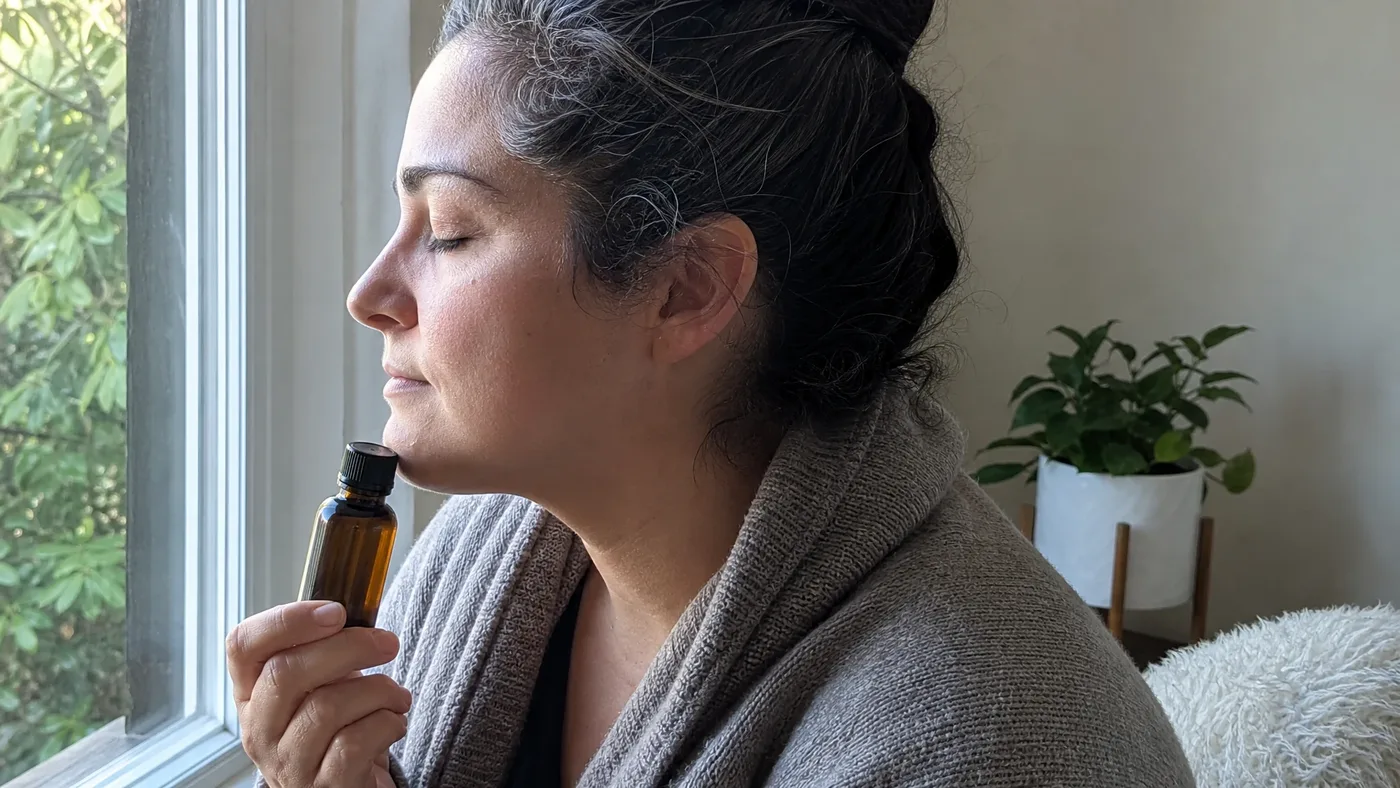
Before any method, a position: if you want to breathe chamomile oil, use a personal inhaler or a single drop on a tissue, and do not lean over a bowl of hot water. Steam bowls have a documented record of scald injuries, and the evidence that steam helps is weak. A passive inhaler has its own limits, covered below, but it cannot tip boiling water onto a child.
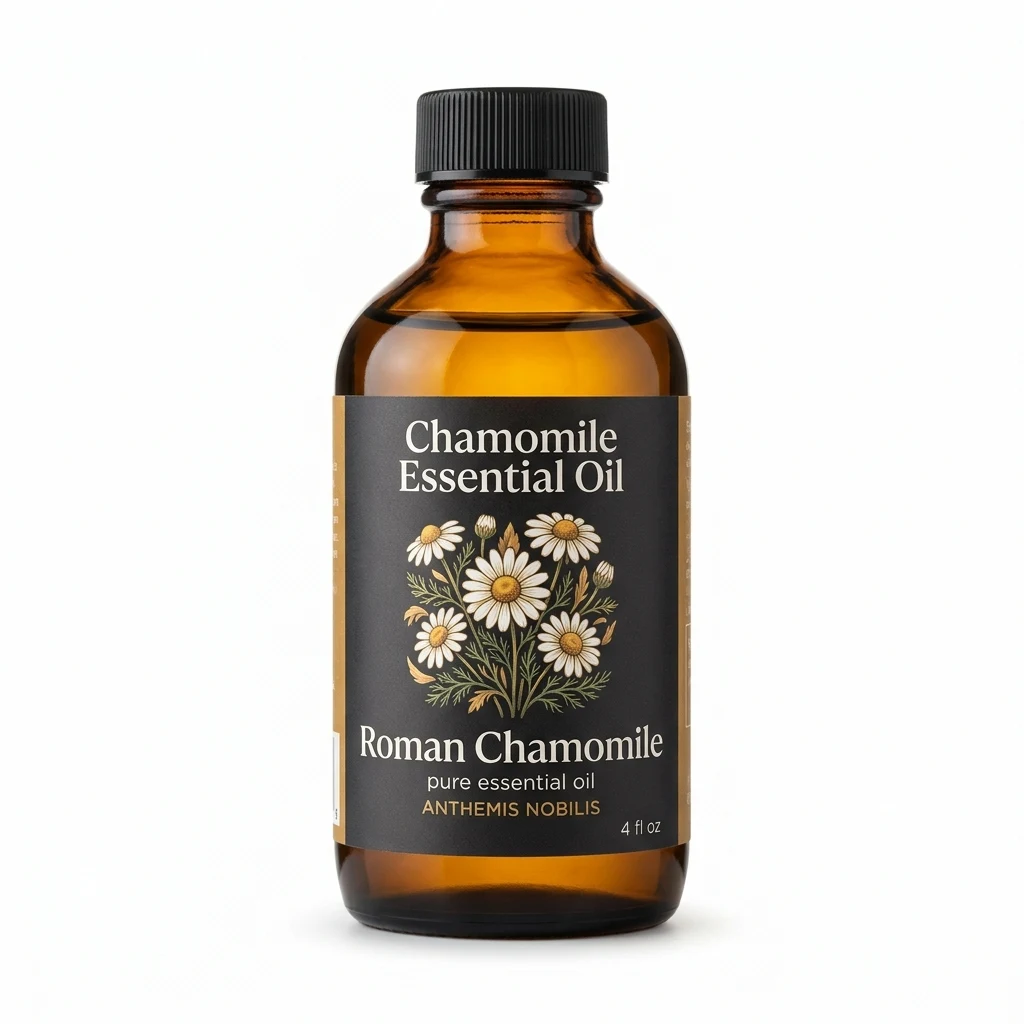
Roman Chamomile Essential Oil
Our own Roman Chamomile Essential Oil, in sizes from 0.5 oz to bulk.
From $32.99
Shop Now →Cautions first
Skip inhalation, or ask first, in these cases. Asthma or COPD: the American Lung Association's blog post "Essential Oils: More Harmful Than Helpful?" (January 2024, updated October 2025) says that inhaling essential oils directly can irritate the respiratory tract, that certain oils can trigger asthma symptoms in sensitive people, and that people with asthma or COPD should consult their healthcare professional first. It is a patient-organisation blog, not a trial, so treat it as a cautious position, not a measurement. Allergy to daisy-family plants: chamomile belongs to that family, and our Inside the Still page carries a ragweed and Asteraceae caution; an allergist is the person to ask. Babies and young children: ask a pediatrician, and do not hold oil near an infant's face. Pets: see our posts on cats and dogs, and ask a veterinarian. Pregnancy: ask your OB-GYN or midwife. Scent as a trigger: if strong smells bring on headaches or migraines for you, a physician is the right person for that question, and our headaches post goes into the evidence.
Why we steer away from the steam bowl
The Newcastle Hospitals NHS Foundation Trust and the British Burn Association published a warning on 25 November 2025 against inhaling steam from bowls of boiling water. It says scalds from accidental spills often affect the face, chest, abdomen and legs, that some need long-term treatment or reconstructive surgery, and that there is little evidence steam inhalation works for nasal congestion. Its suggested alternative is to sit in a steamy bathroom with a hot shower running.
The case series put numbers on it. Sheikh and colleagues (Burns, 2026) reviewed 308 paediatric scalds linked to home remedies for respiratory infections, mostly in children aged 0 to 5, and reported that about 23% needed surgical grafting and 19% developed hypertrophic scarring. Tobalem and colleagues (Journal of Burn Care & Research, 2026) described 33 children burned by homemade steam inhalation devices, most on the perineum or thighs, about half needing surgery and intensive care. In adults, Dearden and colleagues (JPRAS Open, 2022) described 12 adults admitted with steam inhalation scalds, who stayed about 8 nights on average. These are case series, not rates: they show that the injury happens and how bad it can be, not how often per bowl of steam. We read abstracts, not full papers.
What the evidence says steam does
The Cochrane review by Singh and colleagues (2017) examined heated, humidified air for the common cold. It found six trials from five publications with 387 participants, no new studies since the 2013 version, and mixed results: one analysis favoured it, another found no significant difference, viral shedding showed no difference, and the authors rated the evidence low quality. It tested heated water vapour, mostly with a device, not essential oil, so nothing in it says anything about chamomile oil. We mention it because it is the best summary of whether steam itself is worth the risk, and the answer is that the case for it is thin.
Is there any evidence on chamomile inhaled?
A little, and it is not strong. Hu and colleagues (Acta Cardiologica Sinica, 2025) pooled 14 trials of aromatherapy for anxiety in people who had had an acute myocardial infarction. Aromatherapy as a group was associated with lower anxiety, and chamomile (M. chamomilla), geranium and bitter orange were each reported to show a significant reduction. But the heterogeneity was very high (I² = 96.7%), the abstract does not say how each oil was delivered, and the setting was hospital patients, not people at a desk. The abstract does not state funding. Reasoning from this, the most that can be said is that trials have tested chamomile aromatherapy in a clinical population with a mixed result quality; it does not tell you what to expect from a bottle at home, and nobody has tested our oils.
The three formats, compared
- Steam bowl. Documented scalds, weak benefit evidence, and the NHS notice advises against it. Not recommended here.
- Tissue or cotton sniff. One drop, held at a distance, you control the strength. Nothing is heated, and nothing can spill. The downside is that the oil is neat on the cloth, so keep it off your skin and your nose, and out of reach of children.
- Personal inhaler. A small tube with an absorbent wick, which you sniff briefly. We do not sell inhalers, so you would buy one from any reputable supplier or use a clean, capped container with a cotton pad. It is the lowest-risk format of the three, in our reasoning, because the exposure is small, brief and under your control. It is not evidence-backed for any outcome.
Drop arithmetic for a wick
No authority we found gives a chamomile inhalation dose. Our own product page figures imply about 20 drops per ml (3 to 12 drops per ounce for 0.5% to 2%), so one drop is about 0.05 ml, or 50 microlitres. That is the unit to reason with. A small wick holds a few drops at most, and more oil on the wick means a stronger, not longer, scent. Reasoning from the ALA's warning about direct, high-concentration inhalation, start with one drop, take two or three slow breaths, stop at the first headache, cough, nasal irritation or tightness in the chest, and do not repeat the session within the hour. That is our conservative reading, not a published protocol.
What not to do
- Do not add undiluted oil to a pot of boiling water on the stove.
- Do not use inhalation as a replacement for asthma medication or for a physician's advice on a persistent cough or congestion.
- Do not take the oil by mouth. It is not for internal use.
- Do not put it in a humidifier tank. See the humidifier post for what two manuals say.
We sell two chamomile essential oils, German and Roman, undiluted, so the dilution and the drop count are yours to manage. For room scent through a purpose-built diffuser, see chamomile diffuser blends, and the safety guide collects the cautions in one place.
If your symptoms are the reason you are reaching for a bottle, the next step is a pharmacist or physician, not a stronger inhalation.
Roman Chamomile Essential Oil
Roman Chamomile Essential Oil from our own shop, in sizes from 0.5 oz to bulk.
From $32.99
Shop Now →Sources & Further Reading
- Newcastle Hospitals NHS Foundation Trust and British Burn Association, 25 November 2025. Burns warning: risks of steam inhalation. newcastle-hospitals.nhs.uk
- Singh M, Singh M, Jaiswal N, Chauhan A, 2017. Heated, humidified air for the common cold. Cochrane Database of Systematic Reviews. pubmed.ncbi.nlm.nih.gov/28849871
- Sheikh RH et al., 2026. Upper respiratory tract infections and scald burns: risks and insights on home remedies. Burns. pubmed.ncbi.nlm.nih.gov/42161065
- Tobalem B et al., 2026. Homemade Steam Inhalation Therapy Devices: A Neglected Cause of Severe Pediatric Burns. Journal of Burn Care & Research. pubmed.ncbi.nlm.nih.gov/40657784
- Dearden AS, North AS, Varma S, 2022. Severe scalds sustained during steam inhalation therapy in an adult population. JPRAS Open. pubmed.ncbi.nlm.nih.gov/35198720
- Hu JY et al., 2025. The Efficacy of Aromatherapy in Alleviating Anxiety among Acute Myocardial Infarction Patients: A Systematic Review and Meta-Analysis. Acta Cardiologica Sinica. pubmed.ncbi.nlm.nih.gov/41018287
- American Lung Association, 2024 (updated 2025). Essential Oils: More Harmful Than Helpful? lung.org/blog/essential-oils-harmful-or-helpful