
Period Cramps and Chamomile Oil: Reach for Warmth First
If you are curled up with period cramps, the advice with the longest track record is not an oil at all. The NHS puts a warm bath or shower, a heat pad or hot water bottle wrapped in a tea towel, a tummy and back massage, gentle exercise such as yoga or walking, and everyday painkillers at the top of its list (NHS, period pain). Chamomile oil is not on it, and that is worth understanding before you shop.
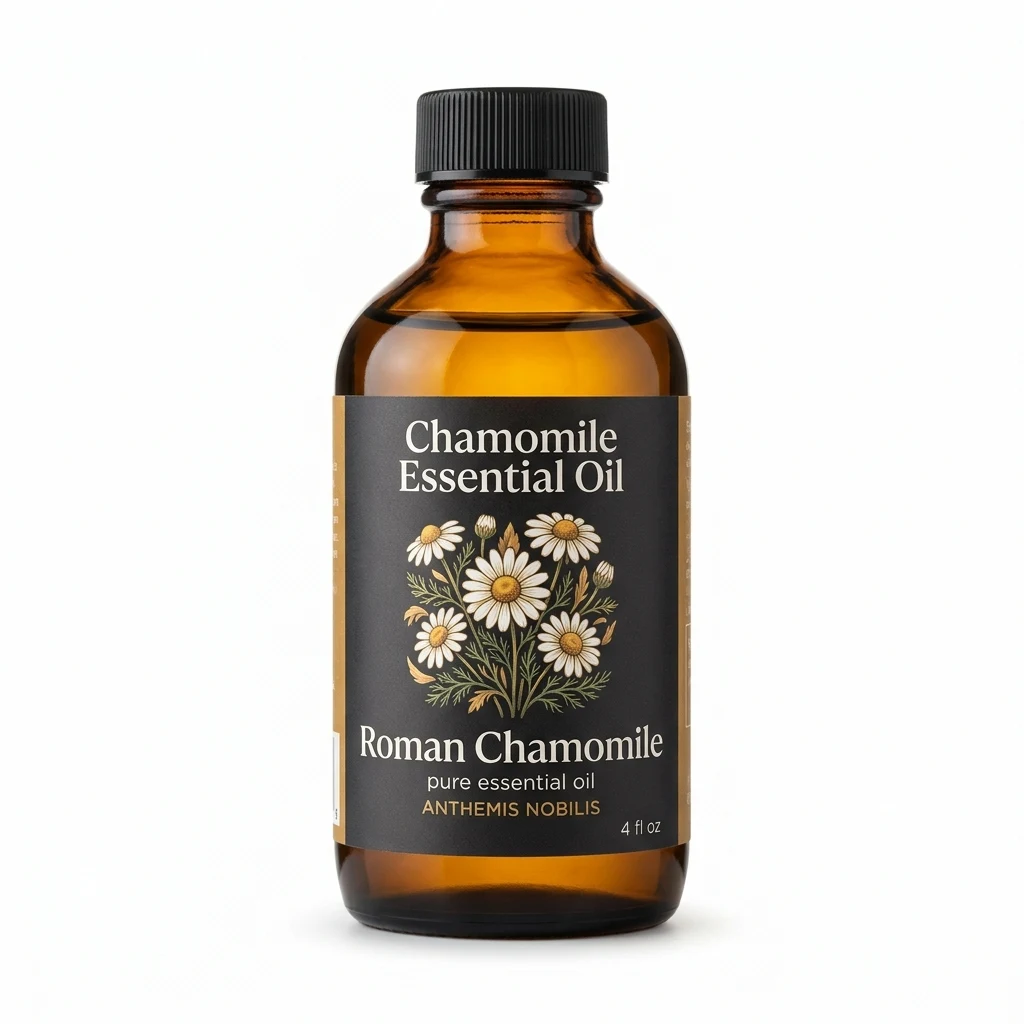
Roman Chamomile Essential Oil
Our own Roman Chamomile Essential Oil, in sizes from 0.5 oz to bulk.
From $32.99
Shop Now →Where chamomile shows up in the research
Chamomile does turn up in period-pain studies, just not as an essential oil. A small Malaysian trial gave young women with painful periods a drink combining chamomile with theanine, 15 people per group, and reported lower pain scores in the group that drank it. Because theanine was in the mix, the effect cannot be pinned on chamomile alone (Soh et al., 2025). An Iranian trial in 102 women with endometriosis used 1,000 mg chamomile capsules three times a day for eight weeks and found lower pelvic pain and dysmenorrhea scores than placebo (Khalajinia et al., 2024). A swallowed drink and a swallowed capsule are a long way from a few drops of oil in a carrier, and our oils are not for internal use.
The aromatherapy reviews
A larger systematic review pooled 19 placebo-controlled trials of aromatherapy for period pain, 1,787 participants in all, and found lower pain scores than placebo, with inhalation and massage both included. The authors rated the evidence moderate, and the results varied a good deal from trial to trial (Lee et al., Journal of Clinical Medicine, 2018). The oils it searched for centred on lavender and rose, and chamomile does not appear anywhere in its text. So a bottle of chamomile oil is, at best, a reasonable guess from a neighbouring category of research, not a tested choice, and we would rather say so plainly.
How we would put it together
We would start where the NHS starts: warmth, and a massage of the tummy and back. If you like a little fragrance with it, our Roman oil has a sweet, apple-like aroma and our German oil is blue and hay-like, and either can be diluted into a carrier oil for the massage. Our guidance is 0.5% to 2% in a carrier, with a patch test beforehand (how to patch test). How to dilute chamomile essential oil covers the carrier side, and the massage guide covers technique. Think of the oil as a scent choice for a comforting ritual, not as a period-pain product. We do not sell carrier oils or heat packs, so a pharmacy or grocery store is your stop for those.
Keep it off broken skin and away from your eyes, and do not swallow it. NCCIH notes that people allergic to ragweed, daisies, marigolds or chrysanthemums are more likely to react to chamomile and that too little is known about its safety in pregnancy (NCCIH); if you are pregnant or breastfeeding, start with our pregnancy article.
The NHS says to get urgent help if pelvic or period pain is severe or worse than usual and painkillers have not helped, and to see a GP if periods become more painful, heavier or irregular, if pain disrupts daily life, or if there is bleeding between periods or pain during sex. A doctor or OB-GYN is the right person for any of that, and conditions such as endometriosis and fibroids deserve proper care.
For the other days of the month, chamomile has plenty of charm as a scent on its own terms, and the warm bath is still the best partner for it.
Roman Chamomile Essential Oil
Roman Chamomile Essential Oil from our own shop, in sizes from 0.5 oz to bulk.
From $32.99
Shop Now →Sources & Further Reading
- NHS. Period pain. nhs.uk/conditions/period-pain
- Soh Z et al., 2025. Chamomile and theanine beverage in primary dysmenorrhea. J Food Drug Anal. pubmed.ncbi.nlm.nih.gov/41525193
- Khalajinia Z et al., 2024. Chamomile and flaxseed in endometriosis. Iran J Nurs Midwifery Res. pubmed.ncbi.nlm.nih.gov/39759908
- Lee MS et al., 2018. Aromatherapy for pain in primary dysmenorrhea: a systematic review. J Clin Med. pubmed.ncbi.nlm.nih.gov/30423839
- NCCIH. Chamomile. nccih.nih.gov/health/chamomile