
Chamomile Oil and Sore Joints: What One Trial Really Used
When a chamomile oil page mentions joints, it is nearly always leaning on one study: a randomized trial in people with knee osteoarthritis. It is worth knowing what that trial found, because the headline is more modest than the way it gets passed around, and because the phrase "chamomile oil" in its title carries more weight than it first seems to.
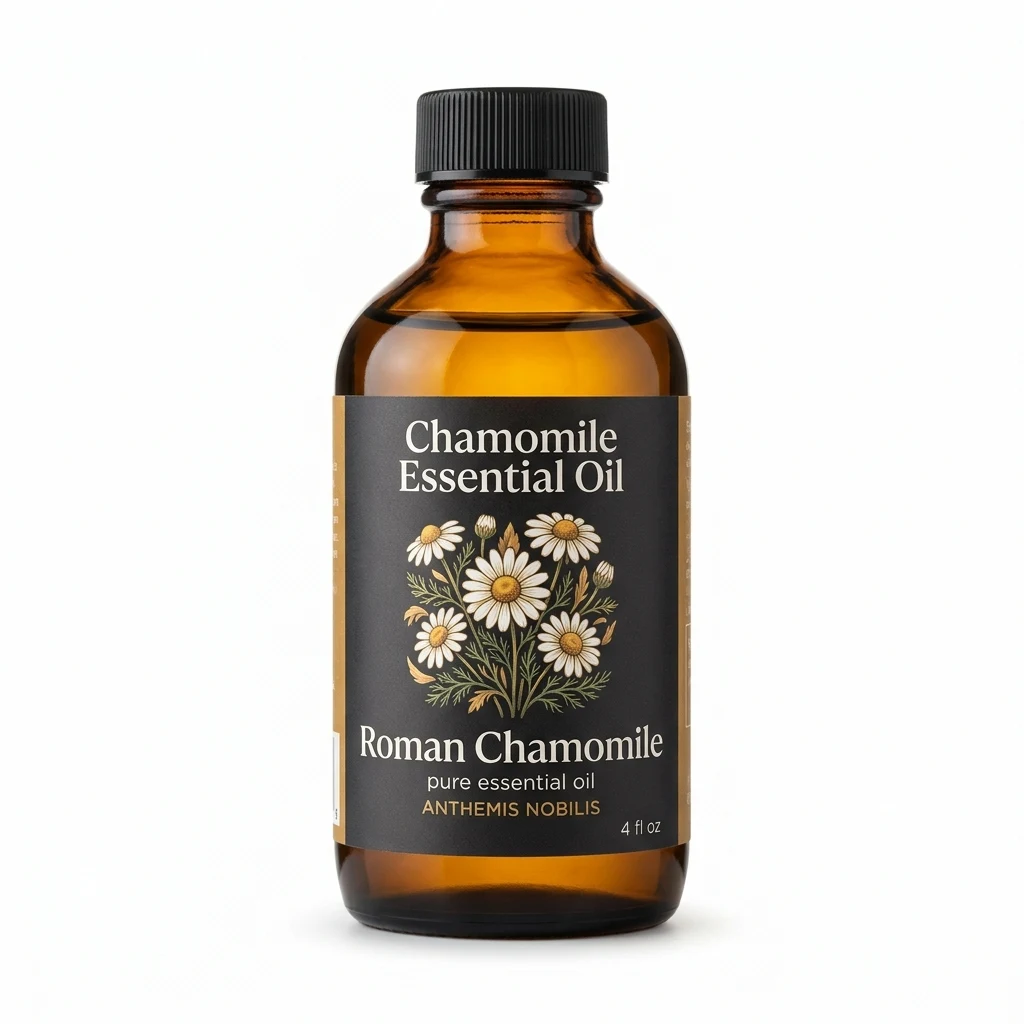
Roman Chamomile Essential Oil
Our own Roman Chamomile Essential Oil, in sizes from 0.5 oz to bulk.
From $32.99
Shop Now →What the knee trial reported
Researchers at Shiraz University of Medical Sciences randomized patients with knee osteoarthritis to topical Matricaria chamomilla oil, diclofenac or placebo, three times a day for three weeks. Everyone was allowed acetaminophen, and the team tracked how much each person used. Pain, function and stiffness were scored weekly on the standard WOMAC questionnaire.
The chamomile group used significantly less acetaminophen than the other two groups. The WOMAC questionnaire domains, however, showed no significant differences between groups (Shoara et al., Complementary Therapies in Clinical Practice, 2015). The authors read the lower painkiller use as a possible benefit. Reasonable readers can weigh the two results differently, and a single three-week trial in one condition is a signal for researchers to follow up, not a settled answer.
What "chamomile oil" means in a trial
This is the part that matters most for a shopper. In traditional Persian medicine, "chamomile oil" generally means a chamomile extract boiled in sesame oil, a preparation closer to an infused oil than to a steam-distilled essential oil (Zargaran et al., Medical Hypotheses, 2014). The abstract of the knee trial does not say how its oil was made or at what strength, so there is no way to translate it into drops from a bottle like ours. A bottle of chamomile essential oil and a trial's "chamomile oil" can be quite different products wearing the same name, and our comparison of essential, infused and CO2 chamomile unpacks that difference.
What we sell, and how people use it
We sell Roman and German chamomile essential oil, undiluted, as cosmetic and aroma products. We do not claim they relieve pain or ease any condition. What they bring to a massage is fragrance: Roman is sweet, apple-like and herbaceous, and our German oil is blue and hay-like. If that appeals, dilute in a carrier oil at 0.5% to 2% (our guidance), patch test first (how to patch test), and see how to dilute chamomile essential oil for choosing the carrier. We do not sell carrier oils, so a pharmacy or grocery store is the place to find one, and our massage guide covers technique.
Keep chamomile off broken skin and away from the eyes, children and pets, and do not swallow it. NCCIH notes that people allergic to ragweed, chrysanthemums, marigolds or daisies are more likely to react to chamomile (NCCIH). If a joint is red, hot, swollen, injured or getting worse, or if pain wakes you at night or will not settle, that is a conversation for a physician or physical therapist, and a bottle of oil does not take the place of it.
A good massage oil is a small pleasure in itself, and chamomile's sweet, fruity aroma is a nice reason to slow down while you do it.
Roman Chamomile Essential Oil
Roman Chamomile Essential Oil from our own shop, in sizes from 0.5 oz to bulk.
From $32.99
Shop Now →Sources & Further Reading
- Shoara R et al., 2015. Efficacy and safety of topical Matricaria chamomilla L. (chamomile) oil for knee osteoarthritis. Complement Ther Clin Pract. pubmed.ncbi.nlm.nih.gov/26256137
- Zargaran A et al., 2014. Possible mechanism of action of chamomile oil in migraine. Med Hypotheses. pubmed.ncbi.nlm.nih.gov/25238714
- NCCIH. Chamomile. nccih.nih.gov/health/chamomile