
What Chamomile Oil Smells Like (Hint: Not Tea)
Ask most people what chamomile smells like and they describe a tea bag. The essential oil is a different animal. Distillation gathers the aromatic compounds of the flower into a concentrated oil, and what comes out is sweet, herbaceous and unmistakably fruity, with an apple note that surprises first-timers.
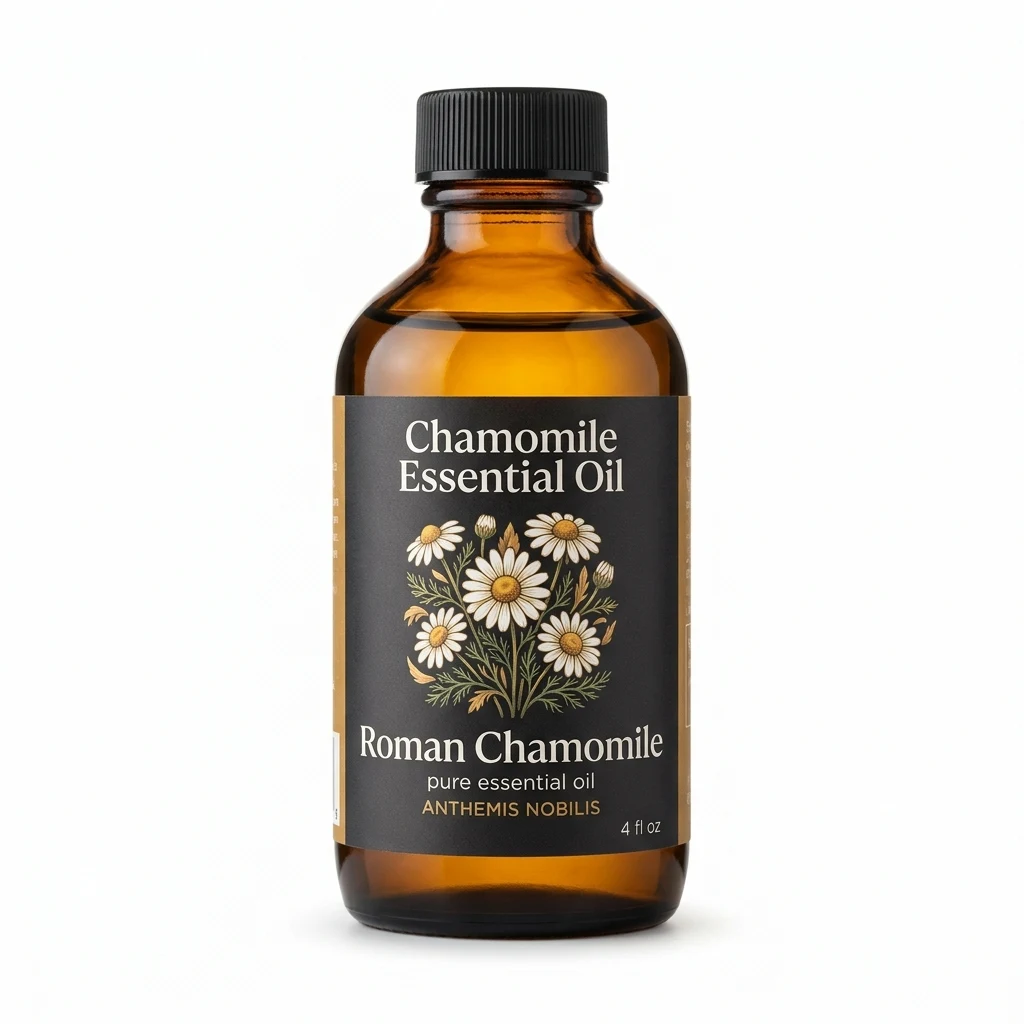
Roman Chamomile Essential Oil
Our own Roman Chamomile Essential Oil, in sizes from 0.5 oz to bulk.
From $32.99
Shop Now →Two oils, two noses
"Chamomile oil" is really two oils from two plants, and we sell both. Our Roman chamomile is sweet, apple-like and herbaceous, softer and fruitier than German chamomile. Our German chamomile is sweet, herbaceous and apple-like too, but with a hay-like softness underneath and an inky blue tint. The certificate of analysis we publish for one batch of the German oil records its smell as floral, balsamic and sweet.
The descriptions overlap, and honestly the best way to separate them is a side-by-side sniff. Roman leads with the fruit. German carries more of that dry, hay-like warmth behind the apple. Both are quiet next to peppermint or citrus, which is part of their charm.
Why the chemistry points the same way
German chamomile oil is a sesquiterpene oil. Reviews of the plant list bisabolol oxides A and B, alpha-bisabolol and chamazulene as its main components (Singh et al., 2011). Roman chamomile oil is built differently, mostly from esters of angelic and tiglic acid (Srivastava et al., 2010), and esters are a well-known fragrance family. It is reasonable to read the fruitier Roman nose and the warmer German one as reflections of those two recipes, although none of the sources we read assigns a smell to each compound, so that is our inference and not a measured result.
Why one bottle can smell different from the next
Natural oils move. The amount of chamazulene in German flowers depends on where they grew and how old they are, and it falls if the flowers are stored before distilling (Singh et al., 2011). Fresh German oil can run from brilliant blue to deep green and turns dark yellow with storage (Srivastava et al., 2010), a reminder that the molecules in the bottle change over time. Colour is not scent, but a fresh bottle and an old one make poor comparisons. We suggest keeping the bottle tightly capped in a cool, dark place, where oils like ours typically keep for 2 to 3 years. Our storage guide has the details.
And the tea bag?
A chamomile infusion and a chamomile oil share ancestry but not a recipe. When researchers analysed the volatile compounds in a tea infusion, they found the oil's hydrocarbons were lower in the cup, along with bisabolol oxides and chamazulene, while other groups such as spiroethers and lactones were higher (Tschiggerl and Bucar, 2012). So the dry, comforting smell of a tea bag is a different mix of molecules from the fruity oil, and that is why expectations built on tea can miss.
Getting to know it
Smell it on a strip of paper before you build a blend around it, then again an hour later, since a middle note changes as it settles. Roman and German each pair with lavender, bergamot, clary sage, geranium and sweet orange, and our pairing notes are in oils that blend with chamomile. If you are weighing the two oils against each other, Roman vs German chamomile oil walks through the decision, and the sizes guide helps you pick a first bottle.
Chamomile oil is a subtle scent that grows on people. Give it a few slow breaths and the apple and hay start to separate.
Roman Chamomile Essential Oil
Roman Chamomile Essential Oil from our own shop, in sizes from 0.5 oz to bulk.
From $32.99
Shop Now →