Where to Keep Chamomile Oil So It Lasts
A bottle of chamomile oil can sit happily in a cupboard for years or fade on a sunny shelf in a season. We say our Roman and German oils keep for typically 2 to 3 years when tightly capped in a cool, dark place, and that one sentence holds three separate instructions. Closed, cool and dark each fail in a different room of the house, so here is a tour of the places a bottle usually ends up.
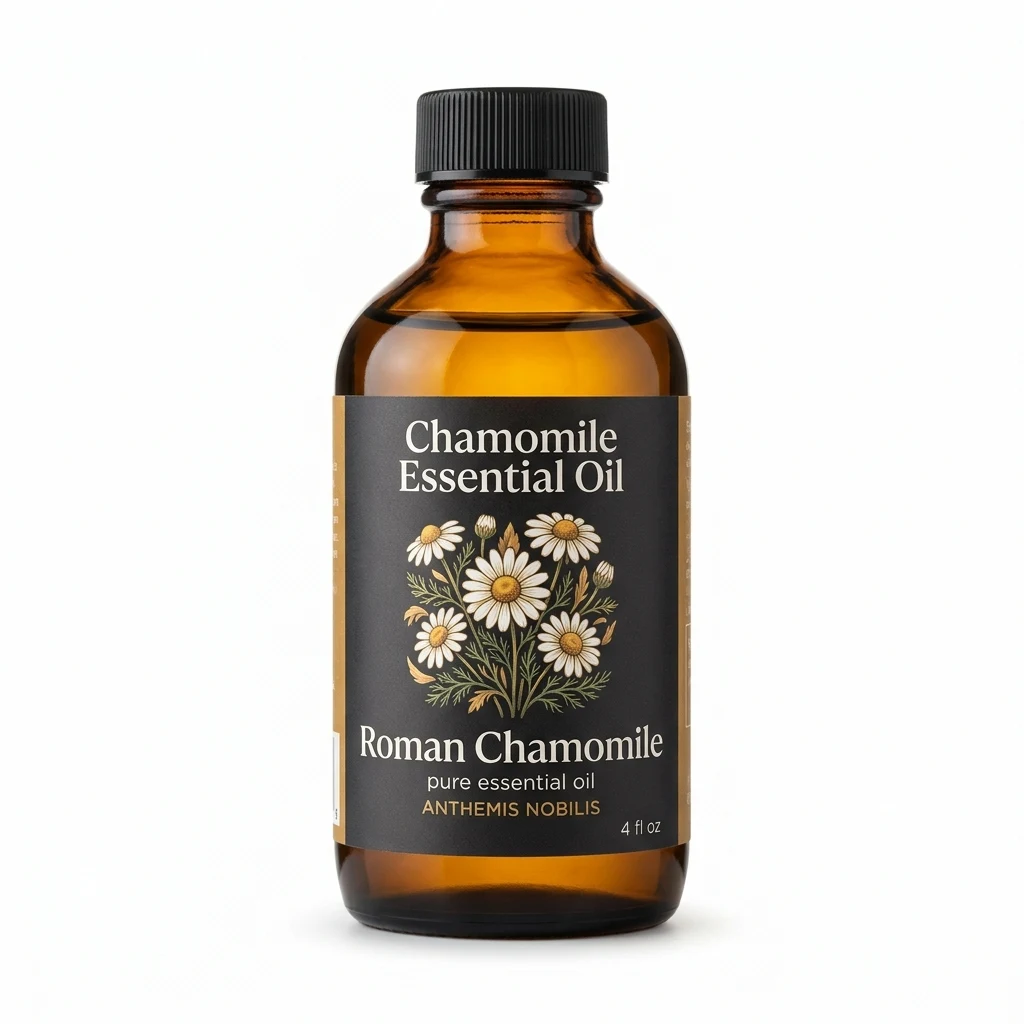
Roman Chamomile Essential Oil
Our own Roman Chamomile Essential Oil, in sizes from 0.5 oz to bulk.
From $32.99
Shop Now →The windowsill
This is the spot to avoid, and the reason is specific to chamomile. The blue of German chamomile oil comes from chamazulene, and a 2024 study by Gabbanini and colleagues in Molecules looked at how that compound holds up. Under strong UVA light for three hours, chamazulene broke down into seven byproducts, mostly oxygen-containing ones. Kept in the dark at 50 C for 50 days, it showed no degradation at all.
That was isolated chamazulene under a lamp, not a bottle on a sill, so we draw only a modest conclusion: in that experiment light was the culprit and gentle warmth in the dark was not. It is why direct sun is the first thing to take away. Colour alone is a poor judge of a bottle, since shade varies with how much chamazulene an oil contains, so we would not read a paler blue as proof of anything. If you need the composition of a specific lot, ask us in writing through our contact page, and our guide to reading a chamomile GC-MS report will help you use what comes back.
The bathroom shelf and the cabinet above the stove
A bathroom adds daily temperature swings, damp air and a cap that gets opened often. The Gabbanini result suggests heat on its own matters less than heat combined with light and air, but a bathroom is not cool for an hour after a shower, so we would pick a bedroom drawer instead. That is our recommendation rather than a measured threshold.
The cabinet above the stove has a different problem. Tisserand lists Roman chamomile oil as flammable, so beyond any quality question it simply should not live near a burner.
The drawer in a cool room
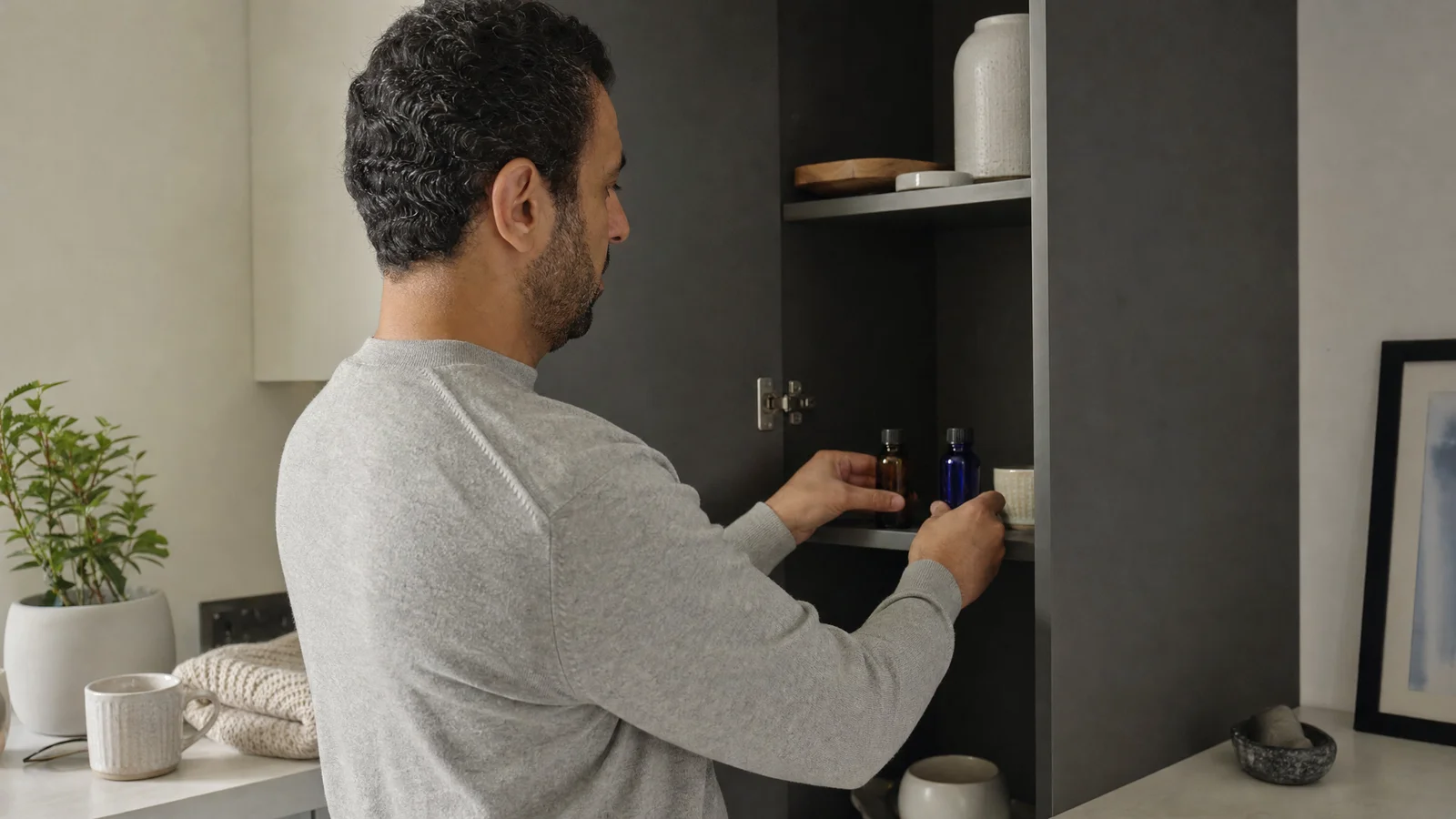
This is where we would keep it. Our German oil arrives in amber glass, which blocks most light, so the glass is your second barrier and a dark place is the first. Keep the cap tight, store the bottle upright, and wipe the threads after pouring so dust does not collect and the cap seats properly.
What changes once a bottle is open
- Air builds up. Every drop you use leaves more air above the oil. If you buy a large bottle and use a little at a time, decanting some into a smaller dark glass bottle filled close to the neck keeps the working bottle mostly oil. That is reasoning about oxygen, not a measured rate for chamomile.
- Oxidised oil is a poorer bet on skin. The Barbaud study of essential oil allergy (Contact Dermatitis, 2023) found that oxidised terpene components, including limonene and linalool hydroperoxides, picked up most of the essential-oil-allergic patients it tested. Chamomile was not among the oils named, and Tisserand does list limonene in Roman chamomile. So an old bottle is one more reason to read our patch test routine before using it on skin.
- Blends age faster than neat oil. Carrier oils go rancid on their own schedule. Make small batches, write the date on the label and retire a blend when the carrier smells sharp or paint-like. Carrier oils come from a grocery or craft supplier, so check their date guidance.
Reading the date on your bottle
The 2 to 3 years is guidance for a properly stored bottle, not a measured expiry for your lot. Our German bottles carry two printed dates and a lot number, so use those for planning and keep the lot number handy for questions. A better test is your own senses before each use:
- Is the colour what you expect? Our German oil has an inky blue tint.
- Does it smell right? Our Roman oil is sweet, apple-like and herbaceous, and our German oil is sweet and herbaceous with a hay-like softness. Sharp, flat or sour means it has turned.
- Is there residue, cloudiness or stickiness at the neck?
If any answer is no, keep it off your skin. An older bottle that still passes can go into a diffuser built for oils, and our note on humidifiers explains why a machine that is not made for oils is a different matter.
Keeping it safe at home
Store the bottle shut and out of reach of children and pets. Tisserand's label warns that Roman chamomile oil can be fatal if swallowed and enters the airways, and our posts on cats and dogs cover the household angle. Ask your local waste service how to dispose of old oil instead of pouring it down the drain.
A cool cupboard, a tight cap and no sun will do more for a bottle than any trick, and once you have a spot, the habit takes care of itself.
Roman Chamomile Essential Oil
Roman Chamomile Essential Oil from our own shop, in sizes from 0.5 oz to bulk.
From $32.99
Shop Now →Sources & Further Reading
- Gabbanini S., Neba J.N., Matera R., Valgimigli L., 2024. Photochemical and oxidative degradation of chamazulene contained in Artemisia, Matricaria and Achillea essential oils and setup of protection strategies. Molecules. pubmed/38893479
- Barbaud A. et al., 2023. Allergic contact dermatitis from essential oils in consumer products. Contact Dermatitis 89(3):190-197. pubmed/37403438
- Tisserand. Roman Chamomile Essential Oil (Anthemis nobilis), product safety information. tisserand.com