What Is Chamomile Oil Good For? Aroma and Research
Ask ten people what chamomile oil is good for and you will get ten different answers, most of them borrowed from chamomile tea. The honest picture is more interesting. Chamomile oil's clearest strengths are the ones you can smell and use, and the research that exists is narrower than the internet suggests.
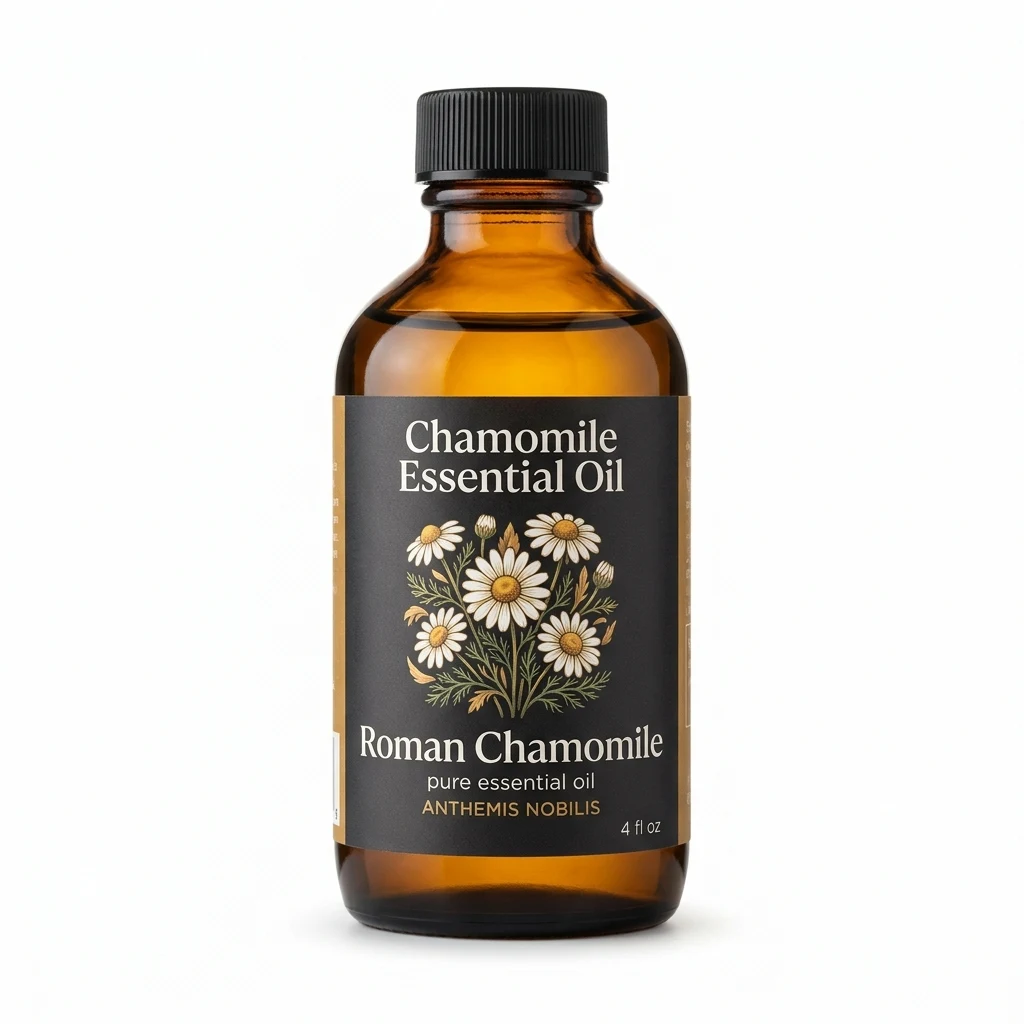
Roman Chamomile Essential Oil
Our own Roman Chamomile Essential Oil, in sizes from 0.5 oz to bulk.
From $32.99 $26.40 with code BLACKFRIDAY
The benefit you can check for yourself: the aroma
Roman chamomile has one of the more distinctive scents in the oil shelf: sweet, apple-like and herbaceous, softer and fruitier than German. Our German chamomile is sweet and herbaceous with a hay-like softness, and it is the one with the deep blue colour. As a middle note, either one rounds out a blend, and we list lavender, bergamot, clary sage, geranium, sweet orange and frankincense as partners for the Roman oil. Our scent guide and blending guide go further.
That aroma is why people reach for chamomile in diffuser blends, linen sprays, natural perfumery, candles and soap, and why it appears in diluted face and body oils. For skin use we recommend 0.5% to 2% in a carrier oil, patch tested first. A little goes a long way, and our oils arrive undiluted, so the measuring is part of the pleasure of using them.
A simple way to get to know the oils
If you have never smelled chamomile oil, give yourself a little time with it. Put a drop on a paper strip, hold it a few inches from your nose and take two slow breaths. Then put the strip down and come back to it ten minutes later, because a middle note shows you something different once the first sharpness has faded.
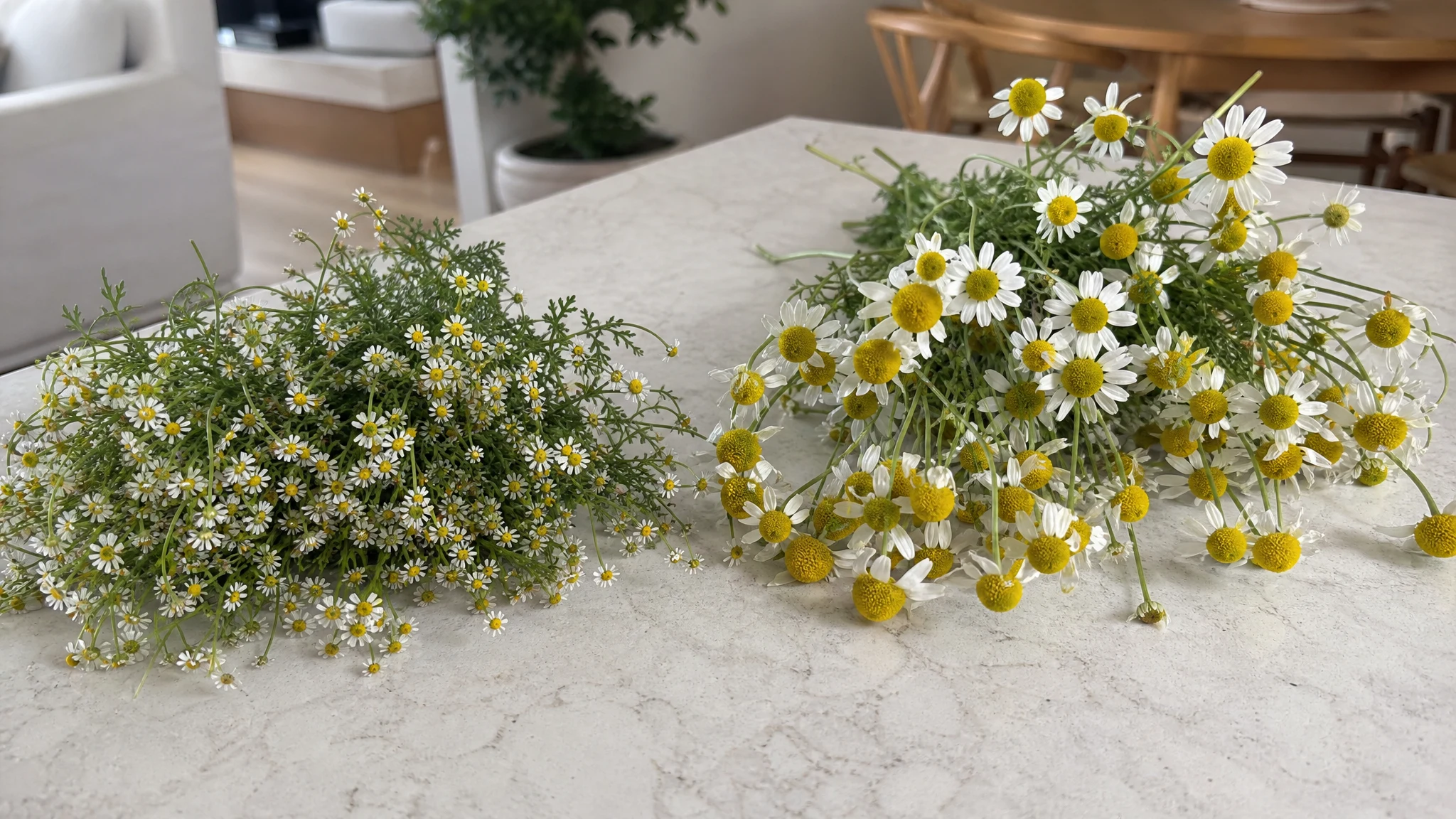
Try the Roman oil first and you will likely notice the apple before anything else. The German oil tends to read a little drier, with that hay-like softness in the background, and the blue colour in the bottle is part of the fun of opening it. Jot down a word or two for each, in your own language, before you read anyone else's description. Those notes are the real benefit of a small bottle: you learn which oil you actually like.
What the research covers
Chamomile is one of the most studied herbs, but nearly all of that work is on tea and oral extracts, which are different materials from an essential oil. NIH's National Center for Complementary and Integrative Health has a chamomile page that discusses tea and supplements and does not cover the essential oil, which tells you where the bulk of the research sits.
Studies on the essential oil itself are fewer and smaller. One example is a double-blind trial in Iran of 154 patients with acute coronary syndrome (Pourshaikhian and colleagues, 2024). Participants inhaled either 7 drops of a 10% chamomile oil or 7 drops of sesame oil on cotton for two nights, and the chamomile group reported a larger fall in a short anxiety questionnaire. That is what the trial measured, in a hospital setting, with a blinding that scent makes imperfect. It is a useful piece of the picture, not a promise about any bottle, and the concentration used is not a skin dilution. We make no health claims for our oils, and for anxiety, sleep, pain or any medical question the right person is a physician or pharmacist.
The wider lesson is a good one to carry into any "benefits" article: ask what form was tested, how it was used, and in whom. If you want to go deeper, our posts on anxiety and stress and an evening routine look at the scent-and-routine side with the same care.
Three questions to ask of any benefits list
- What form was used: tea, capsule, extract, or the distilled essential oil?
- How was it used: swallowed, applied, or breathed in, and at what strength?
- Who was it tried on, and for how long?
If an article cannot answer those, treat its list with caution. It is a habit that serves you well with every oil on your shelf, not just this one.
Skin and hair: cosmetic uses
For cosmetic use, chamomile oil is a fragrant ingredient in a diluted face or body oil, a balm or a bath blend. Our cosmetic care guide shows how people use it, and our carrier oil guide helps with the base. Carrier oils are not something we sell, so you will find those at a pharmacy, grocery or craft supplier.
Who should check first
Chamomile belongs to the daisy family. NCCIH notes allergic reactions are more likely in people allergic to ragweed, chrysanthemums, marigolds or daisies. If that is you, an allergist should weigh in first. For pregnancy, babies, pets, or anyone taking prescription medicines, ask a physician, pediatrician or veterinarian. Never swallow the essential oil.
The simplest way to learn what chamomile oil does for you is to smell it. Try a small bottle of each oil and see which one earns a place on your shelf.
Roman Chamomile Essential Oil
Roman Chamomile Essential Oil from our own shop, in sizes from 0.5 oz to bulk.
From $32.99 $26.40 with code BLACKFRIDAY
Sources & Further Reading
- Pourshaikhian M, et al., 2024. Effects of aromatherapy with Matricaria chamomile essential oil on anxiety and hemodynamic indices in patients with acute coronary syndrome. BMC Complement Med Ther. pubmed.ncbi.nlm.nih.gov/38172912
- National Center for Complementary and Integrative Health. Chamomile. nccih.nih.gov/health/chamomile