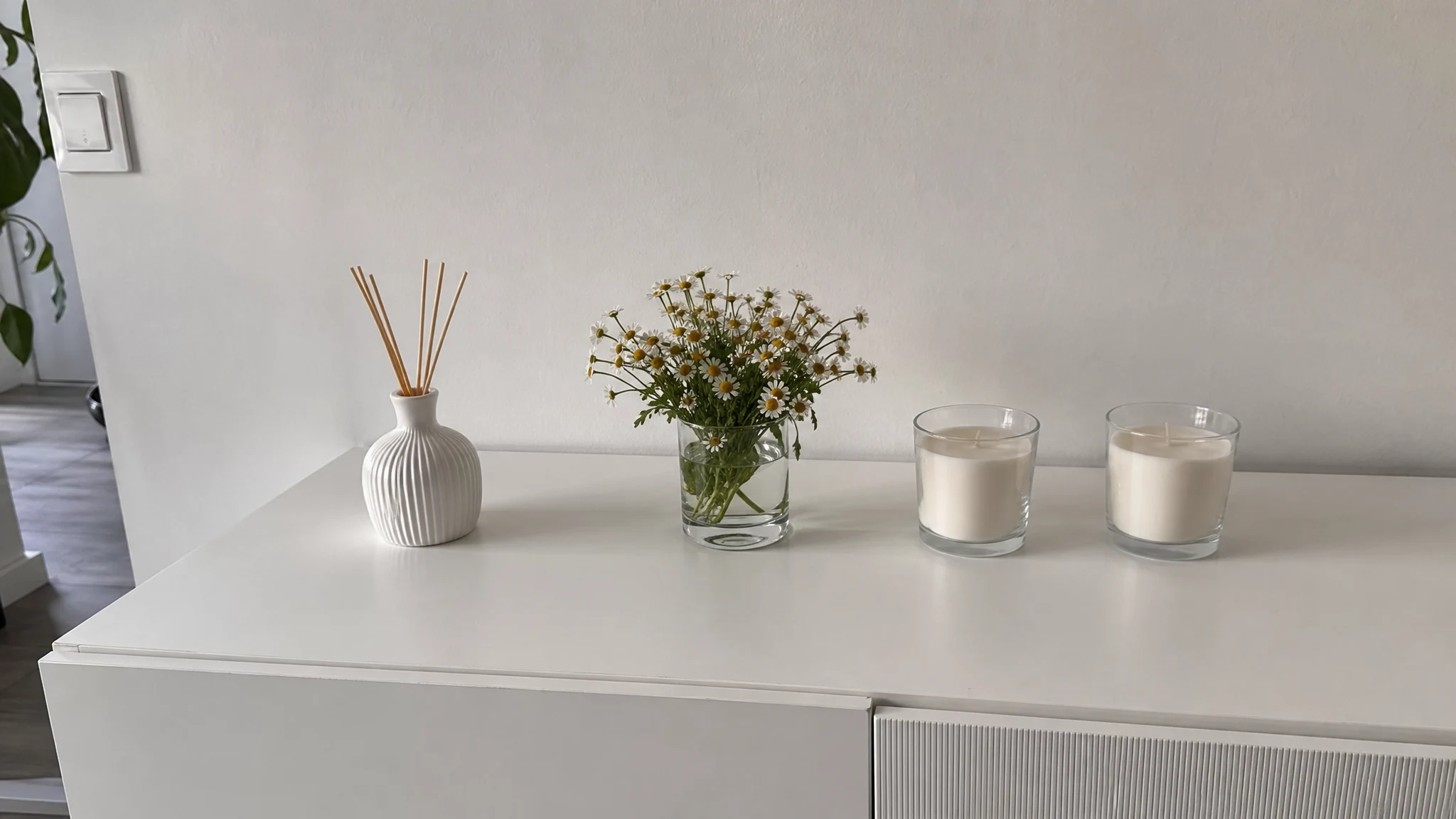
Three Ways to Pair Chamomile in a Room or Candle
Chamomile oil is quiet, which makes its partner the deciding voice in a room. Next to cedarwood it reads dry and woody, next to petitgrain it turns orange-green and bright, and next to ylang ylang it goes rich and floral. Here are three pairings, with drops for a diffuser and percentages for a candle.
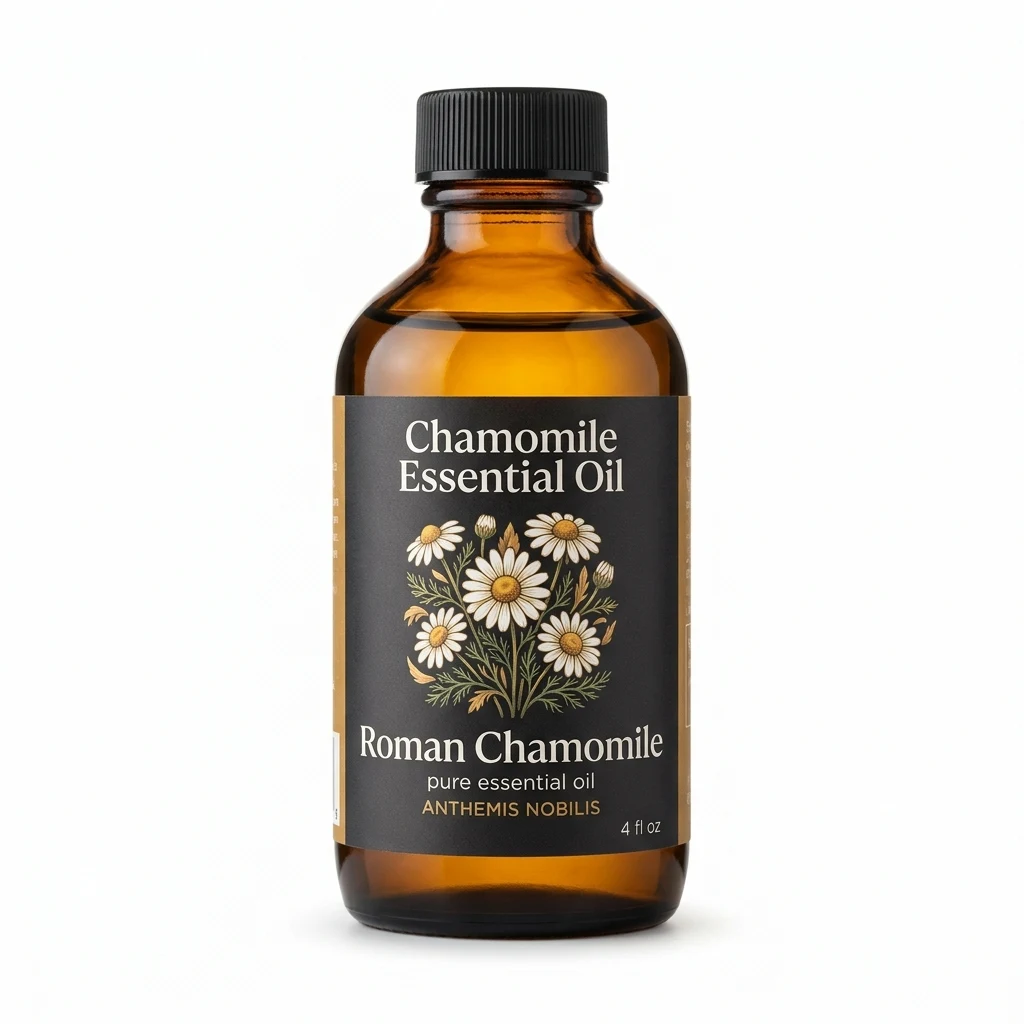
Roman Chamomile Essential Oil
Our own Roman Chamomile Essential Oil, in sizes from 0.5 oz to bulk.
From $32.99
Shop Now →Why these partners
Our other posts cover chamomile with lavender, bergamot, clary sage, geranium, sweet orange and frankincense, in the diffuser post, lavender and chamomile and pairings by chemistry. These three use different partners. They are formulations worked out from cited guidance, and we sell the chamomile only, so the partner oils, wax and wicks come from a craft supplier. For candle sizing in general, see our candle maker's guide.
Roman and Virginia cedarwood
For a diffuser, 4 drops of Roman chamomile and 2 of Virginia cedarwood, or half that to start. For a candle, 200 g of wax at 6% total fragrance is 12 g: 8 g chamomile (4%) and 4 g cedarwood (2%).
ScenTree describes Virginia cedarwood as a base-volatility oil that smells reminiscent of pencils (ScenTree), while we list Roman chamomile as a middle note. Reasoning from that, the cedarwood outlasts the chamomile, so we cap it at a third to keep the apple note from being buried. Organic Aromas notes that woody and resinous oils such as cedarwood generally out-throw delicate florals in candles (Organic Aromas), which is the other reason chamomile gets the larger share. The 6% total sits at the bottom of that source's general 6% to 10% window.
Roman and petitgrain
For a diffuser, 3 drops of each, or 2 of Roman and 1 of petitgrain to start. For a candle, 200 g of wax at 7% total is 14 g: 6 g chamomile (3%) and 8 g petitgrain (4%).
ScenTree lists petitgrain bigarade as head-to-heart, rich in linalyl acetate and linalool, with a floral, orange blossom, green character (ScenTree). Organic Aromas gives petitgrain a candle range of 6% to 9% (Organic Aromas), so it can take the bigger share in wax. Both oils sit in a similar volatility band, so we would expect them to fade at similar speeds, which is an inference from classification and not a measurement.
German and ylang ylang
For a diffuser, 4 drops of German chamomile and 1 of ylang ylang, and keep the ylang at one drop until you know how loud it is in your room. For a candle, 200 g of wax at 6% total is 12 g: 9 g chamomile (4.5%) and 3 g ylang ylang (1.5%). We list ylang ylang as a partner for our German oil, and Organic Aromas gives it a candle range of 3% to 6%, so 1.5% sits comfortably under it. German chamomile is a blue oil that stains, so test a small pour before committing a full batch.
Making a candle
Whatever the pairing, follow your wax maker's guidance. CandleScience suggests adding fragrance at around 185 F, starting 1% to 2% below the wax's maximum load, and curing paraffin for 3 to 5 days and soy or natural waxes for 1 to 2 weeks (CandleScience). Organic Aromas adds to never pour oil into wax hotter than the oil's flash point, and notes that a burning candle takes off the most delicate notes (Organic Aromas). Tisserand lists Roman chamomile as flammable (Tisserand), which is one more reason to follow those temperatures.
Chamomile is the sort of oil that rewards a supporting cast. Pick the partner for the room you want and let the apple note sit just behind it.
Roman Chamomile Essential Oil
Roman Chamomile Essential Oil from our own shop, in sizes from 0.5 oz to bulk.
From $32.99
Shop Now →