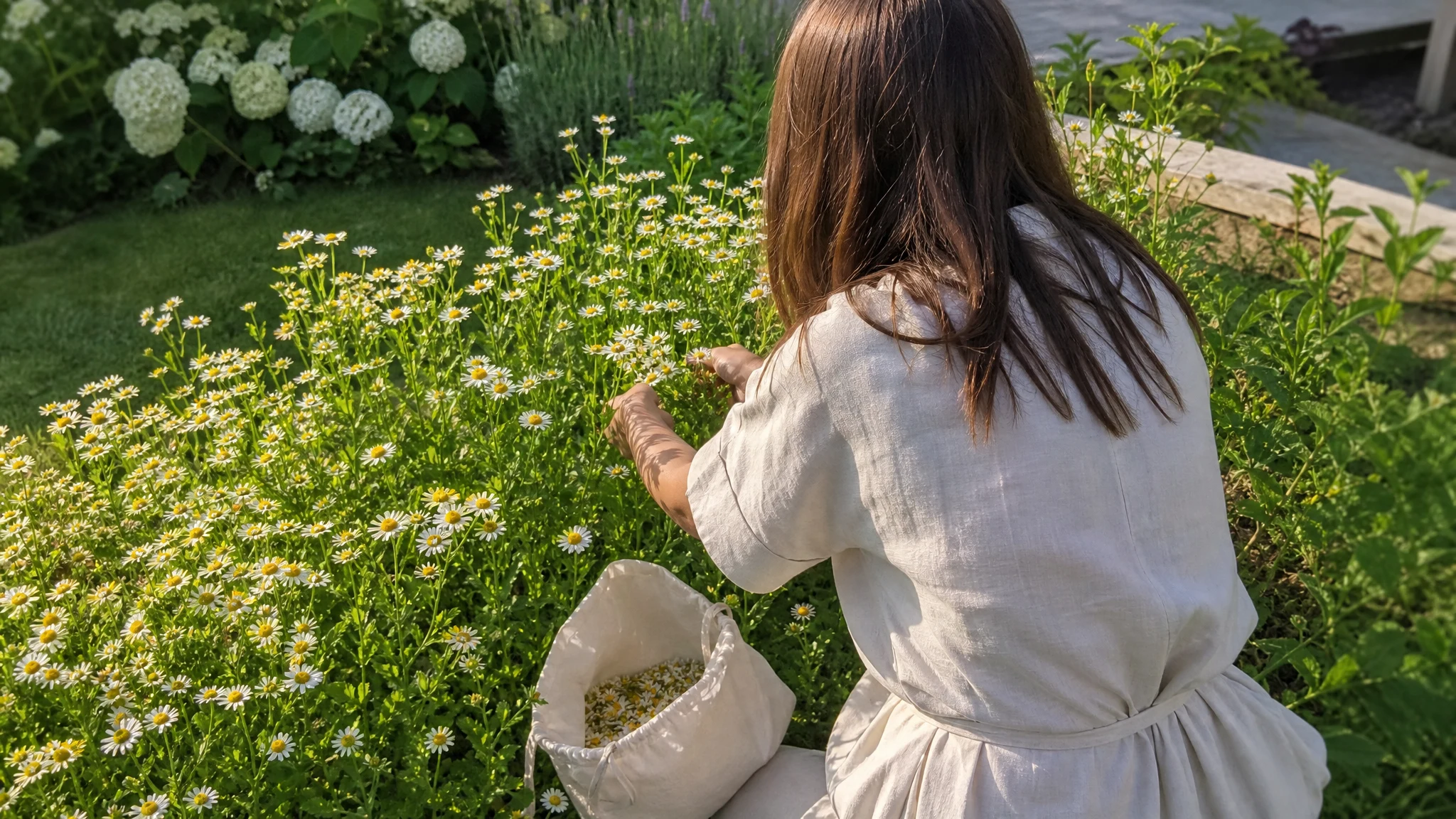
Growing Chamomile: Lovely Flowers, Not a Source of Oil
A chamomile bed in bloom is a lovely thing: low, feathery, covered in small daisies and smelling of apple. It will give you flowers to dry, but not essential oil. Oil comes from steam distillation of the flower heads, which needs equipment and quantities a home garden does not have.
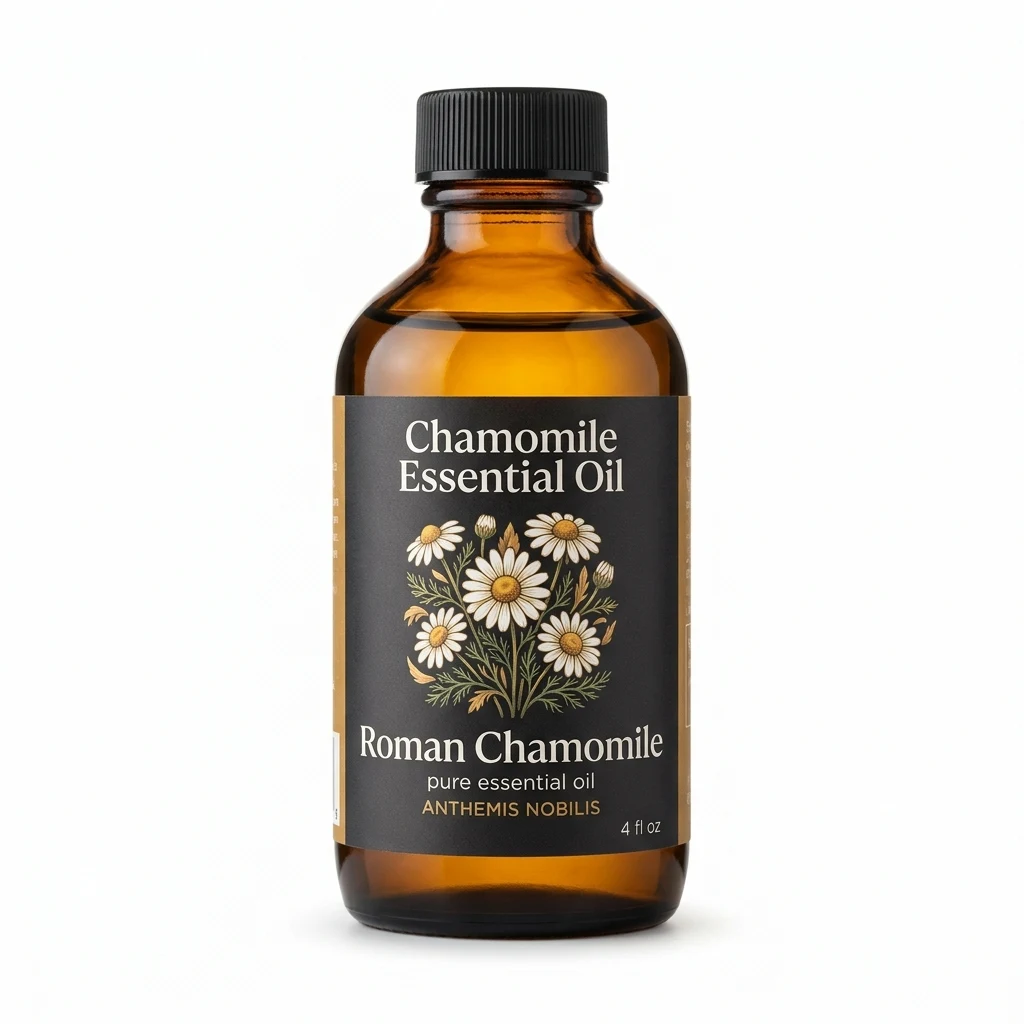
Roman Chamomile Essential Oil
Our own Roman Chamomile Essential Oil, in sizes from 0.5 oz to bulk.
From $32.99
Shop Now →Two plants share the name
Check the Latin name on the seed packet, because the two chamomiles grow quite differently. NC State's Plant Toolbox describes German chamomile (Matricaria chamomilla) as an annual up to about 2 feet tall, grown from seed in full sun, and it is toxic to dogs, cats and horses. The entry for Roman chamomile (Chamaemelum nobile) describes a low perennial, 1 to 2 feet tall, hardy in zones 4a to 9b, spaced 2 to 4 inches apart when planted as a cover.
In practice, German chamomile is sown each year, while Roman returns and spreads. If you want a patch you can leave alone, that suggests Roman. We sell both oils: Roman is listed in our shop as Anthemis nobilis, an older name for the same plant, and German is the blue oil. Our Roman vs German guide compares them.
Why a garden is not an oil source
A review of the genus by Sharifi-Rad and colleagues notes that the oil comes from steam distillation of the flower heads and that its composition depends on the plant part, origin, genetics, environment, harvest season and extraction method. All of those are managed on a commercial scale and none of them on a windowsill.
We did not find a verified figure for how much oil a given weight of flowers yields, so we will not quote one. Our reasoning is simple: a small bottle represents far more flowers than a garden bed holds. A countertop still kit will give you a scented water or a trace of oil, which is a hobby, not a replacement for a bottled oil. That is not a loss, because the flowers have their own uses.
What to do with garden chamomile
- Dry the flowers and use them for a skin-oil infusion. Our infusion guide explains why dried flowers only is the rule.
- Keep the potpourri and craft uses the NC State entries mention.
- Keep homemade chamomile products away from babies and pets. Ask a pediatrician or veterinarian. See our post on babies and kids.
Growing notes
- German chamomile is grown from seed, and NC State notes it tends not to transplant well, so direct sowing or individual pots suit it.
- Soil. NC State recommends well-drained sandy or loamy soil and says to avoid rich or wet beds. Our reasoning is that wet soil is where flower heads rot before they dry.
- Sun. Full sun for German, full sun to part shade for Roman.
Harvesting for drying
The extension pages give no harvest schedule, so this is general reasoning. Pick on a dry morning after the dew has gone, spread the heads in a single layer in a warm, shaded, airy place until they snap, then store them in a closed container out of light.
Allergy and pet notes
NC State lists the plant as toxic to dogs, cats and horses, and NCCIH notes that people allergic to ragweed, chrysanthemums, marigolds and daisies are more likely to react to chamomile. Handling flowers at harvest is contact too. For the oil and pets, see our post on cats.
When you want the oil itself
If you want the oil for blending, a bottled one is the realistic route. The Certificate of Analysis we publish covers one German batch and lists density and refractive index. If you need GC-MS results for a lot, ask us in writing through our contact page before ordering. Our buying checklist explains what else to look for.
Grow chamomile because you love the plant, and buy the oil when you want the oil.
Roman Chamomile Essential Oil
Roman Chamomile Essential Oil from our own shop, in sizes from 0.5 oz to bulk.
From $32.99
Shop Now →Sources & Further Reading
- NC State Extension Gardener Plant Toolbox. Matricaria chamomilla. plants.ces.ncsu.edu
- NC State Extension Gardener Plant Toolbox. Chamaemelum nobile. plants.ces.ncsu.edu
- Sharifi-Rad et al., 2018. Matricaria genus as a source of antimicrobial agents. pubmed/30172312
- NCCIH. Chamomile. nccih.nih.gov