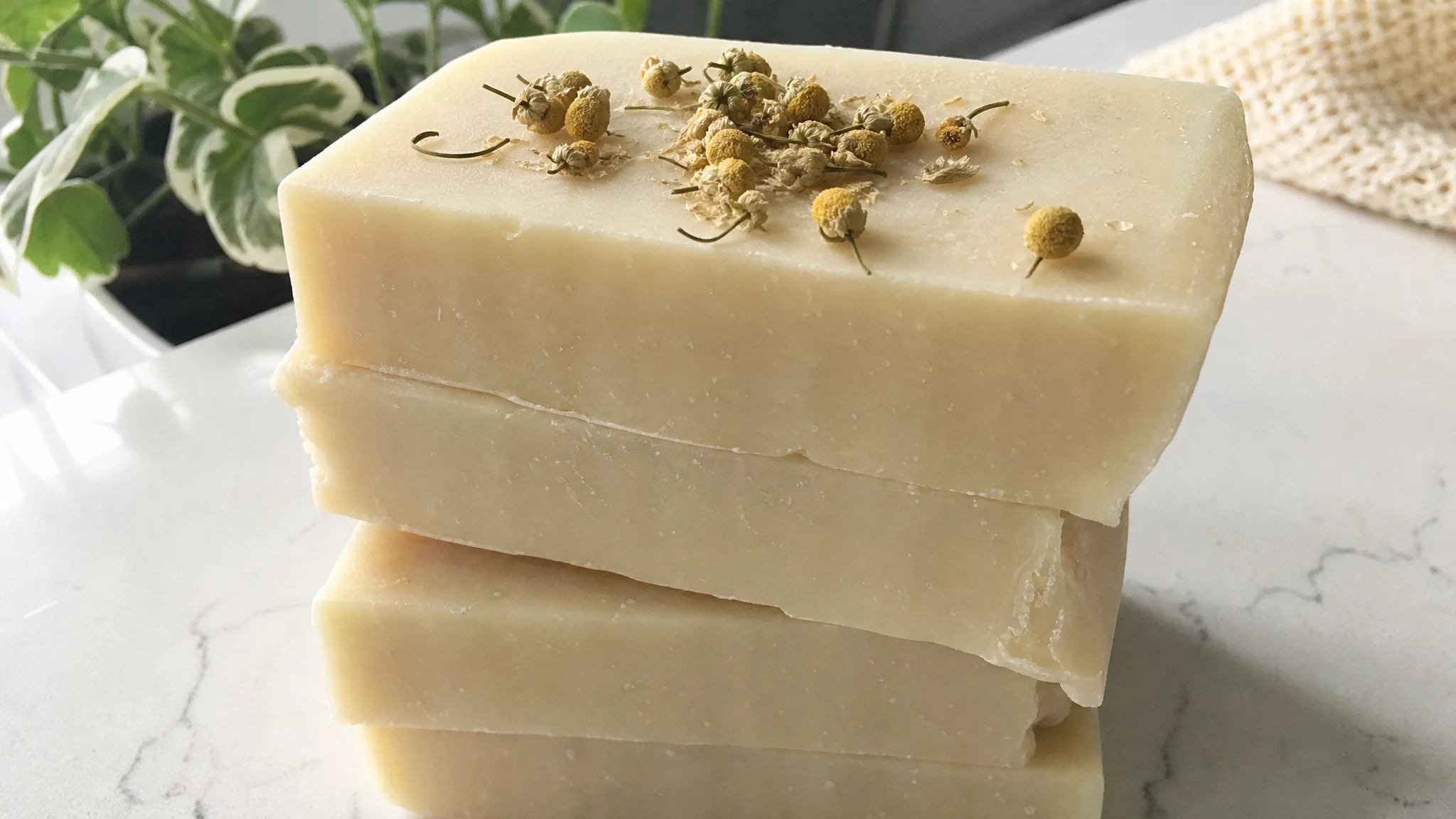
Using Chamomile Oil in Cold Process Soap
Chamomile in a bar of handmade soap is an appealing idea: a soft, apple-like or hay-like scent in something you use every day. A handful of decisions before the first batch will save you from a lot of guesswork, and most of them come down to knowing exactly what you are putting in the pot.
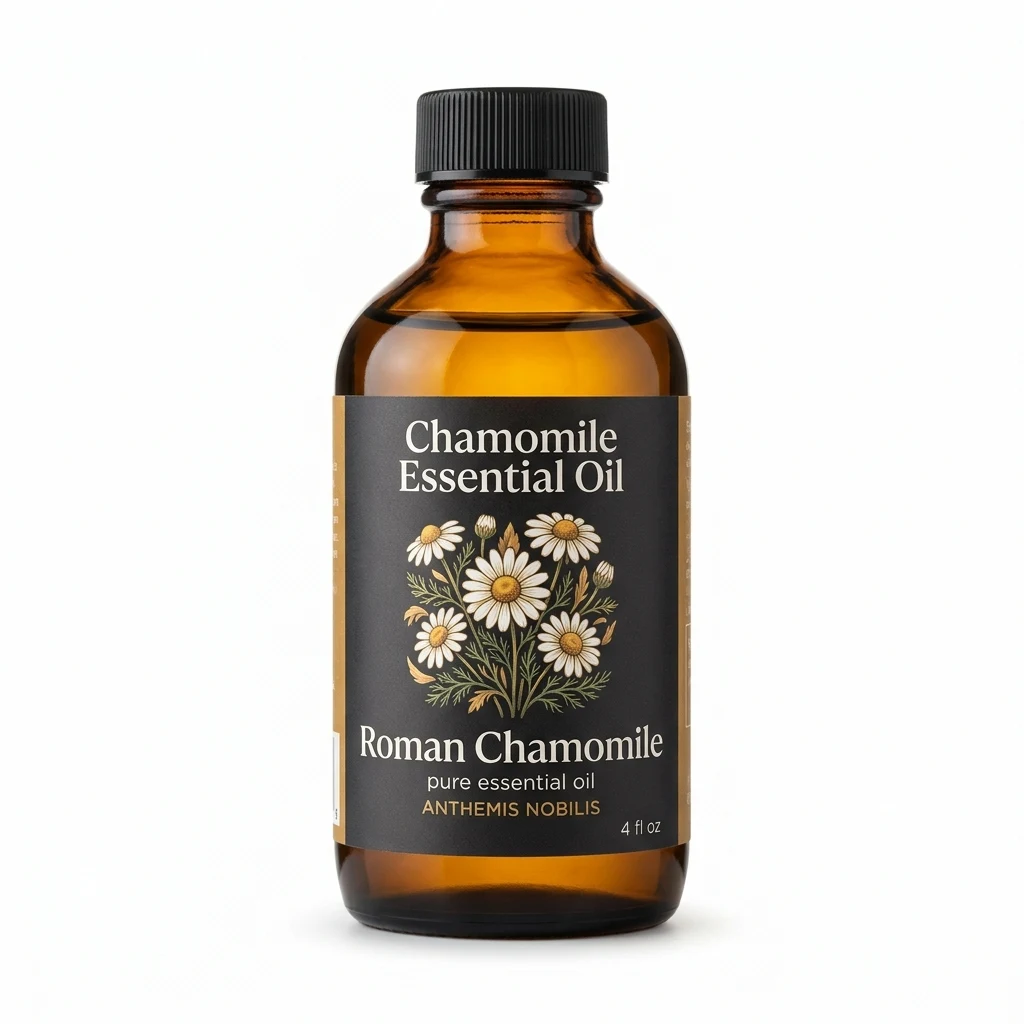
Roman Chamomile Essential Oil
Our own Roman Chamomile Essential Oil, in sizes from 0.5 oz to bulk.
From $32.99
Shop Now →Start with which chamomile
Two plants are sold as chamomile oil, German (Matricaria chamomilla, also written M. recutita) and Roman (Chamaemelum nobile), as the LactMed chamomile entry notes. We sell both. Our Roman oil is sweet, apple-like and herbaceous, and our German oil is sweet and herbaceous with a hay-like softness and an inky blue tint. Both come undiluted, from 0.5 oz up, and soap makers working at volume can look at our 16 oz and larger sizes, with a half or one ounce bottle a sensible way to try a recipe.
Pick one and stay with it across test batches. A 2018 review by Sharifi-Rad and colleagues lists plant part, origin, genetics, harvest season and extraction method as factors that change the make-up of chamomile oil, so two bottles that both say chamomile can behave differently in a recipe. Our post on Roman versus German helps with the choice.
How much goes in
Usage limits for soap come from the International Fragrance Association standards for the product category that covers it, and they are set per oil. We would not print a percentage from memory or from a forum thread. The reliable route is to request the IFRA documentation for the oil and lot you are buying, find the limit for your product category and stay under it. If you want to know what documentation exists for a lot of ours, ask us in writing through our contact page before ordering.
Our 0.5% to 2% dilution guidance applies to oil in a carrier for skin use, and it is a different question from soap, so do not carry that number over. NCCIH adds that people allergic to ragweed, chrysanthemums, marigolds or daisies are more likely to react to chamomile. A rinse-off bar spends less time on skin than a lotion does, which is a reasonable inference but not a safety guarantee, so anyone with that allergy should skip it.
Scent, colour and the cure
Soap is a hot, alkaline, weeks-long environment for a delicate fragrance, and essential oils are mixtures of many volatile compounds whose proportions vary by species and origin, as the review above makes clear. So we cannot promise how much chamomile scent a finished bar keeps, or that chamazulene will tint it. What works for any scent is a small test batch with your actual recipe, judged at unmoulding, at one week and after the cure.
Keep a log so the results mean something:
- Oil species, supplier, lot number and the date you opened the bottle.
- Oil weight as a percentage of total oils, so batches scale.
- When the oil went in (at trace or earlier) and the batter temperature.
- Whether the batter thickened faster than the same recipe without the oil.
- Scent notes before you sniff a reference bar, and photos of colour in the same light each time.
Change one thing at a time, whether species, rate or timing. That keeps the log readable.
What the label can say
It is tempting to word a chamomile soap as a skin benefit. The FDA states that products intended for therapeutic use are regulated as drugs, that makers carry the responsibility for the safety of what they sell, and that retail cosmetics need an ingredient list. Check how FDA defines soap for your product, and keep the wording to cleansing and scent. We keep our own claims for the oils to aroma for the same reason.
When another ingredient fits better
- You want chamomile to colour the bar. Colour in soap has many causes, so judge it by trial.
- You are soaping for someone with a ragweed allergy or for a baby. Our posts on babies and kids and safety are the place to start.
- You want infused chamomile oil in the oil phase. That is a different ingredient, covered in our infusion post.
We sell essential oil, so lye, butters, carrier oils and moulds come from a soap-supply seller, and lye safety is best learned from the supplier or a soap-making course. Our post on choosing a bottle size covers the arithmetic for oil.
Start small, log everything, and let the cured bar tell you what the chamomile is doing.
Roman Chamomile Essential Oil
Roman Chamomile Essential Oil from our own shop, in sizes from 0.5 oz to bulk.
From $32.99
Shop Now →Sources & Further Reading
- NCBI Bookshelf, Drugs and Lactation Database. Chamomile. ncbi.nlm.nih.gov/NBK501808
- Sharifi-Rad M. et al., 2018. Matricaria genus as a source of antimicrobial agents. Microbiol Res. pubmed/30172312
- NCCIH. Chamomile. nccih.nih.gov/health/chamomile
- FDA. FDA Authority Over Cosmetics. fda.gov