Chamomile Oil Is Not Tea in a Bottle, and Other Myths
Walk into any kitchen and chamomile smells like a mug of tea. Walk into a shop and the bottle says chamomile too, so it is natural to assume it is the same thing, only stronger. That one assumption sits behind most of the chamomile oil myths we hear, and the chemistry politely disagrees with several of them.
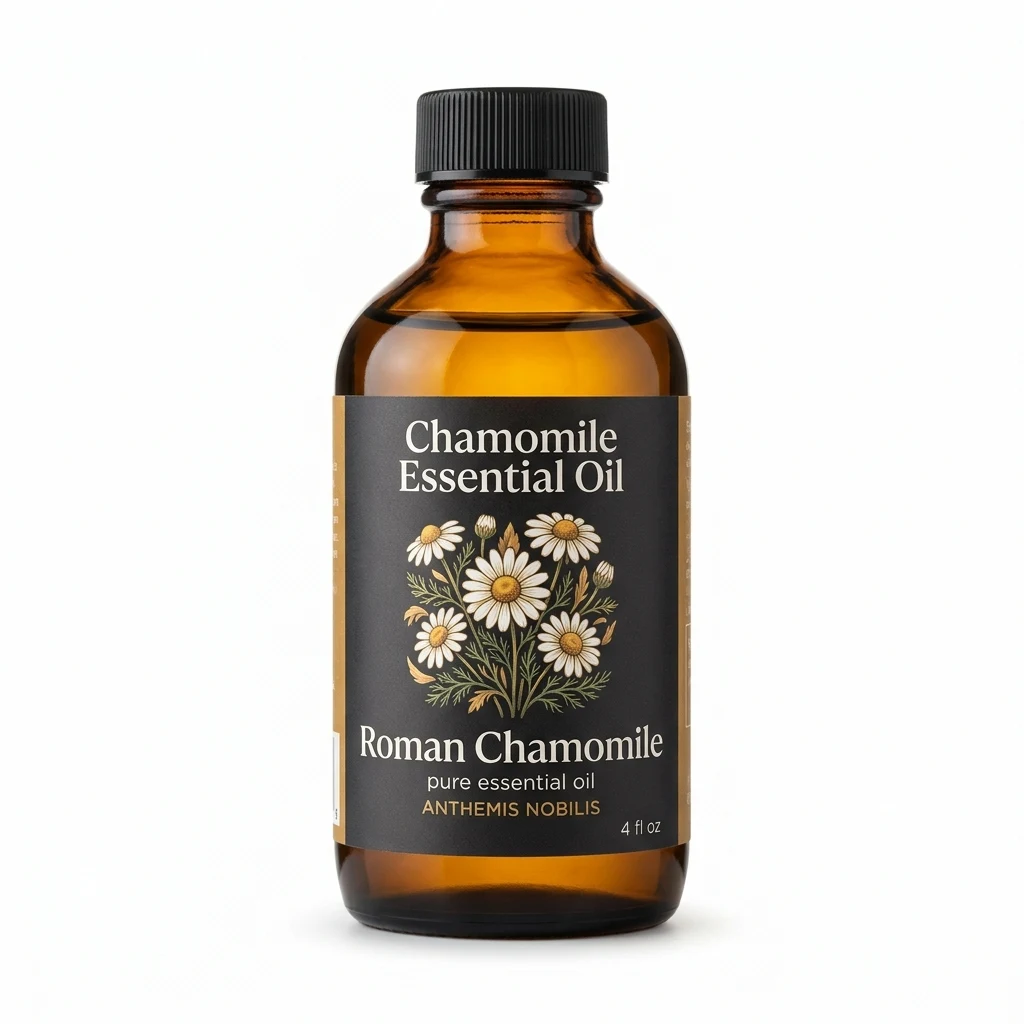
Roman Chamomile Essential Oil
Our own Roman Chamomile Essential Oil, in sizes from 0.5 oz to bulk.
From $32.99
Shop Now →It is not just very strong tea
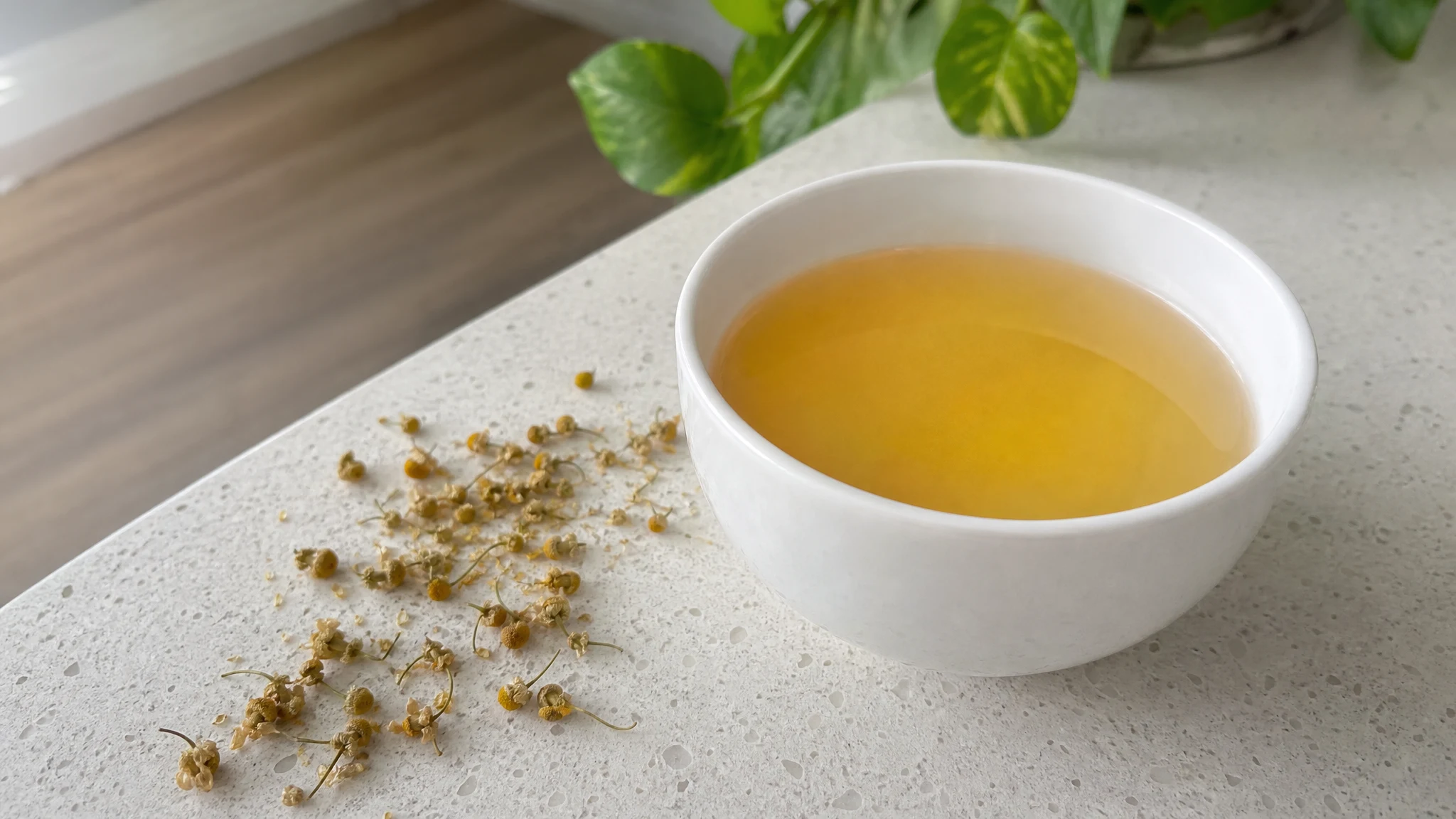
When researchers analysed the aroma compounds in a chamomile tea infusion (German chamomile, Matricaria recutita) and compared them with the essential oil, the two turned out to be different mixtures. The hydrocarbons that are plentiful in the oil were lower in the tea, and so were bisabolol oxides and chamazulene, while other compound families, such as spiroethers, lactones and coumarins, showed up more in the tea (Tschiggerl and Bucar, 2012). Steam distillation and a hot cup of water simply pull out different things from the flower.
The practical lesson runs both ways. Concentrating tea would not give you oil, and a drop of oil is not a cup of tea. Whatever is said about drinking chamomile tea is about tea. If you are curious why we tell people not to swallow the oil, that article does the arithmetic.
Deep blue does not prove anything on its own
German chamomile oil is famous for its ink-blue color, and it is tempting to treat blue as a stamp of authenticity. The blue comes from chamazulene, which a review of the plant's chemistry describes as forming from a precursor called matricine during distillation, and its amount depends on where the flowers grew, how old they were and how they were stored (Singh et al., 2011). Another review notes that fresh oil can range from brilliant blue to deep green and drift toward dark yellow after storage (Srivastava et al., 2010).
So color is a clue for German chamomile, and a nice one, but a paler bottle is not automatically adulterated and a blue one is not automatically excellent. The real identity check is a GC-MS report for the lot. If you want to learn to read one, our GC-MS guide walks through it, and the chamazulene story has the full explanation of the blue.
"Chamomile" is at least two different plants
German chamomile (Matricaria chamomilla) is an annual, and Roman chamomile (Chamaemelum nobile, also called Anthemis nobilis) is a perennial. Their oils are built differently: the German oil carries bisabolol, its oxides and chamazulene, while Roman oil is mostly esters of angelic and tiglic acid (Dai et al., 2022; Srivastava et al., above). That is why we list the two oils separately with their own botanical names, and why you will smell a difference: the Roman is sweet, apple-like and herbaceous, the German a little hay-like. If you are deciding between them, start with our Roman versus German comparison.
"Potency" is not a number on the bottle
Ask which chamomile oil is the most potent and you will get confident answers, but potency is not a defined property of an essential oil. What can be measured is composition, which compounds are present and in what proportions, and that shifts with origin, plant part, harvest stage and storage. For fragrance and formulating, a higher chamazulene oil means a deeper color and a stronger staining tendency, not a better oil. Choosing is a matter of aroma and use. If you need a chamazulene or bisabolol figure for a lot, ask us in writing through our contact page and we will tell you what documentation is available.
Natural is not the same as free of allergy risk
Chamomile is in the daisy family, and the research literature reports contact dermatitis and hypersensitivity in some people, especially those allergic to pollen or to related plants (Dai et al., above). Those findings are about the plant and its preparations, so they are best read as a reason for care with the oil, not a forecast. Our dilution guidance is 0.5% to 2% in a carrier oil with a patch test first, and anyone with a ragweed or daisy-family allergy should ask an allergist before starting. The patch test guide shows how.
The best chamomile oil buyers are the curious ones, so keep asking what is in the bottle and which plant it came from.
Roman Chamomile Essential Oil
Roman Chamomile Essential Oil from our own shop, in sizes from 0.5 oz to bulk.
From $32.99
Shop Now →Sources & Further Reading
- Tschiggerl and Bucar, 2012, Plant Foods for Human Nutrition: volatiles of chamomile tea
- Singh et al., 2011, Pharmacognosy Reviews: Matricaria chamomilla
- Srivastava, Shankar and Gupta, 2010, Molecular Medicine Reports: Chamomile
- Dai et al., 2022, Molecules: Matricaria chamomilla and Chamaemelum nobile