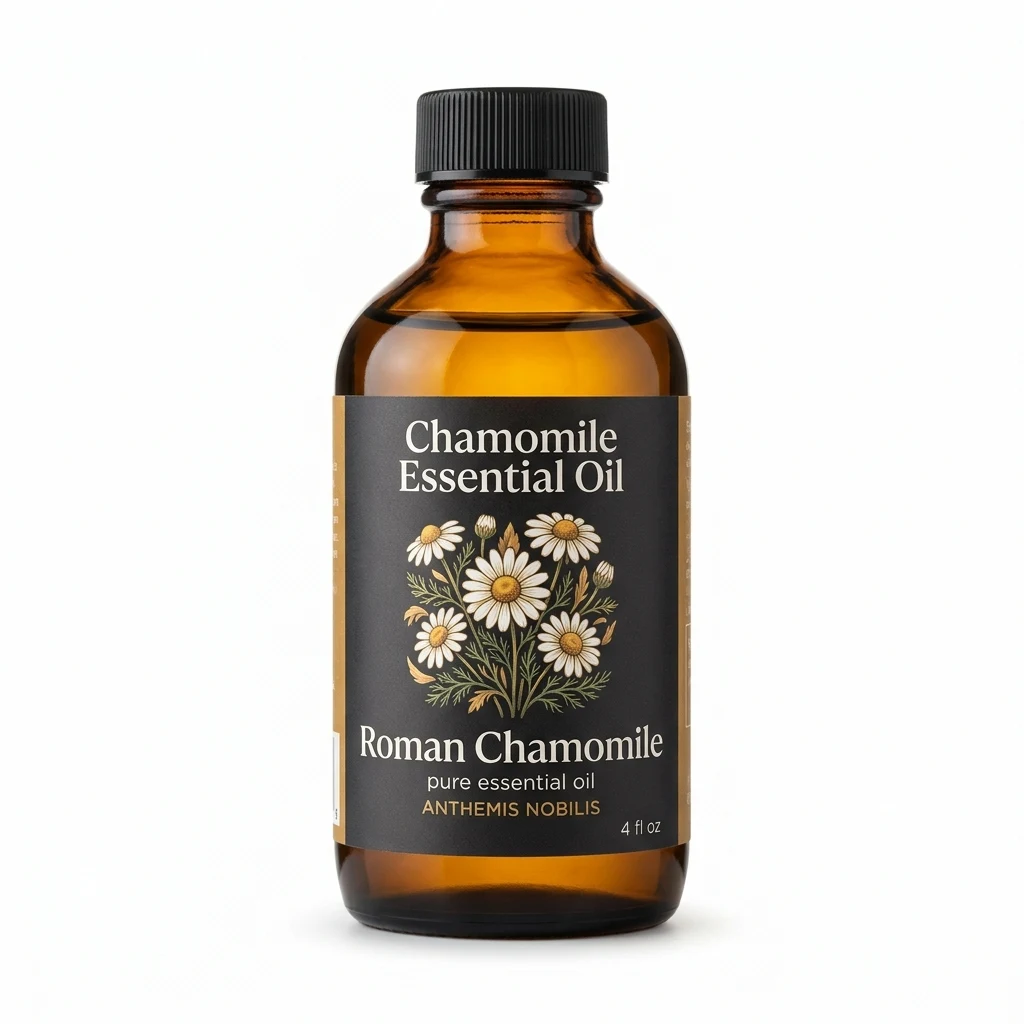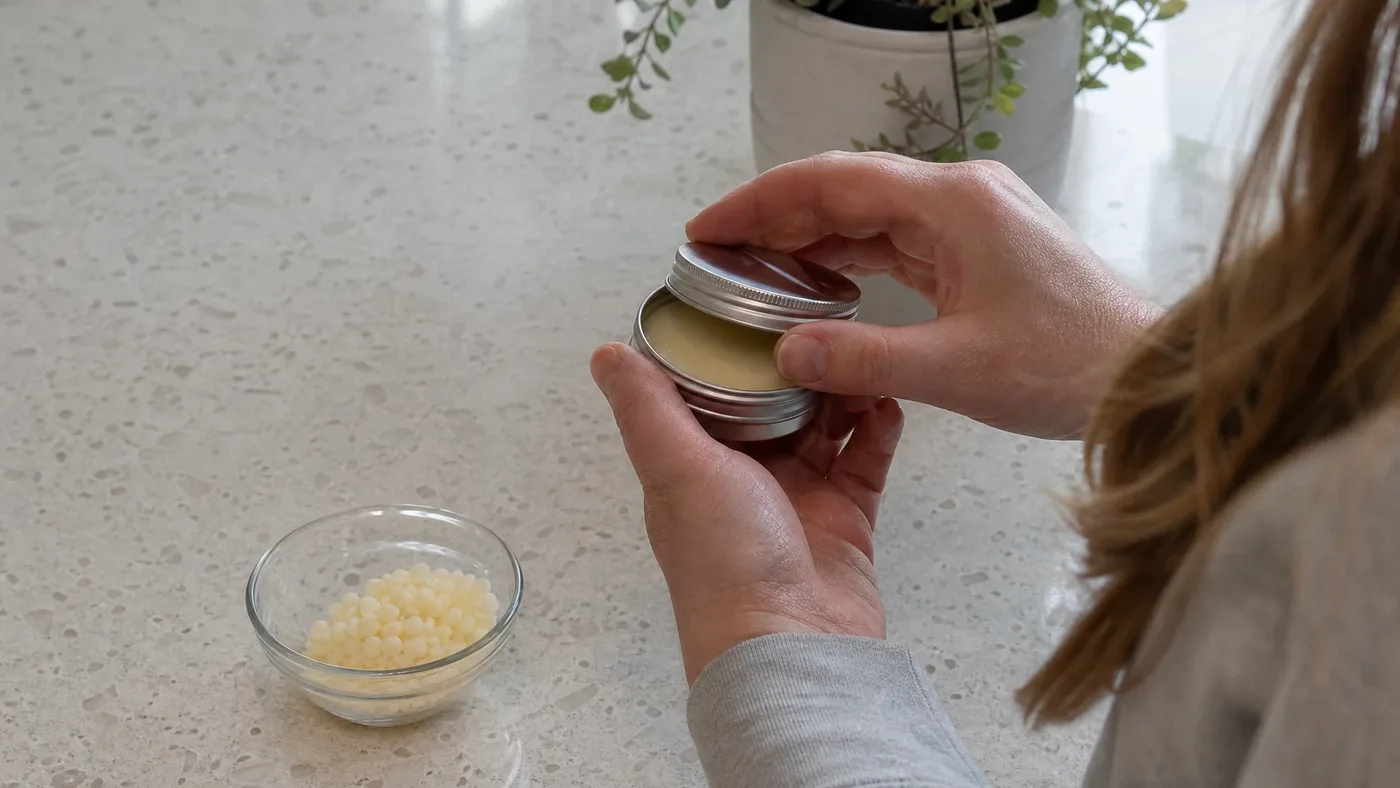
How to Make a Chamomile Balm: Wax and Drop Ratios
Work out a chamomile balm by weight: wax ratios for three textures, drop counts for a 30 g jar, and why the oil goes in last.
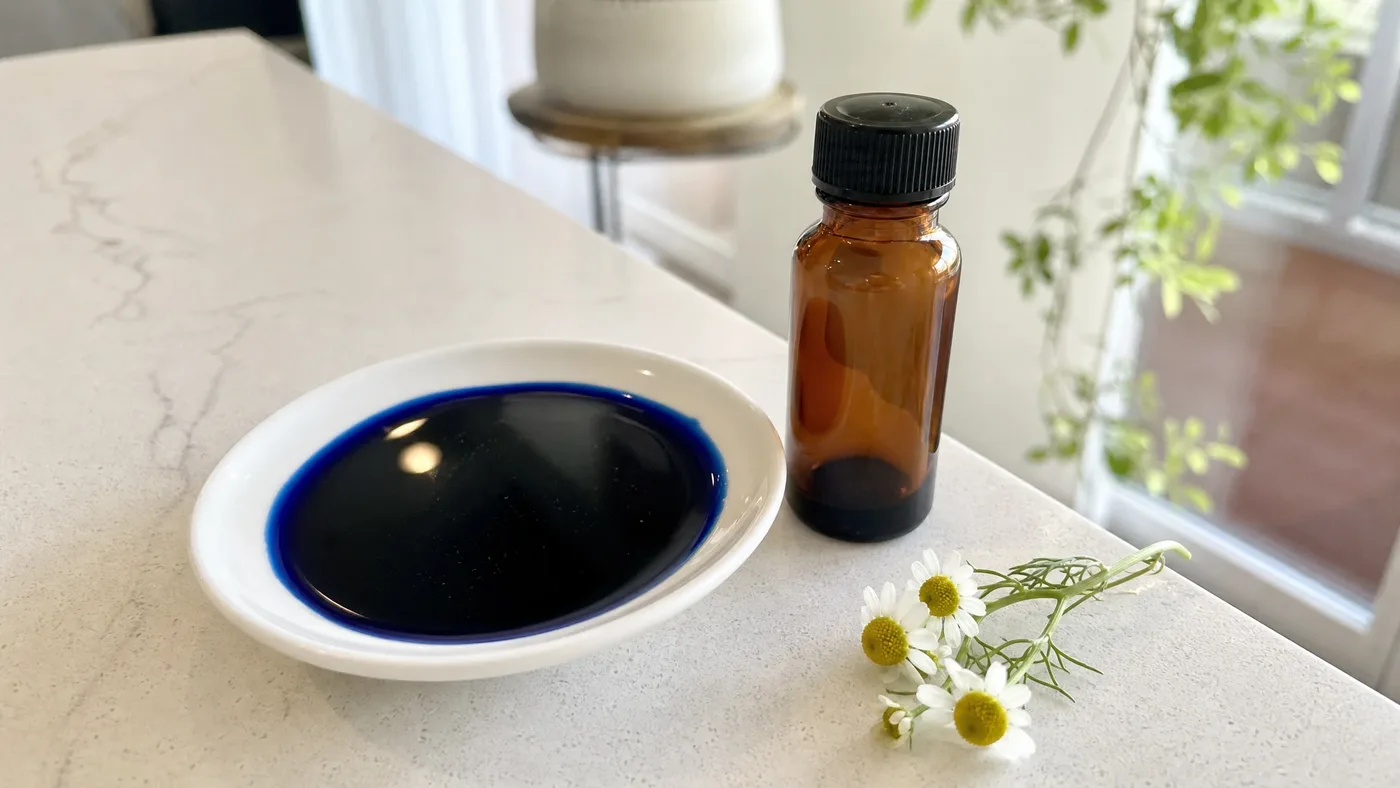
German Chamomile vs Blue Tansy: Same Blue, Two Plants
Two blue oils, two different plants. How the Latin name and a batch report separate German chamomile from blue tansy, whatever the colour suggests.

The History of Chamomile: From Ground Apple to Blue Oil
A low creeping plant in Greek texts, a name that may mean ground apple, and a blue molecule named in 1863. Chamomile's documented story, told simply.
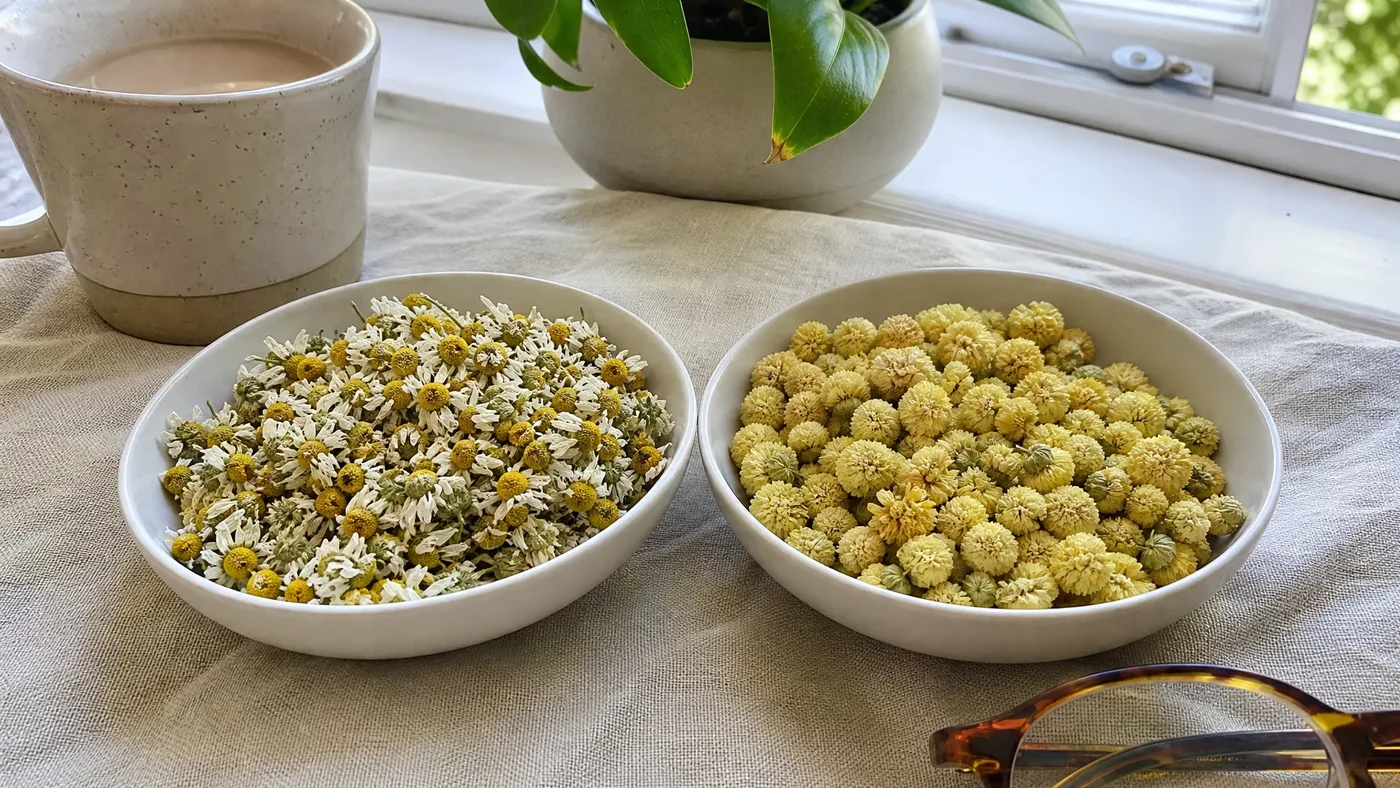
What Is Moroccan Chamomile Oil? One Name, Two Plants
A Moroccan chamomile label can mean a wild daisy relative or Roman chamomile grown there. Here is how the oils differ and what to check before you buy.
What Oils Pair With Chamomile? Blending Partners
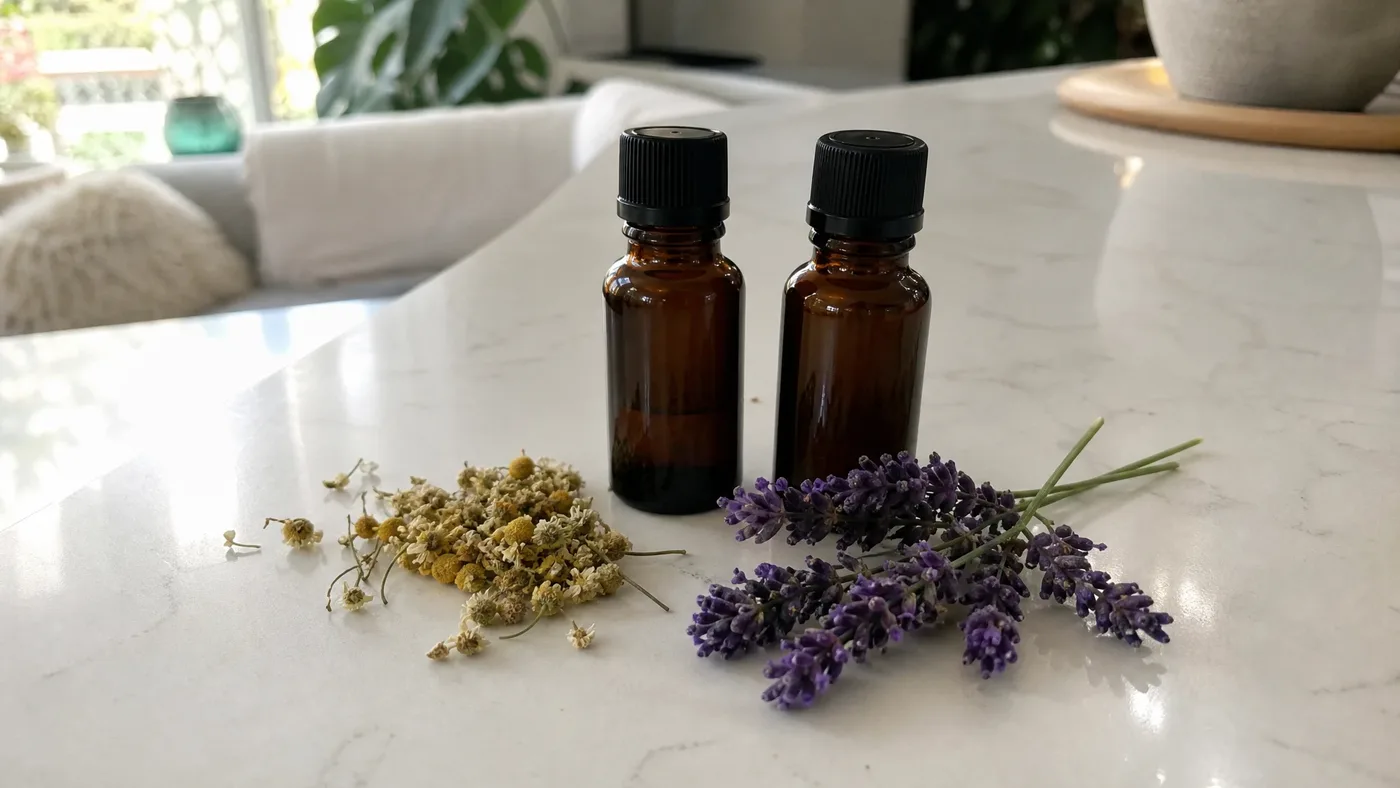
Roman and German chamomile are different oils with different partners. A short guide to pairings by scent and chemistry, plus the drop maths.
Roman or German Chamomile Oil: Which Should You Pick?
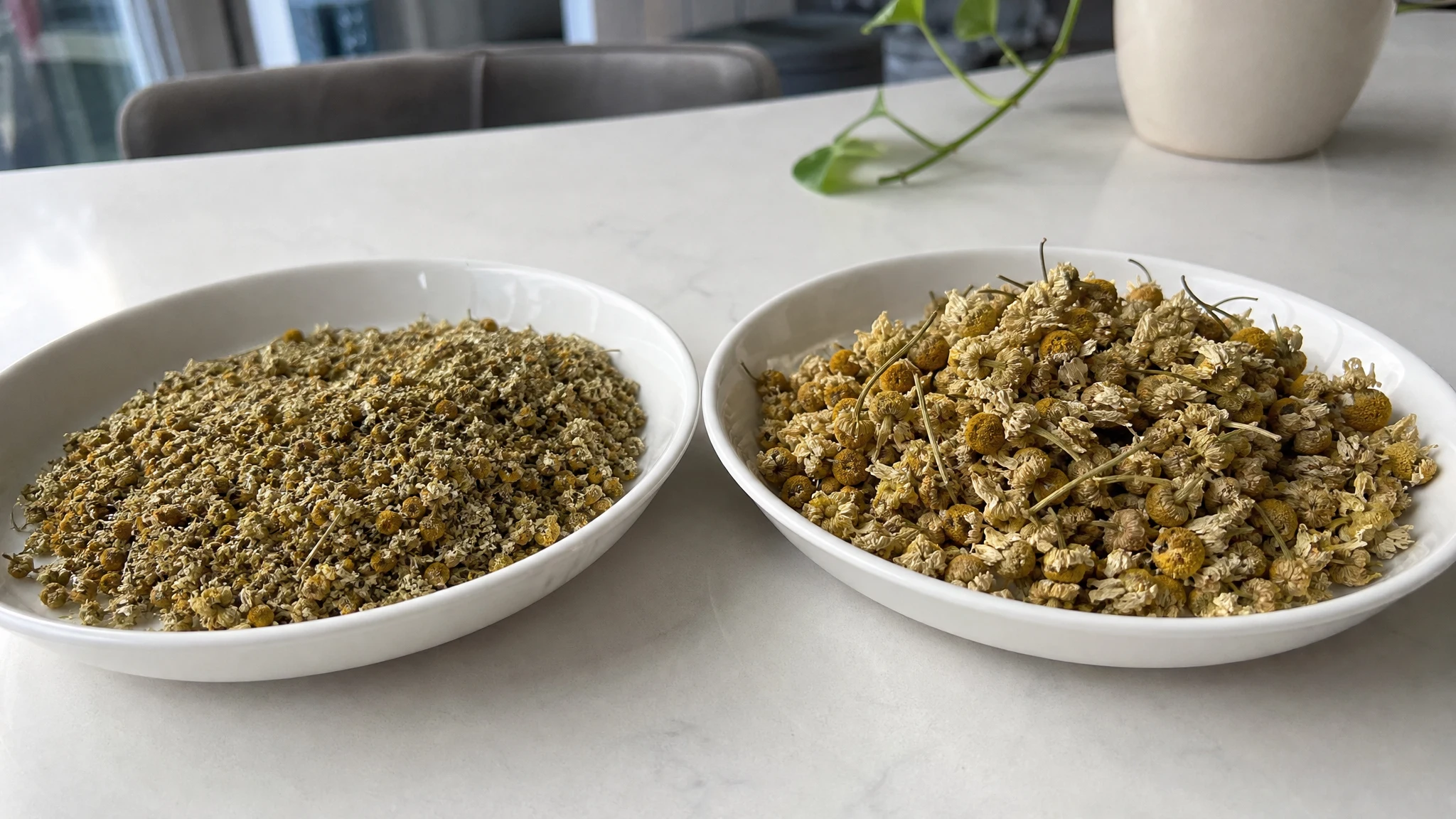
Blue or pale, apple or hay, paperwork or none. Four plain questions that decide between our Roman and German chamomile oils, plus a blotter test.
Chamomile Oil Myths: It's Not Tea in a Bottle
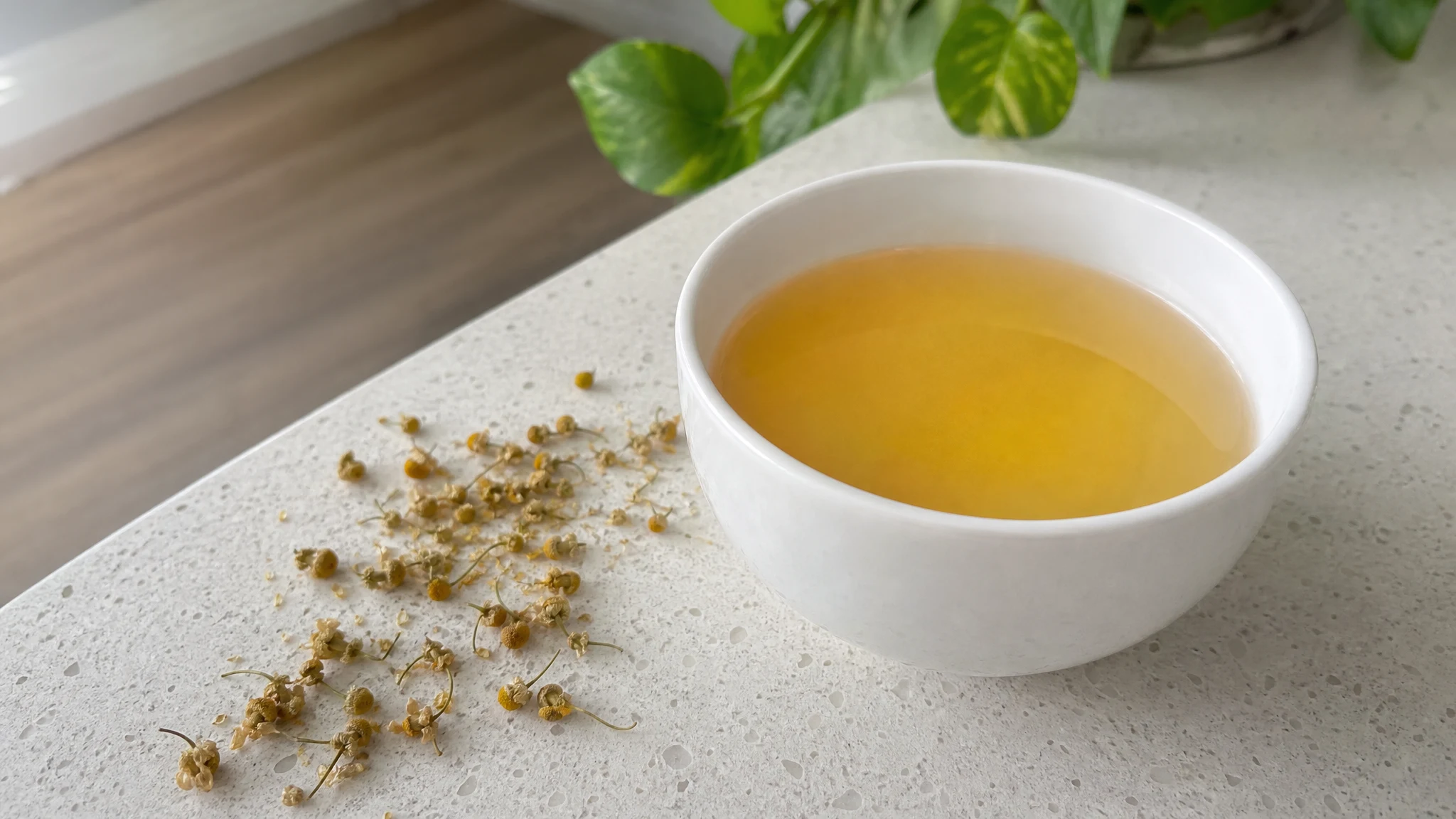
Tea and oil are different mixtures, blue color is a clue and not a test, and there are two chamomile plants. Five common myths, sorted.
Chamomile Essential Oil in Cold Process Soap: A Guide
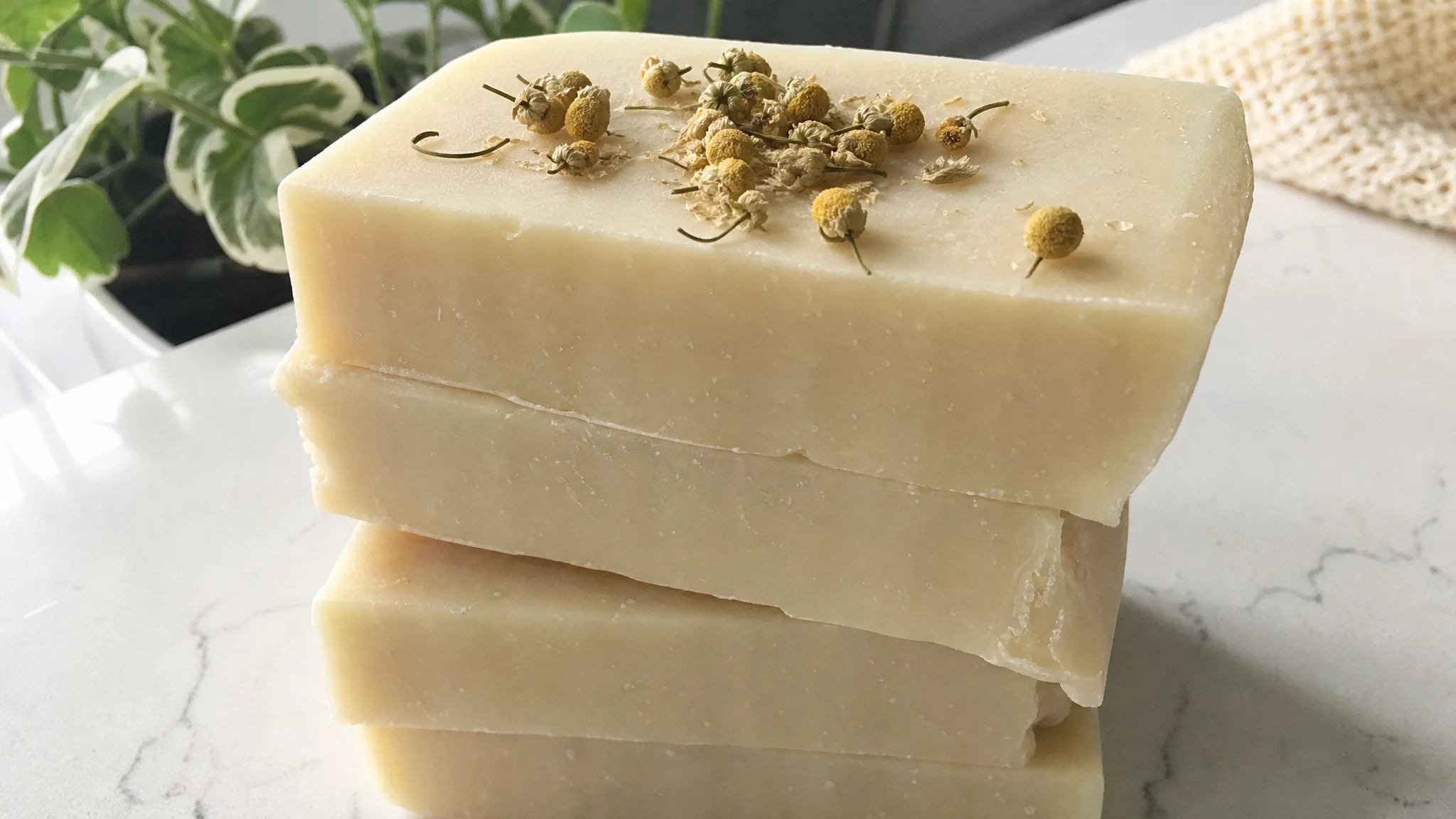
Which chamomile, how much, will the scent last and what can the label say? A practical guide for soap makers using chamomile essential oil.
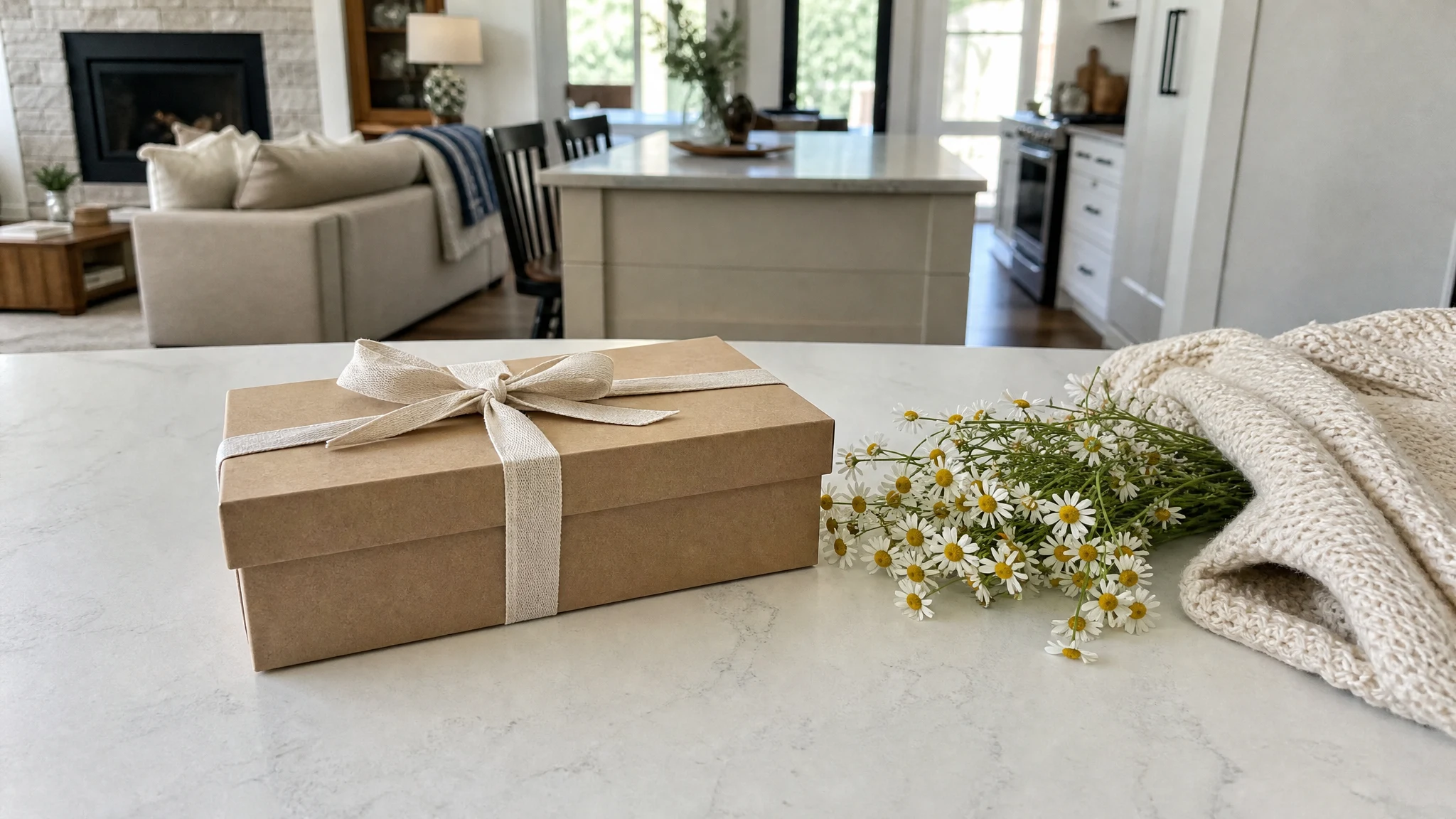
Choosing Chamomile Oil as a Gift: Roman or German?
Thinking of chamomile oil as a gift? Check the recipient first, pick Roman or German, and write the one line the card needs: it must be diluted.
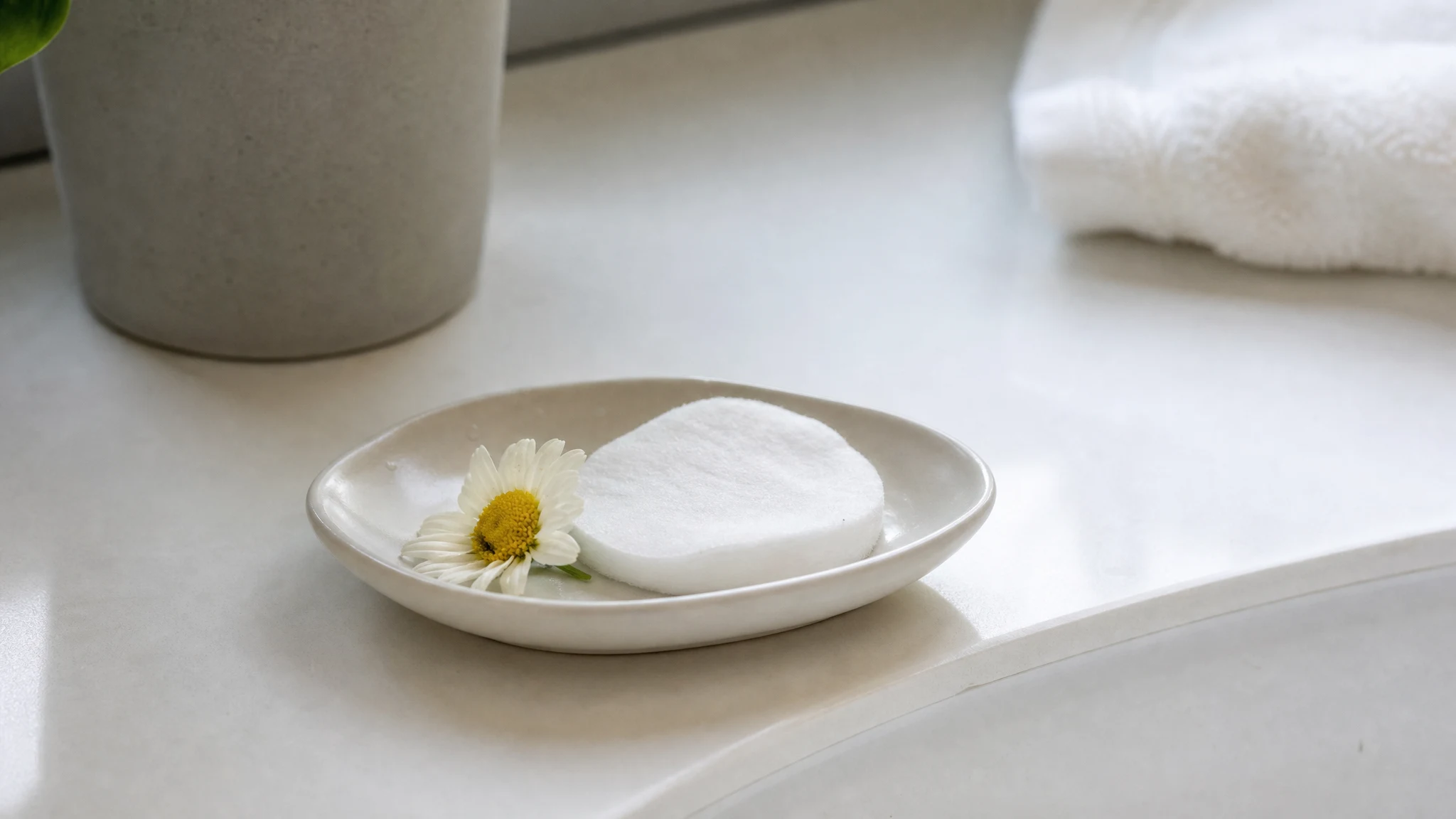
How to Patch Test Chamomile Oil Before You Use It
Five minutes of setup, two days of watching your forearm. How to patch test a chamomile blend properly, and what a clean result does and does not promise.
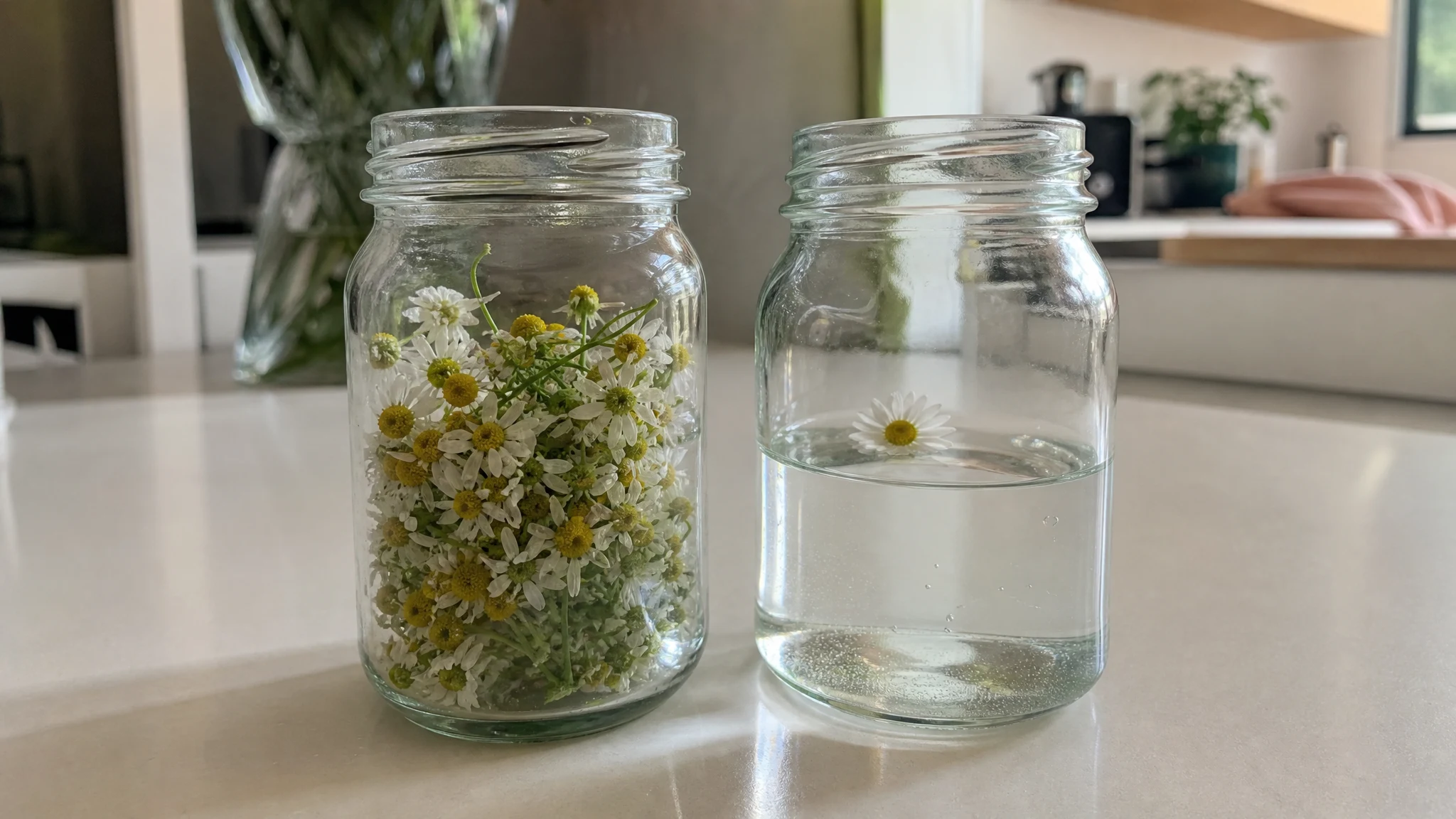
Chamomile Oil vs Hydrosol: Same Still, Different Product
The oil is concentrated; the hydrosol is the water beside it. Why oil in water is not hydrosol, and what to ask any seller of either.
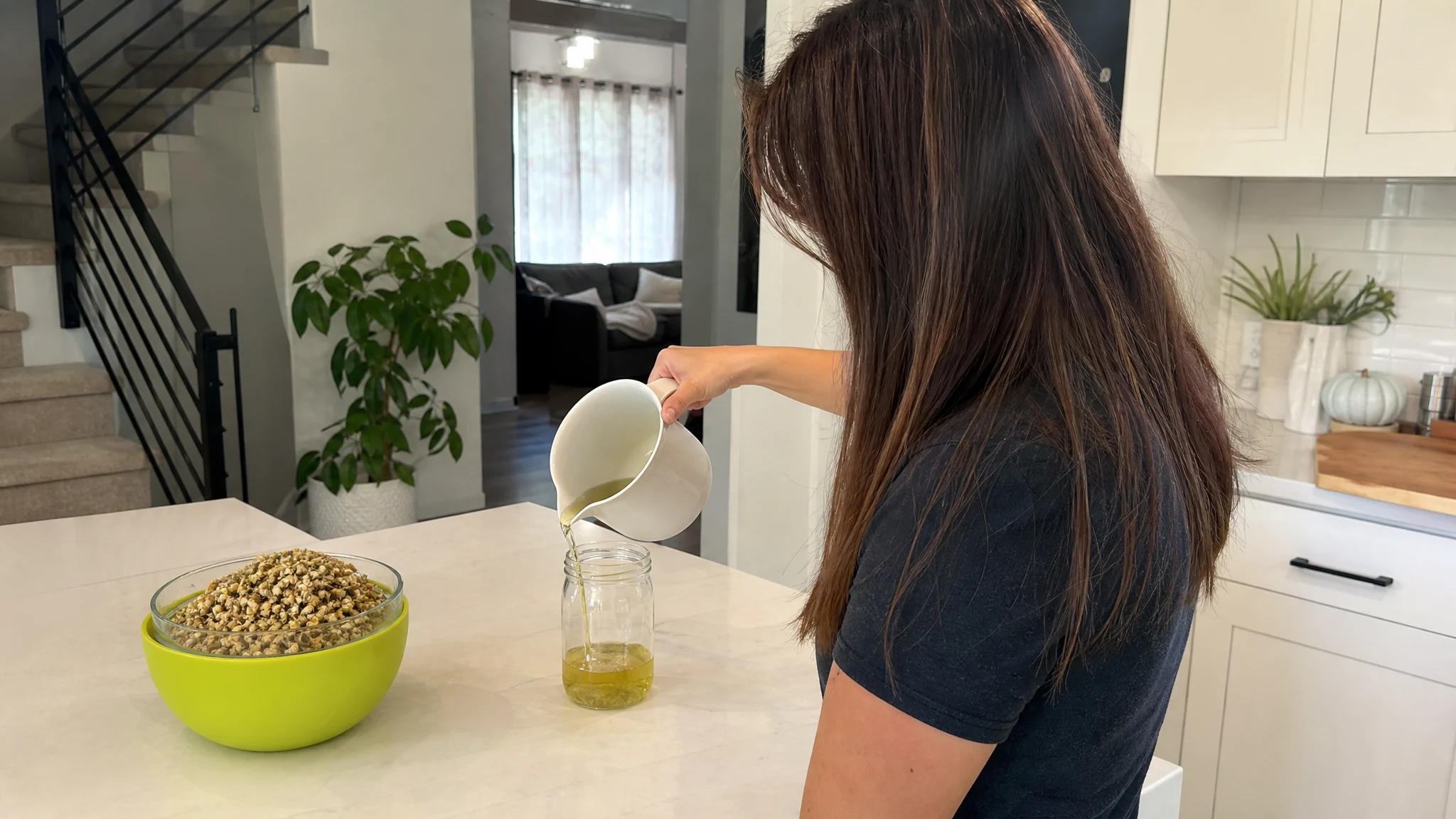
Chamomile Candles: How Much Oil to Add to Your Wax
A delicate oil in hot wax: how to set the load from your wax, convert percentages to millilitres, and test before buying large.